Getting Started
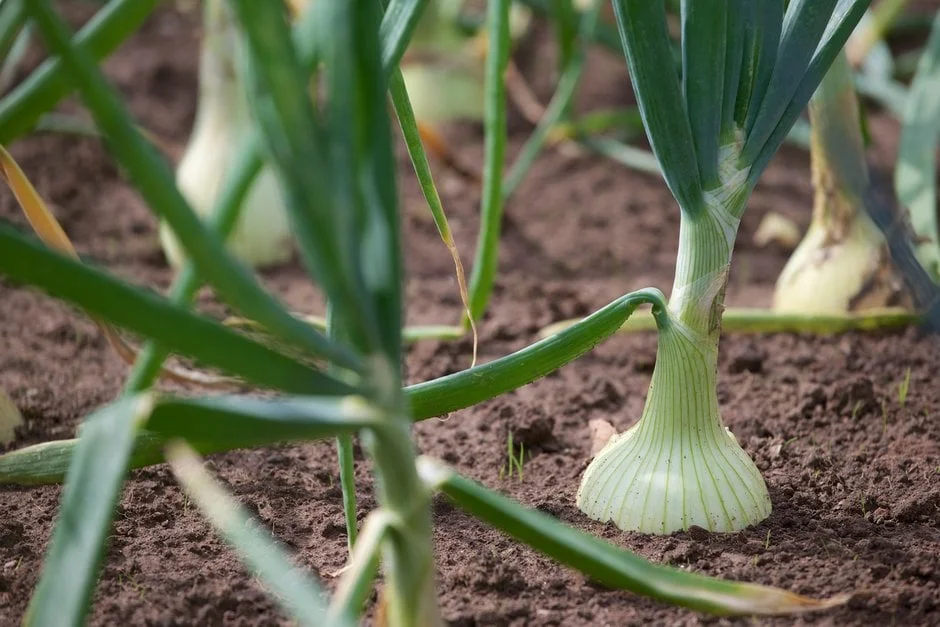
Onions (Allium cepa) are an easy crop to grow, taking up relatively little space and giving reliable harvests that can be used in all kinds of dishes. The crop can be stored too, rather than having to be used straight away, so you won’t find yourself overwhelmed by a sudden onion glut.
Onions are usually grown from small called sets, planted outdoors in spring, or sometimes in autumn. These grow quickly and reliably, with minimal maintenance. Onions can also be grown from seed, although this takes a little more time and care.
A warm, sunny spot in well-drained soil is ideal for growing onions, they can also be grown in large containers. Harvest the crop in summer or early autumn, then either use straight away or store them for whenever needed over the following months.
Jobs to do now
Plant overwintering sets
Month by Month
Sow
Plant
Harvest


Choosing What To Grow
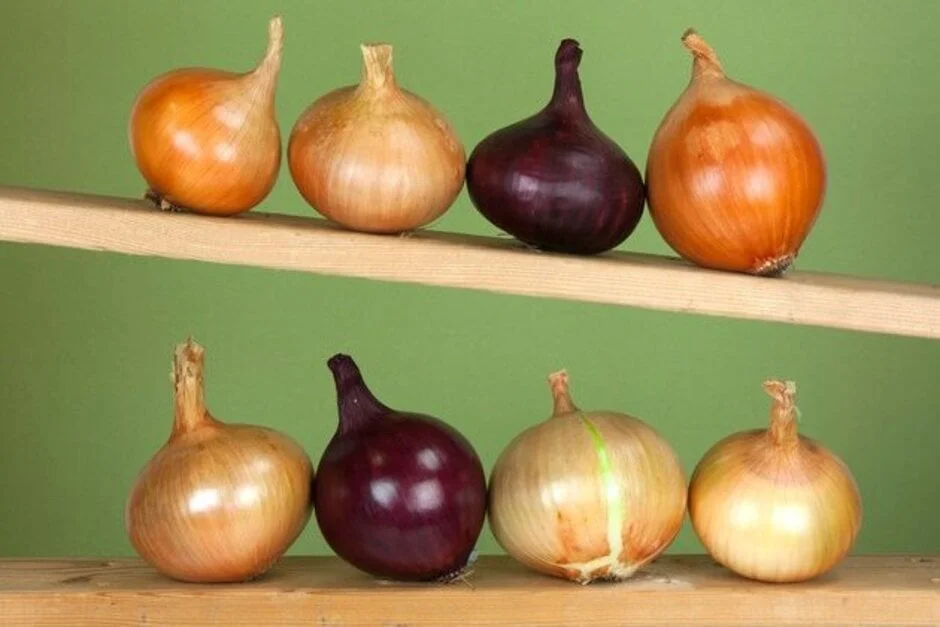
There are many varieties to choose from, producing yellow, white or red onions, some spicy and tangy, others mild and sweet. Varieties mature at different times from early summer to early autumn. Some store particularly well, or are resistant to disease or . When choosing varieties, look for those with an RHS Recommended: Award of Garden Merit (AGM), as these are particularly reliable croppers – see our list of AGM fruit and veg (135kB pdf) and our Recommended Varieties below.
Sets or seeds?
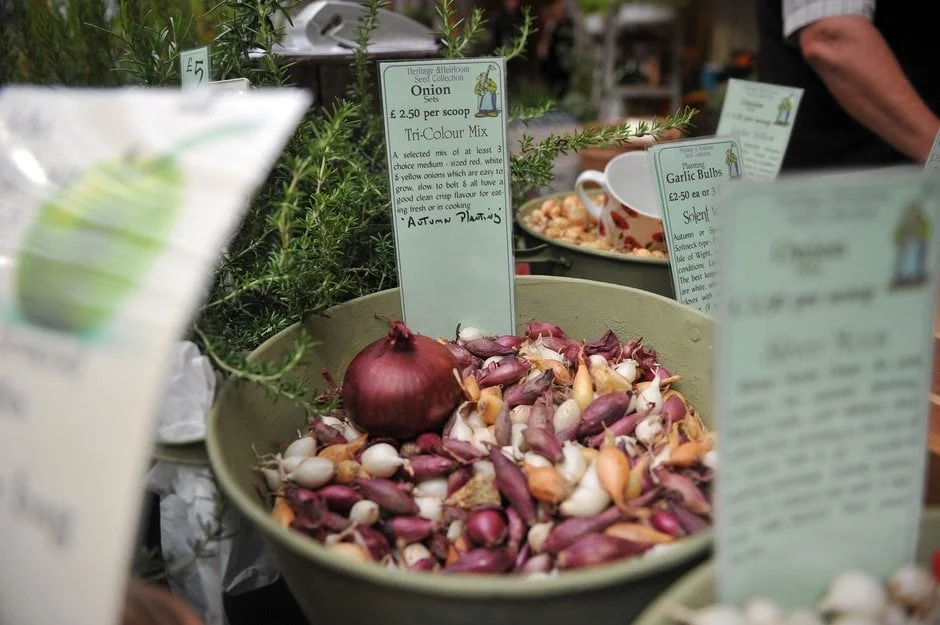
Onions are usually grown from sets (immature ) – this is the easiest and fastest way to grow them. However, they are more prone to bolting (when a flower is produced, diverting energy away from the bulb). Using heat-treated sets greatly reduces the risk of .
More time and care is needed to grow onions from seeds, but seeds are generally cheaper to buy and you'll have a greater choice of varieties. Although, onion seeds don't stay viable for long, with rates declining after a year or two.
What and where to buy
Onion sets are widely available in spring in garden centres and from online retailers. A limited range is also available in autumn, usually sold as overwintering or Japanese onions, for an earlier crop. If you want a specific variety, be sure to buy or order early, as popular ones often sell out quickly.
Seeds are readily available from similar sources all year round. Young plants are also sold in spring and early summer – ideal if you only want a few.
Recommended Varieties


Preparing The Ground
Choose a sunny planting site, with free-draining soil, and weed thoroughly. Onions have a limited root system, so improving the soil with lots of organic matter before planting is invaluable – dig in a bucketful of homemade garden or well-rotted manure per square metre/yard. This will add , improve the soil structure and hold moisture in the soil. Avoid using fresh manure.
Alternatively, if you're practicing no-dig gardening, the soil with organic matter ahead of sowing or planting directly into the mulch.
Sowing
Although often grown from sets, onions can be grown from seed, sown either indoors or outside, from mid-winter to mid-spring. To ensure a good crop, the resulting plants must be growing strongly by late spring, as the lengthening days trigger the formation of – the more leaves that plants have at this time, the better the bulb will be. Some overwintering (Japanese) varieties, such as ‘Toughball’, are available as seed, which can be sown indoors in late summer or early autumn.
Sowing indoors
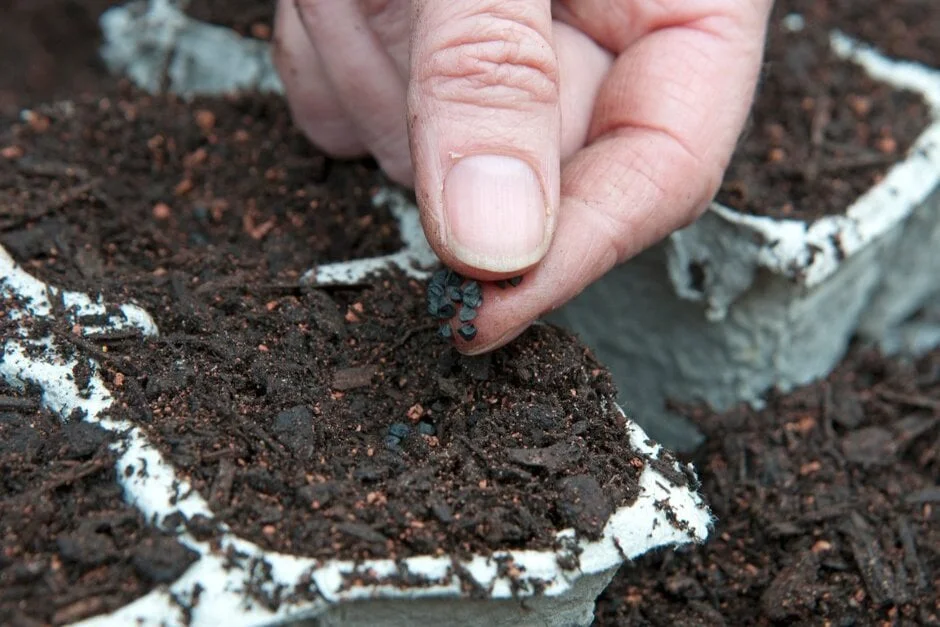
Sow indoors from mid-winter to early spring. Sow seeds about 1.3cm (½in) deep into modular trays filled with peat-free . Sowing one seed per module is effective, but it's also possible to sow three or four seeds per module, although the resulting are likely to be smaller. Place the tray in a or on a warm sunny windowsill. should appear within a couple of weeks. Remove from the , place in bright light and keep the slightly moist.
Harden off indoor-sown plants in spring (or early autumn for overwintering onions), before planting into prepared ground. Space plants about 10cm (4in) apart, in rows 25–30cm (10–12in) apart. If you want to grow large onions you can increase the space between plants to 15cm (6in). Don’t split up multi-seeded into individual plants – just plant them as they are, to form a clump of onion bulbs.
Sowing outdoors
You can sow onions outdoors from early to mid-spring, when your soil starts to warm up. Sow seeds 1.3cm (½in) deep, in rows 20-30cm (8-12in) apart. Thin out the first to 5cm (2in) apart, and later to 10cm (4in) apart. Closer spacing will result in smaller individual , but more of them.
Planting
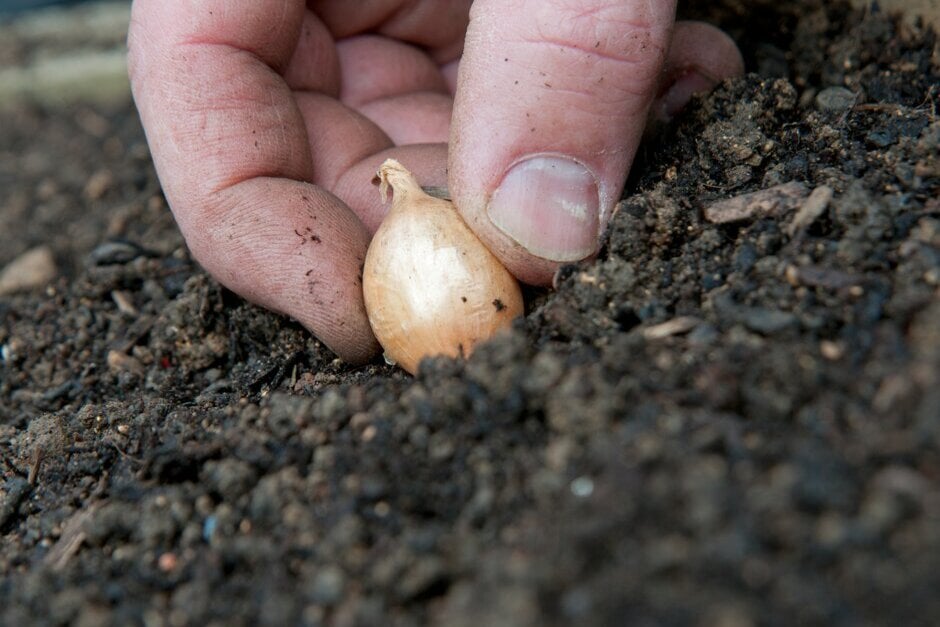
Sets are usually planted in early to mid-spring, for harvesting from July to September. Overwintering (Japanese) onion sets can be planted in autumn, for harvesting in June and July – these are less sensitive to cold, which would otherwise cause bolting.
Planting outdoors
In prepared ground (see above) plant sets 2cm (¾in) deep in drills or gently push them into loose soil, so the tip is just showing at the surface. Space them 10-15cm (4–6in) apart (wider spacing will give you larger ), in rows 20–30cm (8–12in) apart. Firm the soil around them and water well. Birds will often peck newly planted sets out of the ground, so protect with biodegradable fleece or netting until they’ve rooted in.
Planting indoors
If your soil is very wet and cold in early to mid-spring, you can plant onion sets indoors, then transplant them outside when soil conditions improve.
Avoid autumn planting if your soil is heavy and prone to waterlogging during the winter months, as the sets are likely to rot. But they can be planted in indoors instead, then outdoors in spring, which still gives them a head-start.
Use modular trays filled with peat-free multipurpose and plant one set per module. Keep somewhere cool and bright, an unheated greenhouse is ideal.
Planting in containers
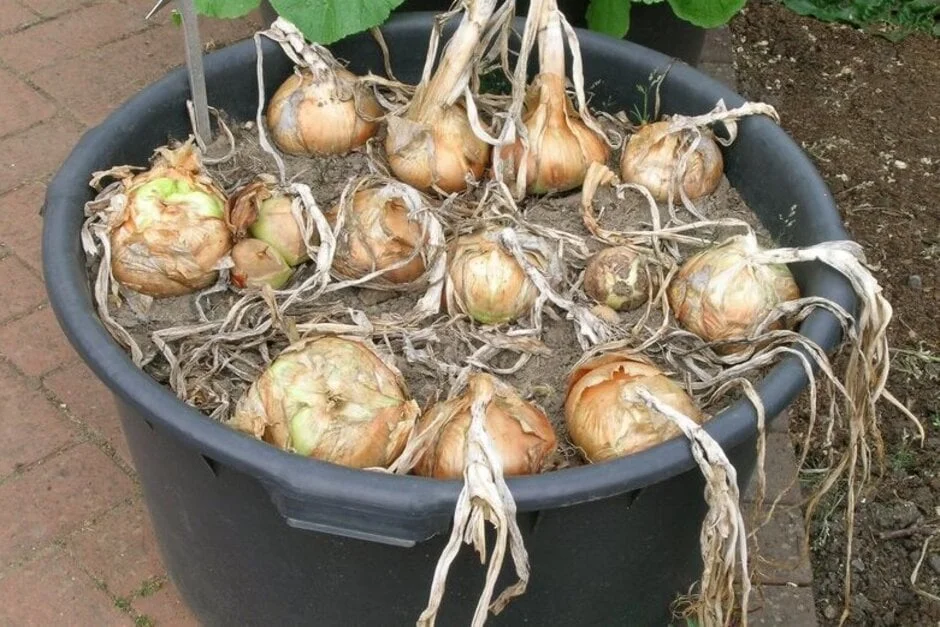
Onions can also be grown in large containers if you don’t have space in the ground or your soil is too damp. Use peat-free and a container that’s at least 45cm (18in) wide and deep. Plant the sets as described above.
Plant Care
Watering
Water during prolonged dry spells, particularly during the early stages of growth when roots are forming, but stop watering once the have swollen in mid-summer. Watering spring-planted crops after mid-summer can mean they store less successfully. Try not to wet the foliage when watering, as this can encourage fungal diseases.
Feeding
Adding organic matter, such as garden compost, before planting should provide sufficient for a good crop of onions. If your soil is poor, you could add an organic-based, nitrogen-rich fertiliser to autumn-planted onions in late winter. This not only boosts growth but can also suppress premature flowering.
Weeding
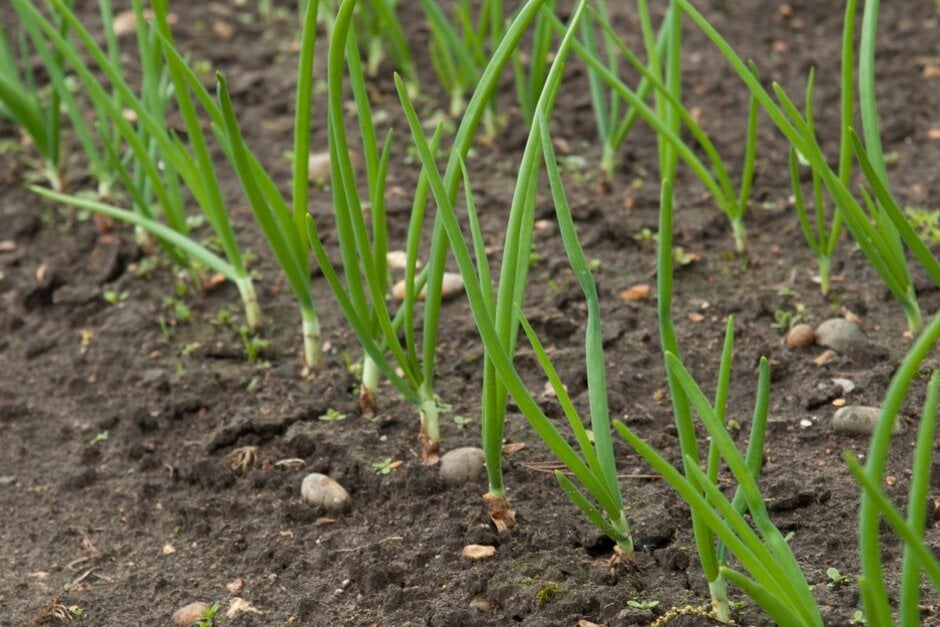
Onions don’t grow well if competing with other plants, so weed between them regularly. Take care not to damage the or foliage if using a hoe – ideally, remove weeds by hand if they are very close to the onions. As onion foliage casts little shade, weeds grow readily and if they aren't removed they can reduce the growth and subsequent bulb size of onions.
Removing flowers
Remove any flower stems as soon as they start to form, otherwise the plant’s energy will go into producing the flower rather than swelling the bulb. It also means the bulb won’t store well.
Harvesting
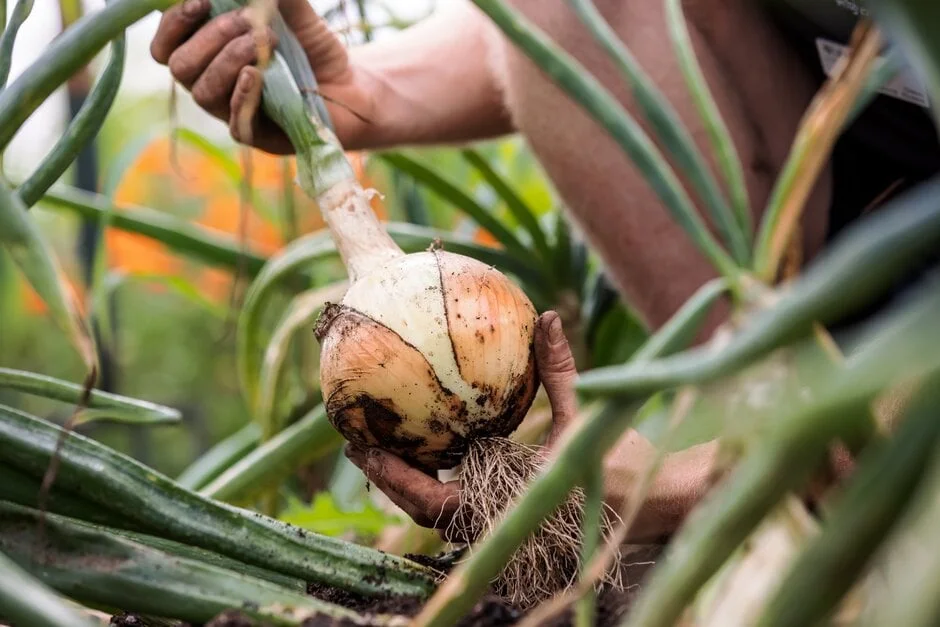
Autumn-planted sets are ready to harvest in June and July, while spring-planted sets and seed-raised onions are ready from July to October.
Although it’s sometimes suggested to bend over the foliage or gently lift the to break the roots, this is no longer recommended. Yellowing and toppling of the foliage is a sign that the crop is reaching maturity. Harvest before the foliage dies down completely. Carefully lift the bulbs with a fork, taking care not to damage or bruise them, as this could cause them to rot in storage. Use any damaged onions straight away.
Storing
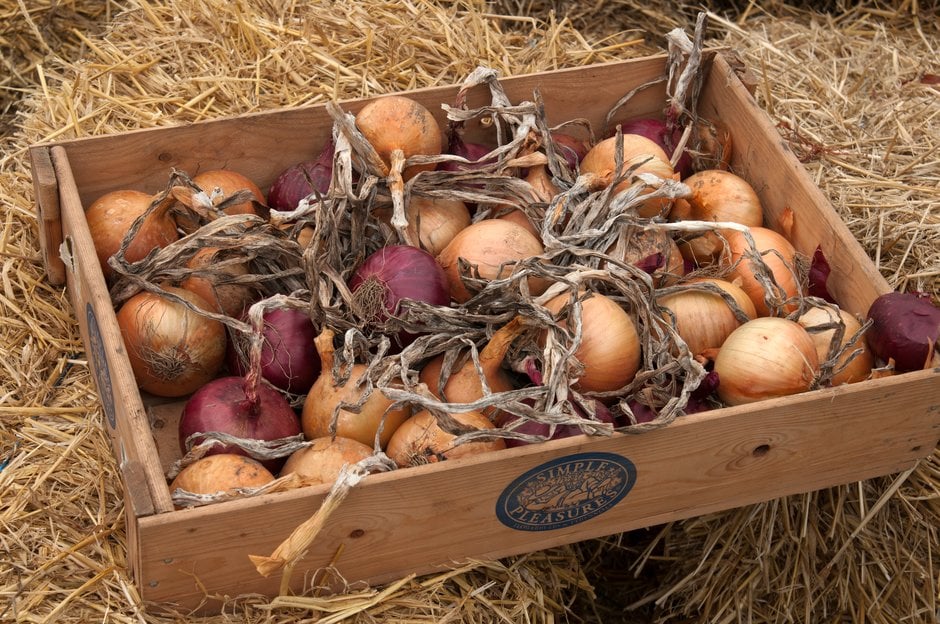
Dry your onions for about two weeks before storing – place them in full sun outdoors on wire racks, or similar, so air can circulate beneath them. Alternatively, if the weather is damp, dry them in a greenhouse or well-ventilated shed.
Once all the foliage is papery and dry, put the onions in net bags or trays in a single layer, or tie them into plaits and hang them up. Keep them in a light, cool, dry and well-ventilated place – don’t store in the dark, as this encourages sprouting.
Autumn-planted onions will store until early winter. Spring-planted or seed-raised onions can last until well into the following spring.
Problem Solving
Onions are relatively trouble free, although they can be affected by several fungal diseases, especially in damp growing conditions or if poorly stored. Flowering ( ), caused by low temperatures in spring, means won’t store well. Birds also tend to pull up newly planted onion sets, so protect them with netting or biodegradable fleece until rooted in. See below for other common problems.
Common Problems

Bolting in vegetables
Bolting is the term applied to vegetable crops when they prematurely run to seed, usually making them unusable. A cold spell or changes in day length...

Allium leaf miner
Allium leaf mining fly was first detected in Britain in 2002, it has become widespread in England and parts of Wales. The larvae bore into the stems a...


