Getting Started
Soya beans grow best in warmer parts of the UK, as they need a long hot summer to crop well. The short pods of small round beans can be harvested when still green and immature, as edamame beans, or allowed to mature for drying and using over winter.
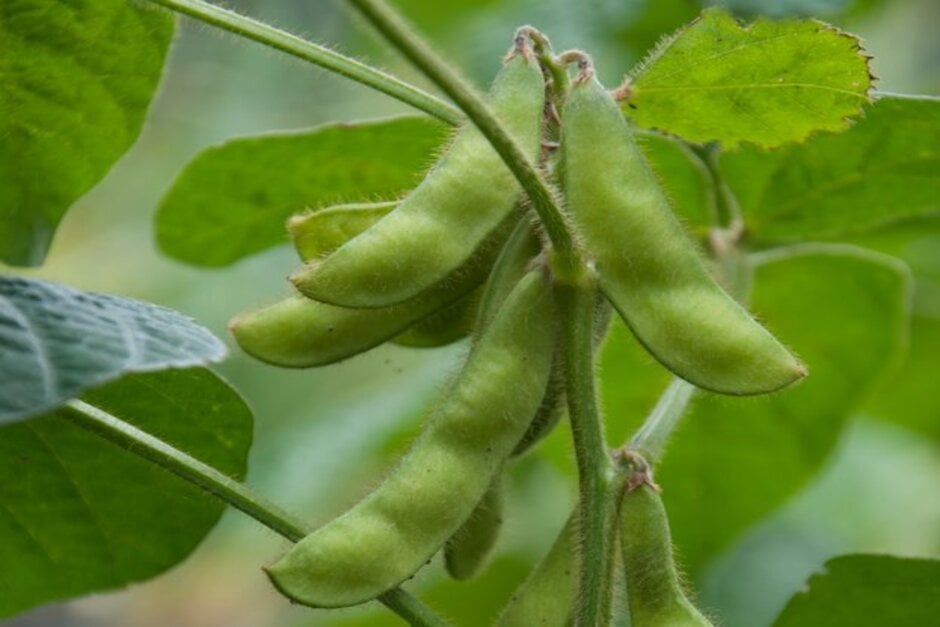
Originating from South-East Asia, soya beans (Glycine max) need full sun, heat and plenty of moisture to produce a good crop in the UK. But as our climate warms and as new, more resilient varieties are introduced, they are becoming a more popular and viable crop here.
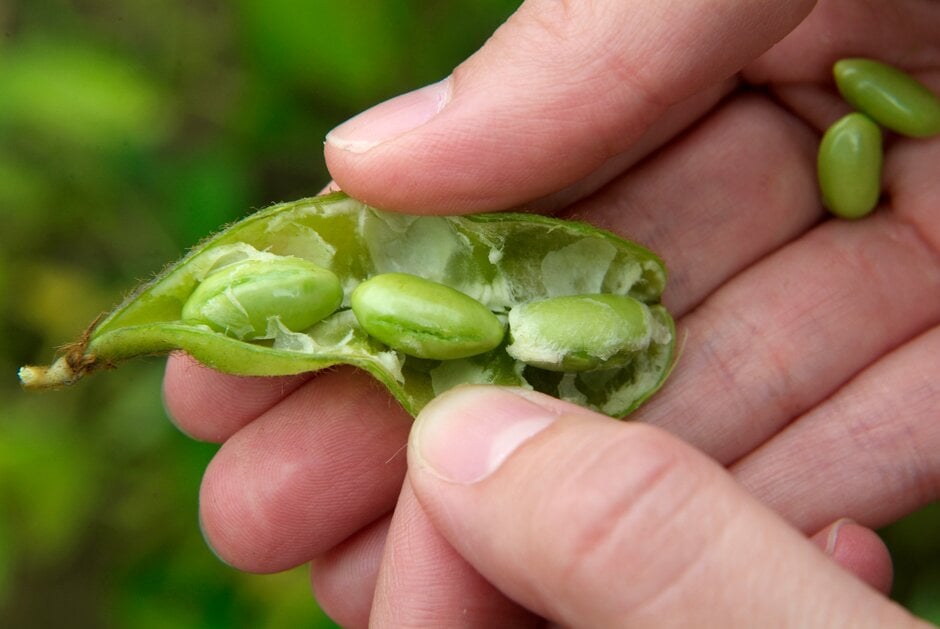
Soya plants produce short hairy pods containing two or three small rounded beans. These can be harvested at two different stages, from late summer into autumn:
- when the beans are the size of garden peas, still green and immature, for cooking and adding to salads, stir-fries and many other dishes. These are usually known as edamame beans
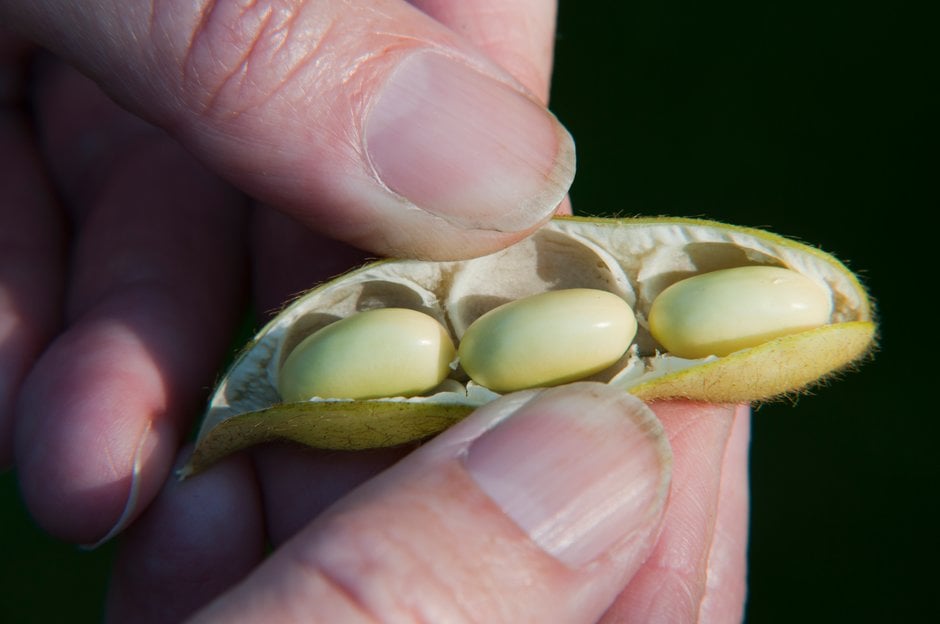
- when the pods are fully ripe and dry – the mature soya beans inside can be stored for use in stews and other hearty winter dishes
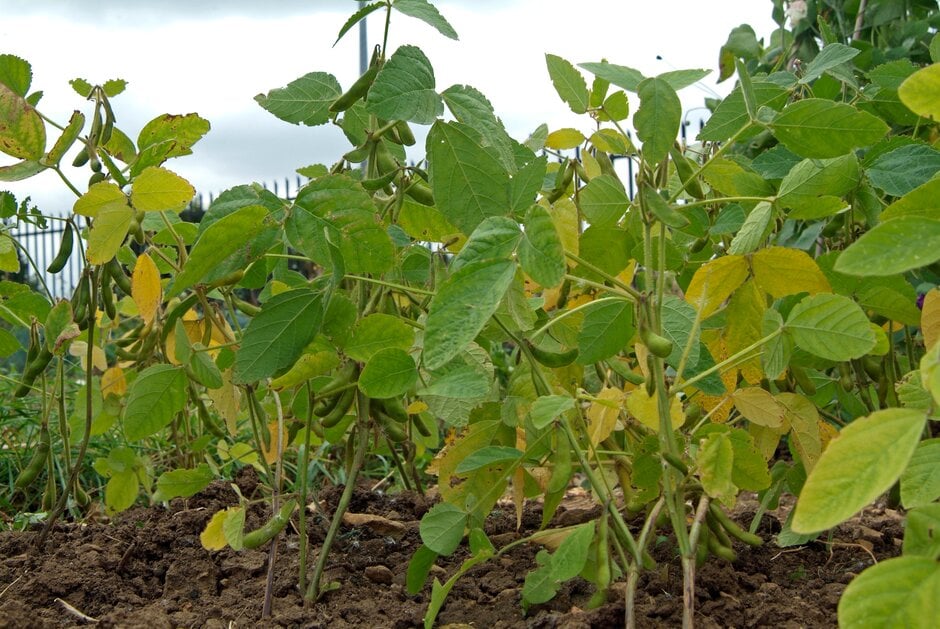
Soya beans can be grown from seed sown indoors or outside. They form bushy plants about 60cm (2ft) tall, depending on the variety, and don’t usually need supports. The beans are a good source of protein and fibre, but they must always be cooked before eating, to get rid of any natural toxins.
Jobs to do now
Water in dry spells
Harvest mature pods
Month by Month
Sow
Plant Out
Harvest


Choosing What To Grow
Soya beans generally need a long, hot summer, ideally 20–30°C (68–86°F), although some newer varieties can cope in cooler conditions. Choose a variety suitable for your local climate, otherwise results may be disappointing. Soya bean seeds are sometimes sold as edamame beans, which is the name given to the immature green beans, but these can be harvested as mature dried beans too. Only a few varieties are currently available in the UK.
What and where to buy
Soya and edamame bean seeds are available in some larger garden centres and from several online seed suppliers, but the choice of varieties is currently quite limited. Young may also be available in late spring and early summer, from similar sources.


Preparing The Ground
Choose a warm, open, sunny growing site, ideally with light, free-draining soil. Weed thoroughly, then fork in lots of home-made garden or well-rotted manure – at least two bucketfuls per square metre/yard. Ideally do this a few weeks before sowing or planting out, to allow the ground to settle. Alternatively, if you're practising no-dig, the soil ahead of sowing or planting directly into the mulch.
Sowing
Soya beans can be sown indoors in April and May, or outdoors in May and June. Sowing indoors is generally a more reliable option – the warmth ensures good rates and you can sow earlier, to give a longer . It also ensures mice don’t eat the seeds, and keeps the out of reach of slugs and snails until larger and more robust.
Sowing indoors
In mid- to late spring, sow soya beans in small pots or modular trays filled with moist peat-free , inserting them 5cm (2in) deep. Place in a , or cover with a clear polythene bag, and keep at 18–20°C (64–68°F). For more sowing tips, see our guides below.
Once appear, remove from the propagator or uncover, then keep in a warm, bright location, watering regularly. Move the seedlings into larger pots when roots appear through the drainage holes. They should be ready to plant out in late May or early June – see Planting, below.
Sowing outdoors
You can sow soya beans outdoors once the soil has warmed to at least 15°C (60°F) in late spring or early summer. Sow seeds 5cm (2in) deep, 15cm (6in) apart, in rows 45cm (18in) apart, then cover with cloches or plastic-free fleece. Protect the from slugs and snails, especially in damp weather.
Planting
Wait until early summer, when temperatures are around 15°C (60°F), before planting indoor-raised soya plants or young bought plants outside. Harden them off to avoid a check in growth, and make sure your planting site is prepared in advance (See Preparing the ground above).
Water the young soya plants well, both before and after planting, and space them 15cm (6in) apart, with 45cm (18in) between rows. After watering in, cover the plants with cloches or plastic-free fleece to keep them warm while they get established.
Plant Care
Watering
Soya beans are thirsty plants and crop best when watered regularly in dry spells, especially once they start to flower and form pods. To reduce competition for water, keep the soil around your plants free from weeds.
Mulching
Spread a deep of garden compost around the plants after planting to help hold moisture in the soil and deter weeds.
Supporting plants
Most soya bean varieties sold in the UK grow to about 60cm (2ft) tall and are self-supporting. But in a windy site, or if you choose a taller variety, insert sturdy bamboo canes at the ends of the rows and loop string around them to hold the plants upright.
Harvesting
You can harvest these nutritious beans either unripe as edamame beans or fully ripe as dried soya beans.
Edamame beans are immature soya beans, harvested in summer when the pods are still green, with plump green beans inside. They can either be shelled or cooked in the pods (then shelled), and must be boiled for at least ten minutes to destroy their natural toxins.
Mature soya beans are ready for harvesting from late September, when the leaves start to fall from the plants, often leaving just brown stems with lots of hanging pods. The pods remain weatherproof during autumn, so you can pick as needed. After harvesting, remove the beans from their dry pods, then either cook straight away or spread them out on a tray indoors to dry fully. Store the dry beans in an airtight container for use over winter. As with the immature beans, cook mature soya beans thoroughly to remove any natural toxins.
Once harvesting has finished, cut plants down to the base and them. However, as legumes (peas, beans and related plants) fix nitrogen from the air at their roots, leave these in the ground to boost soil nitrogen levels.
Problem Solving
Soya beans are generally trouble-free, as long as they’re kept warm and well watered throughout the . In cool summers or colder regions, cropping may be reduced. Take care not to plant them out too early, and protect them with cloches or plastic-free fleece to keep them warm while they get established. and young plants are vulnerable to slugs and snails – see Common problems, below.
Common Problems

Downy mildews
Downy mildews can spoil the appearance of ornamental plants and affect the yield and quality of edible crops. Control depends on cultural techniques a...

Plant viruses
Plant viruses affect many plants and cause a wide range of discolourations and distortions in leaves, shoots, stems and flowers, but rarely kill the p...

Powdery mildews
Powdery mildews are a group of related fungi which attack a wide range of plants, causing a white, dusty coating on leaves, stems and flowers.

