Top 10 plants for moths
Let’s not forget the pollinators that cover the night shift. Here are the best plants for moths you can grow to help our nocturnal pollinators

The 2026 Wild About Gardens campaign is all about moths. RHS Principal Entomologist Dr Hayley Jones and wildlife gardening expert Kate Bradbury discuss these often-overlooked pollinating insects and what gardeners can do to help them
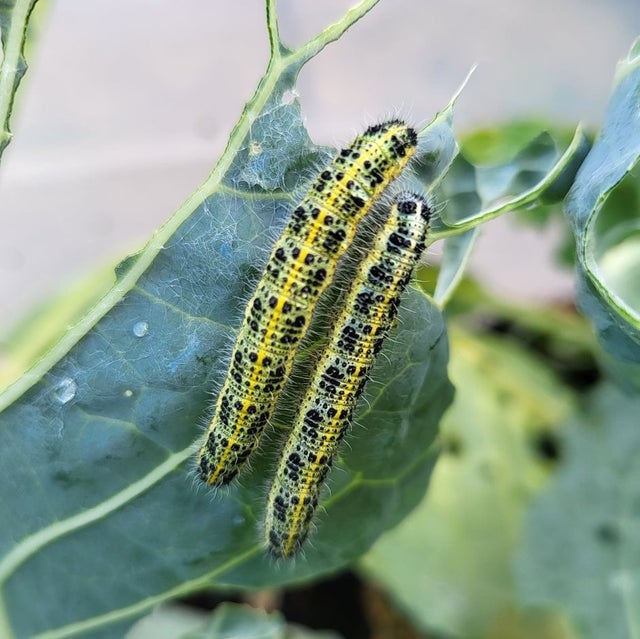
Hayley: Moths are a diverse insect group with 2,500 species in the UK. Most of the caterpillars you encounter in your garden are likely to be moths, and they’re a vital part of the food chain. They are also beautiful and fascinating too. For example‚ the silver Y moth, which has only a 4cm wingspan, makes 1,000-mile journeys migrating from Africa to the UK in summer.
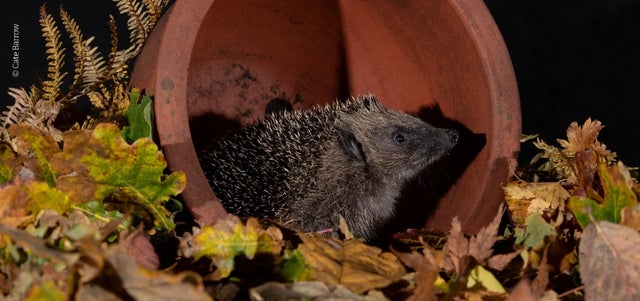
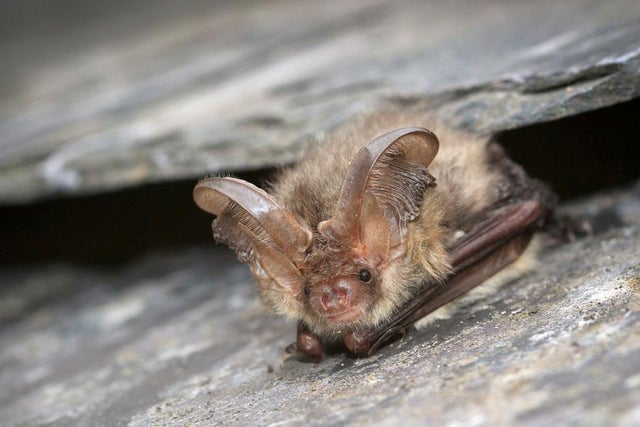
Kate: One baby blue tit eats 100 caterpillars a day for the first three weeks of its life, and there can be up to 14 blue tits in one nest so if you put up a nestbox, you should also grow caterpillar food plants. So many things eat moths: birds, hedgehogs, bats, frogs, toads and small mammals. They form the backbone of our garden ecosystems‚ particularly in the precious little amount of green left in urban spaces. There’s also evidence that moths are more efficient pollinators than bees and other day flying insects. The more that we do for moths, the more we do for all wildlife.

Hayley: Yes. Because of their diversity, moths are an extremely useful indicator species for the overall health of an ecosystem. They’ve been well studied for decades so there’s plenty of data, which means moths can help us look after other insect groups that we know less about. This isn’t just about monitoring declines‚ moths can help us track improvements as habitats are restored and inform what’s working and what’s making a difference. Take Project Psyche, an international initiative that aims to sequence the genomes of all 11,665 butterfly and moth species in Europe. Scientists are currently diving into the DNA of this insect group to uncover why and how it has the ability to form new species relatively quickly in evolutionary terms, which could help inform conservation and address challenges such as food security.
Hayley: There is no clear-cut line between them – they’re both in the Lepidoptera family. It’s we humans that have drawn the distinction. Moths generally fly at night, but 150 of our UK species are day flying – that’s more than double the number of our resident butterfly species. While butterflies tend to hold their wings upright at rest, a moth typically holds them tented around its body or flat against the surface that it’s on. Look at the antennae, too: butterflies have bobbles on the tips while moths’ antennae are usually straight or feathered.
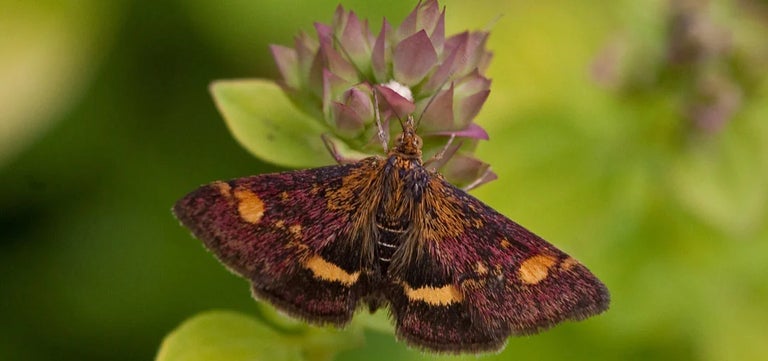
Kate: It’s also a misconception that butterflies are colourful and moths are a drab brown. The garden tiger moths in my garden have forewings marked like a giraffe, underwings that are red-orange with petrol-blue spots and their caterpillars have crazy Mohican haircuts. They’re like fashion icons. Although the enormous convolvulus hawk-moths that like to sit on my washing are brown, they’re so majestic‚ and a little flap of their wings reveals a pink and black pin-striped body. I’ve attracted these moths by planting lots of caterpillar food plants‚ including knapweeds, grasses and nettles.

Hayley: Some species use camouflage to hide from predators, some have bright colours or patterns to scare or startle them, and others have markings that mimic other creatures like wasps or hornets. These vibrant and complex patterns are possible because moths are covered in thousands of scales, like tiles, which are so small their bodies look furry. As well as keeping them warm, the scales easily detach‚ so if a moth is grabbed by a predator, it can escape.
Kate: Another amazing method some moths use to avoid being caught by bats is to produce rapid ultrasonic clicks to jam their echolocation. They make themselves temporarily invisible.
See moths in your garden
The simplest way to see moths is to throw a white sheet over your washing line and, after dark, shine a torch on it “Moths in the area will quickly turn up,” says Kate. For a closer look, make a rudimentary trap on a dry night by putting eggboxes in a bucket and fashioning a funnelled cover so it’s easier for moths to enter than exit, then add a torch on top to attract them. “In the morning, the sleeping moths will be easier to identify. You won’t harm them as long as you’re gentle,” says Hayley. You can upgrade to a professional trap with a more attractive light source. Leave it in a shady place for the rest of the day but remove the cover by nightfall so the moths can fly away.

Hayley: UK moths have declined by 33% since 1968, and many species have disappeared from our shores‚ but the good news is that it’s easy for us to help them. Some are picky eaters and only consume one plant, while others are more generalist, so the more diverse your garden, the more you’ll cater for. Some adult moths use -rich plants to supplement their energy. Help them by planting a range of strongly scented flowers, especially night-scented ones like Oenothera biennis (evening primrose) or Hesperis matronalis (dame’s violet). Ivy is a great late source of nectar, too.
Kate: We need to consider their full lifecycle, not just notice them as flying adults. Right now‚ your garden may have moth eggs on twigs and leaves, caterpillars in leaf litter or debris, as pupae just beneath the soil surface, or as adults sheltering in ivy or under a shed roof. So before you prune your hedge, tidy up a messy corner, or hoe or rake the soil, think what might be living there. We need to get better at sharing our gardens.

Kate: Yes. Some species spend years as caterpillars‚ and some have reduced mouth parts and don’t eat as adults‚ so they need to get all their energy in the larval stage. To help moths, we have to feed caterpillars. Only a few species strip food plants‚ plenty more exist in gardens unseen. I only noticed twenty-plume moths in my honeysuckle when tiny pink caterpillars started abseiling down to the ground to pupate. More than 90% of caterpillar food plants are , so growing more of these really helps.
Hayley: Light pollution distracts moths. The more sources there are, the longer they spend flying to them instead of feeding or mating. Angle lights down, switch them off when you’re not using them and use warm-toned rather than blue or white.
Kate: Studies are now starting to show that caterpillars also react to light – they might be distracted and move towards it, or it may trigger nocturnal feeders to hide.

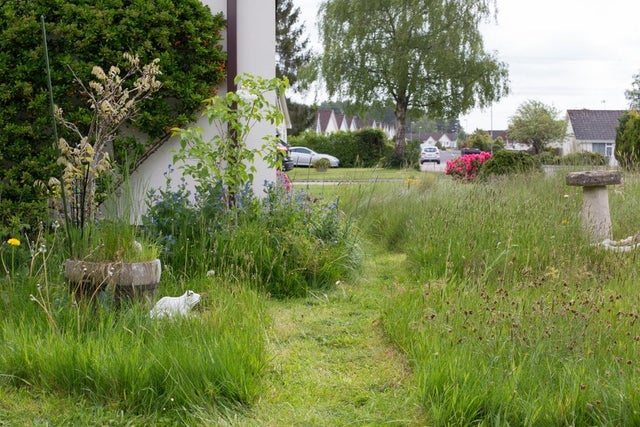
Kate: Let an area of grass grow long. I haven’t counted the moths‚ but I have five butterfly species breeding in a tiny meadow in the front garden of my terraced house.
Hayley: Get your neighbours on board too. Studies show that a street full of gardens can significantly boost moth numbers. You don’t have to all plant the same things; it’s diversity, across a local landscape that matters.

“With a wingspan of up to 18mm and once common across Britain, numbers have significantly decreased since the 1980s. The caterpillars are nicknamed ‘woolly bears’ because of their long black and ginger hairs.”
Caterpillar food plants: Nettle, burdock and many garden plants.

“This night-flyer often rests on walls or in vegetation during the day, looking like a withered autumn leaf. It’s common across Britain, overwintering as larvae so its chunky green to brown caterpillars are seen all year.”
Caterpillar food plants: Herbaceous plants, shrubs and trees, especially birch.

“This striking pink and olive-green moth is still common in UK gardens. Its 8cm long caterpillars have eye-like markings to ward off predators.”
Caterpillar food plants:Fuchsia, rosebay and other willowherbs, Circaea lutetiana (enchanter’s nightshade) and Galium (bedstraw).

“This easy to identify species‚ whose name translates as wonder of the day is often seen on ivy in early autumn. Caterpillars are common across most of the UK, perfectly camouflaged against bark.”
Caterpillar food plants: Oak – leaves and immature flowers of Quercus robur and Quercus petraea.