Getting Started
Forming a fountain of slender arching foliage, lemon grass thrives in warmth and full sun. The lemon-flavoured stem bases of this tender herb are a popular ingredient in Asian cuisine, particulalry Thai dishes.
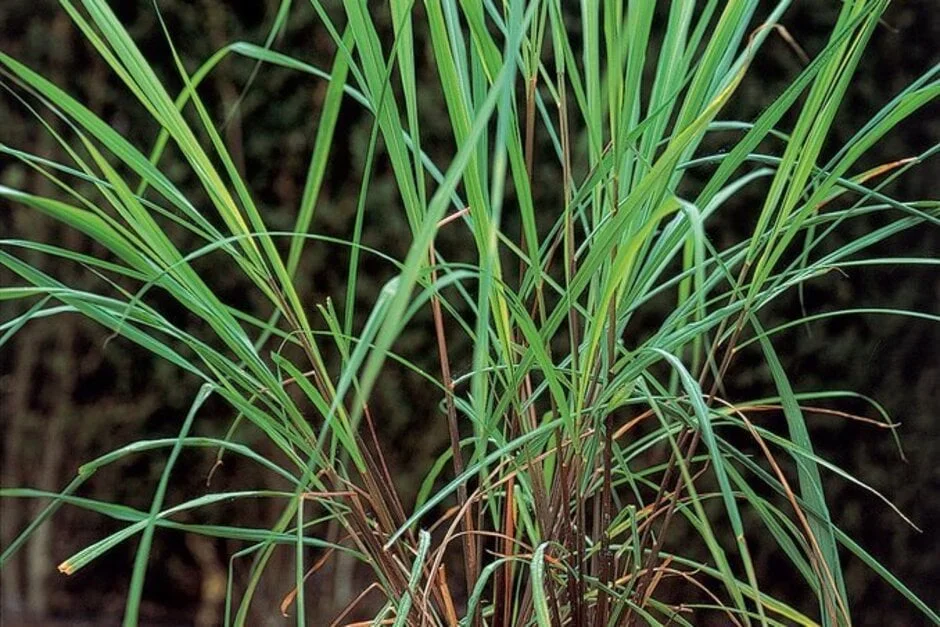
Lemon grass (Cymbopogon citratus) is a tropical grass, originally from India and Sri Lanka, so isn’t hardy in the UK and needs protection from frost. It's ideal for growing in a container that can be placed in a warm, sunny spot in summer, then moved indoors over winter. If you don’t have space indoors in winter, simply treat it as an annual and grow fresh plants every spring.
Allowed to grow from year to year, lemon grass will form a large clump of narrow leaves that remain evergreen if given warm, bright conditions. Plants can reach 1.5m (5ft) tall and 1m (3ft) wide, although are unlikely to reach this size when grown in a pot in the UK. The swollen stem bases bring a rich citrus flavour to curries, soups and sauces, and can be infused to make a refreshing tea.
Jobs to do now
Move plants inside
Water if needed
Month by Month
Sow
Plant
Harvest


Choosing What To Grow
The most widely available lemon grass is Cymbopogon citratus, although you may sometimes find the slightly more compact East Indian lemon grass, C. flexuosus.
What and where to buy
Lemon grass seeds can be bought in larger garden centres and from online seed suppliers. Young plants may also be available in spring and summer, mainly from specialist herb suppliers.
There are risks (such as introducing plant diseases) associated with growing lemon grass from stems bought in supermarkets and food shops, so this should be avoided.
Recommended Varieties


Sowing
It’s easiest and quickest to buy young lemon grass plants in spring from a herb nursery or garden centre, but it can also be grown from seed sown indoors.
Sowing indoors
In early to mid-spring, sow lemon grass seeds in small pots or modular trays filled with peat-free . Sprinkle seeds thinly on the surface and cover with a thin layer of fine . Place them in a or on a warm windowsill at 20–25°C (68–77°F). should take two to three weeks.
Keep the compost slightly moist and keep the warm and in good light. Move them into slightly larger pots if necessary, once the roots show through the holes in the base. They can be moved outside in early summer – see Planting below.
Planting
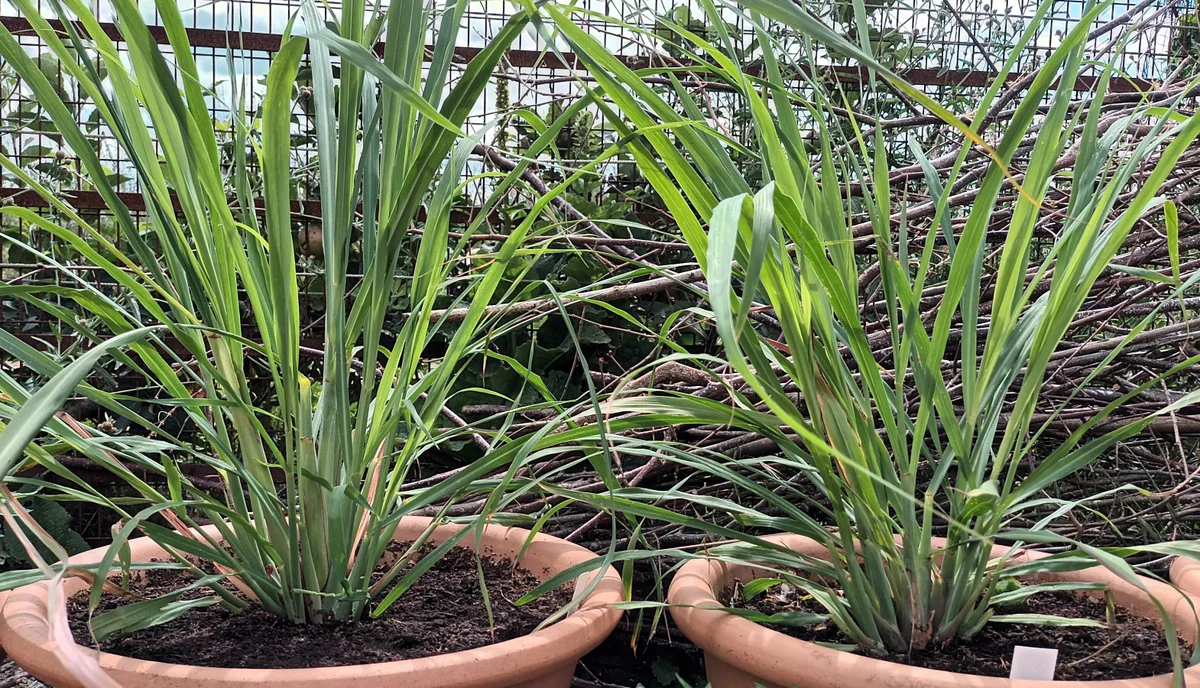
Lemon grass plants, either raised from seed indoors or bought as young plants, can be moved outdoors in early summer. Acclimatise these tender plants gradually to outdoor conditions by hardening off first. To really grow well and thrive, lemon grass needs temperatures of at least 13°C (55°F). In cooler locations, it is best to keep plants in a warm, bright conservatory or greenhouse all year round.
Lemon grass is best planted in a container, so it’s easy to bring indoors in autumn to protect it from winter cold and wet. You can also plant it in the ground, and either treat it as a short-term annual herb or pot it up in autumn and bring it indoors.
To plant in a container – in early summer, choose a pot that is slightly wider and deeper than the pot your plant is currently in and add peat-free multi-purpose . Position your plant in the centre of the pot and back fill with compost, planting it at the same level it was previously growing. Firm down the compost, water well and place the pot in a warm, sheltered, sunny location.
To plant in the ground – choose a site in full sun with fertile, free-draining soil. No soil preparation is generally needed before planting. However, if your soil is poor, mix some well-rotted organic matter into the soil you remove from your planting hole and use this to backfill after planting. This minimises soil disturbance and will encourage good root growth. If growing more than one plant, space them at least 30cm (1ft) apart.
Plant Care
Lemon grass needs little maintenance if grown in a sunny, sheltered site over summer and kept warm indoors over winter. It's advisable to wear gloves when handling lemon grass, as the mature leaf blades can be sharp.
Watering
If you're growing lemon grass in a container, check the regularly, especially in warm weather, and water it enough to keep the compost evenly moist. If planted in the ground, water initially until well rooted, then you should only need to water in dry spells. Adding a mulch to the soil surface straight after planting will help to hold in water. For water-saving tips, see our guides below.
When plants are indoors during winter, low light levels will slow the rate of growth, so water sparingly.
Feeding
Lemon grass grown in a container will benefit from additional feeding during the . Either add a slow-release general-purpose fertiliser to the when new growth appears in spring, or apply a general-purpose liquid feed every two or three weeks from spring until late summer.
Winter protection
Lemon grass is tender, so bring it indoors in autumn, before overnight temperatures fall below 7°C (45°F) in your local area. Cut back the top growth if necessary, then place it in a bright position where temperatures remain above 7°C (45°F). Lemon grass won’t usually survive outdoors in UK winters, even in mild areas, and an unheated greenhouse may be too cold as well.
Cutting back
Remove any tatty or faded foliage on an ongoing basis to keep plants looking their best. Then cut all the leaves down to 5–10cm (2–4in) from the base, either in autumn if you’re short on indoor space over winter, or in early spring, when new growth starts.
Propagating
To make more lemon grass plants, divide established clumps in spring. Tip the plant out of its pot, then use a knife or sharp-bladed spade to cut the into two or more pieces, each with a good set of roots and several strong stems. Replant each section into its own pot, then water in well.
Harvesting
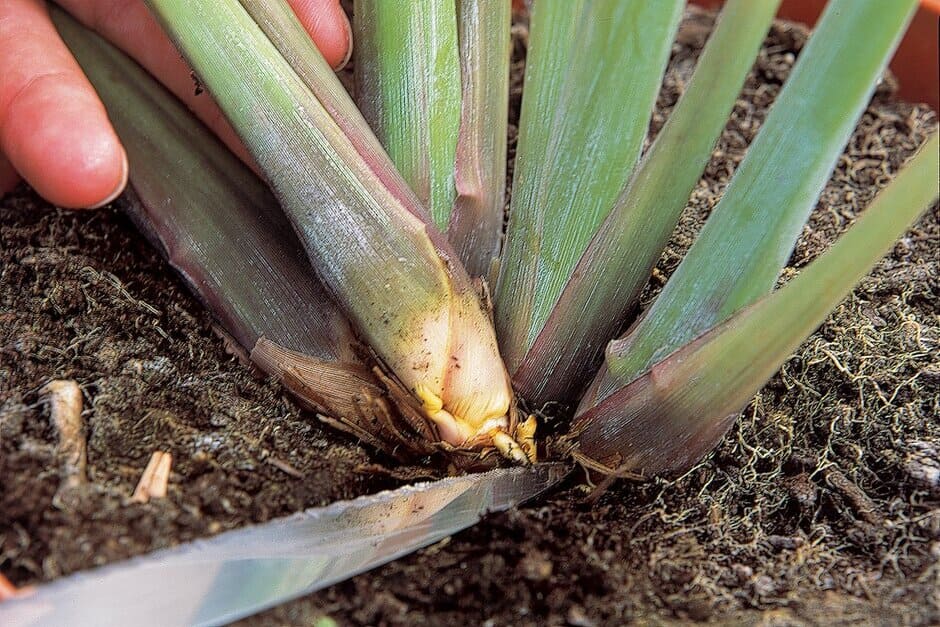
Lemon grass stems can be harvested during the , usually from May until September. Choose stems with swollen bases that are at the edge of the clump and cut or pull them off as low down as you can.
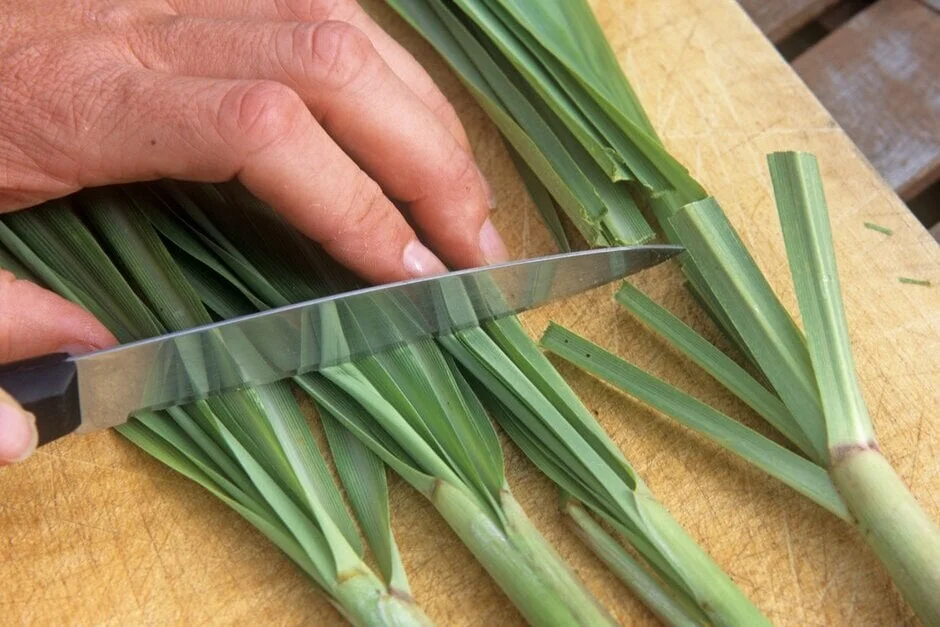
Prepare the stems by trimming off the upper sections of leaves, retaining only the lower 10cm (4in) of stem for use, as this has the best flavour. The base of the stems can then be sliced or chopped into dishes, especially curries, or used in sauces to add a citrus flavour. The upper sections of leaves are usually too tough to be used in cooking but they can be infused to make a refreshing lemony tea. The leaf blades can be sharp, so take care when handling them.
Problem Solving
If grown in suitably warm, bright conditions, lemon grass is generally problem free. Plants can live for many years, forming large clumps. Just be sure to bring plants indoors over winter. Rust can occasionally affect the leaves, and plants grown in a greenhouse are susceptible to whitefly. See Common problems below for information on tackling these issues.
Common Problems

Glasshouse whitefly
Glasshouse whitefly is a common sap-feeding insect, mainly of house-plants and greenhouse plants. They excrete a sticky substance (honeydew), which al...

Rust diseases
The rusts are amongst the most common fungal diseases of garden plants. Trees, shrubs, herbaceous and bedding plants, grasses, bulbs, fruit and vegeta...
