How will AI change gardening?
Artificial Intelligence is here, and it’s already shaping the way we garden. Should we be worried? Or should we embrace the most momentous technological innovation since the Industrial Revolution?

With a smidge of imagination, you can transform ordinary woody plants and trees into the most amazing art forms
Gardening, at its best, is a form of art. You’ll probably have heard garden designers describe their creative process as painting with plants, but I find the most enjoyable artistic outlet in the garden to be the pruning and training of our cherished shrubs and trees – a practice where the gardener is turned sculptor.
As with any artistic discipline, the only limit upon the beautiful shapes and striking forms that can be achieved is in the gardener’s own imagination. From simple domes to pleasing cones, intricate rose-stem latticework, and even yew-shorn golden retrievers, I’ve seen countless garden shrubs and trees transformed into spectacular sculptural features. And while it can take a little time and practice to perfect the craft of creative pruning and training, it really can be done by anyone, in any size of space.
Creatively shaped trees and shrubs can provide focal points throughout the garden and playful moments that help us to express ourselves. Let’s not underplay the benefits to our mental health too, in what is the perfect mesh between the therapeutic acts of gardening and art.

For me, trained fruit trees are where I find the greatest joy. This most rewarding form of pruning not only offers structural merit but also that of flowers and fruit, and the endless benefits to our garden wildlife, too. At RHS Partner Garden West Dean, West Sussex, where I’m Head Gardener, I’ve been fortunate to inherit a host of apple and pear trees that have, over the years, been lovingly nurtured into goblets and mitres, circles and double cordons. They add an exquisite dose of drama to the garden throughout the year and it’s a tradition that I’m continuing to invest in, with lots of new and exciting cultivars worth adding to the collection.
Other gardens provide excellent inspiration too: there are some wonderful examples of U palmettes at The Newt in Somerset, where both single and double U-shaped trees have been trained against walls, pairs of parallel stems emerging at right-angles from the trunk before arching skywards. When not in leaf, the shape alone is spectacular; when adorned with fruit, it’s divine. Elsewhere in the Kitchen Garden at The Newt, shin-high stepover cordons transform a simple border boundary into a playful and productive feature. Now, that would look fabulous in any home veg patch or allotment.
"This is the most rewarding form of pruning: structural merit, flowers and fruit"
Of course, when it comes to fruit trees, very few gardens can rival the range on display at RHS Garden Wisley in Surrey. The winged pyramid trees are truly works of art. If you’re limited on space and looking for inspiration, you can’t do much better than a pyramid-trained apple – or even a pair of them, for the sake of and symmetry alike.
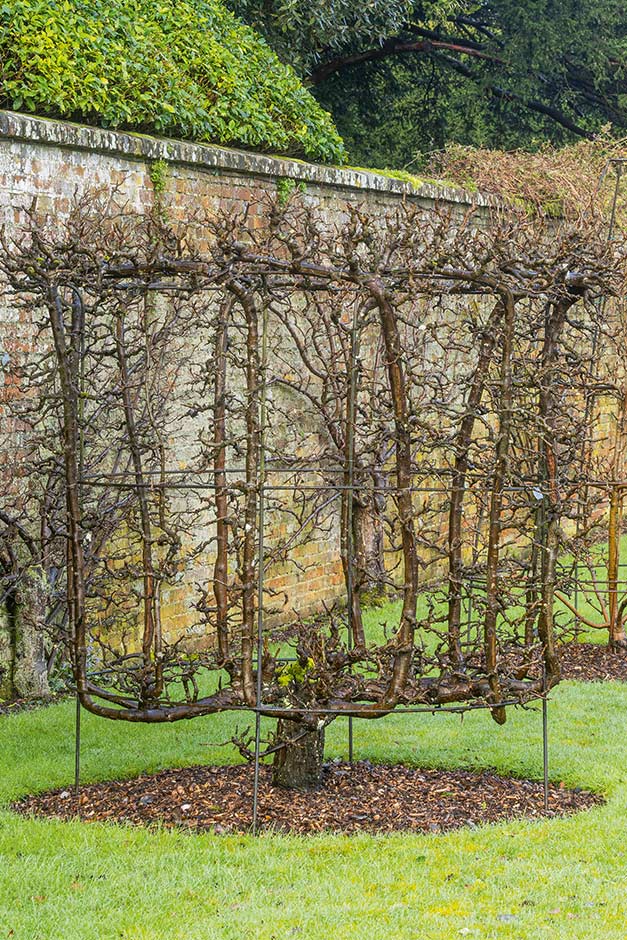
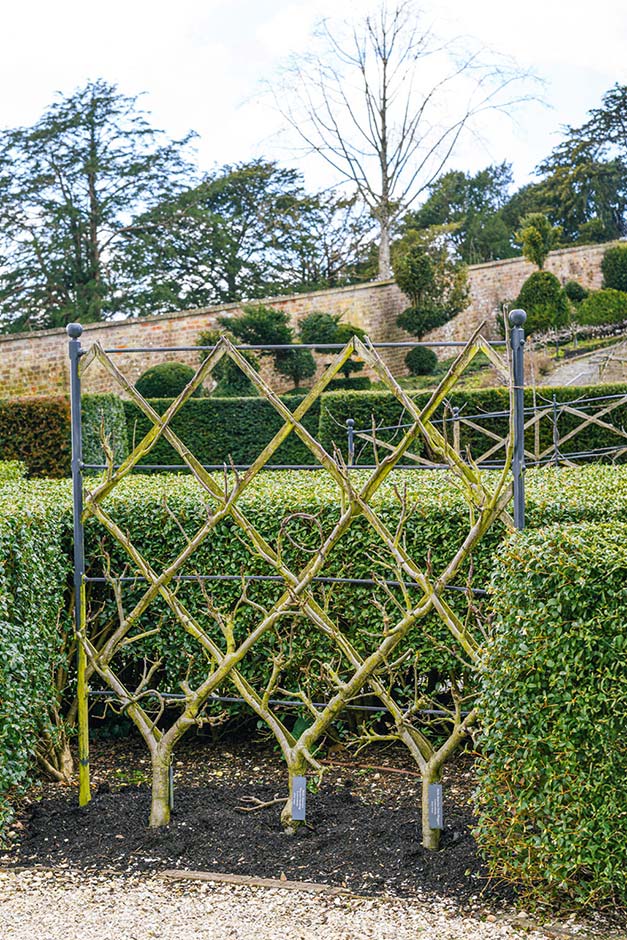
With all pruning and training we’re managing the way in which trees respond to our actions – we’re not just considering how the plant will look when we’re done, but how it will look through that process, during and after its next . Training fruit trees isn’t a matter of instant success – it can be a long game, but trust me, it’s worth the time and effort.
Cold cuts: Young fruit trees need to be pruned hard in winter. This feels counter-intuitive, but it creates an eruption of fresh growth that can be manipulated to form the basis of many shapes. As a trained tree becomes more established, pruning in summer promotes a gentler response from the tree, which will help you maintain the required shape.
Show of strength: Creating these forms from young trees requires some serious support frameworks. Use strong wires at 20cm spacings to make shapes against a wall. Free-standing forms need robust wire frames with canes tied in.
Invest in the right stock: It’s important to consider your fruit tree’s rootstock. Too vigorous and it will make managing annual growth tricky, but a dwarfing type won’t have enough vigour from which to train the young shoots. Apple rootstocks MM106 and M26 are good all-rounders, with the vigour and tolerance to grow in most garden conditions. For smaller gardens or stepover trees, M27 and M9 are better suited. Quince A rootstock will suit most pear trees.

Iadore the way topiaryallows gardeners to express themselves. These plants stand as symbols of the time, creativity and love that’s been poured into a garden by its caretaker.
Evergreen plants provide much-needed colour and structure, especially during winter. The impact of that structural drama is magnified by artistic pruning. Evergreen shrubs such as Ilexor Ligustrum, along with their muchloved coniferous counterparts, including Cedrus, Pinus, Taxusand some Cryptomeria, always create strong outlines, especially when seen from a distance. Buxustoo, of course, has historically been a favourite of the creative pruner, though it’s no longer considered to be a sustainable choice thanks to box tree caterpillar and box blight.
"A plant’s structural drama is magnified by artistic pruning"
We can all visualise those looming statue-like topiary forms piercing a grey, misty morning, offering a comforting constant and sense of timelessness. The emotions and feelings that are conjured by such visions are not exclusive to stately homes or gardens of vast scale; they’re magical moments that can be created in our own gardens. It’s on a smaller scale, yes, but no less powerful.
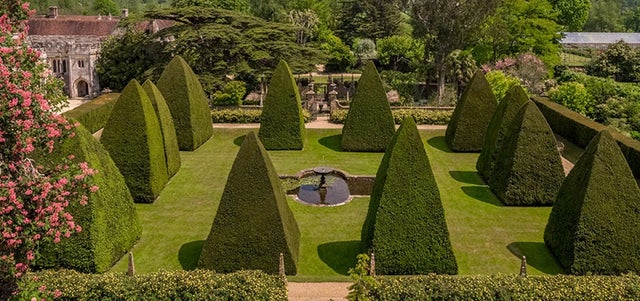
For inspiration, look to Levens Hall in Cumbria, which is arguably one of the most famous topiary gardens in the country, if not the world. Here you’ll find predominantly yew topiary shapes including wacky mammoth mushrooms, spirals and giant chess pieces, with some creations having graced the garden for 300 years. The yew characters in the garden are as much a part of the history at Levens Hall as the residents who have occupied the house.
Clouds of soft, green, pillow-like growth can symbolise the presence of a master pruner in a garden. Pines, yews, cedars, olives, hollies and even camellias can be shaped into sculptures reminiscent of a fantasy world. But an otherworldly power is not necessary to create such wonders in a garden – all you need is a vision, a little patience and some regular tweaking.
Start them young:Sculpting an evergreen from scratch is less complicated than you might think. Start with a young plant, have an idea of the shape that you’re ultimately aiming for, start to select the branches you wish to work with, and remove the unwanted ones. Take your time with this. Sleep on a decision, if necessary – once you’ve cut it off, you can’t stick it back on!
Play the long game: Transforming a mature plant into a creative sculpture is possible, but along with your vision and sharp tools, patience is key. Some transformations may take a number of years, but the joy is not in the destination, but in the creative journey.
Right tool, right time: Pruning should be carried out during summer to maintain a shape through the winter months. Sharp shears or secateurs are a must for beautiful, crisp lines, but avoid using shears on larger-leaved plants as cut or damaged leaves can look unsightly.

The winter garden is full of skeletal forms of plants and this absence of foliage is not a shame, but a virtue. With imaginative pruning and training you can turn an ordinary shrub or climber into something quite spectacular. Arosein its can be more dramatic than it is in full flower, just as a hornbeam can be more beautiful in its denuded form than when in leaf.
One of the areas of this style of pruning that has caught my imagination in recent years, and is accessible to us all, is rose training. Rose stems are incredibly malleable and can be manipulated into countless fascinating shapes. Jenny Barnes, Head Gardener at Cottesbrooke Hall in Northampton, has deservedly forged a reputation as one of the most artistic gardeners in the country with her elaborate rose-training techniques. The things she can achieve armed only with a pair of secateurs and a ball of jute string have to be seen to be believed.
Don’t be put off by her artistry; rather, be encouraged. Roses, whether climbers, ramblers, or even vigorous shrubs, are surprisingly easy to train into elaborate and colourful characters. It’s not all about roses, either. Other deciduous climbers can also be artfully sculpted to deliver a relatively fast-growing and ever-changing character within our gardens. Take wisteria – while not generally associated with small gardens, they can be grown in a tighter space if you get creative.
Try training a young plant up a pole in a corkscrew of lattice work until it reaches the top. Here, a cartwheel-like support can be erected, allowing the plant to follow a circular framework from which to flower and be maintained. Once at the top, that growth can be continually manipulated by tying it down, therefore reducing vigour, promoting more flowers and creating a more manageable moment of magic in spring.
As with all creative aspects of gardening, take the time to look around for inspiration and be bold with your experiments. Indulge your sense of playfulness. You don’t need to know a lot about gardening to create something magnificent; good timing and techniques help, but don’t underestimate the power of creativity.
Knock them sideways: Following the principle that horizontal growth will reduce the vigour and amount of foliage, plus in turn promote more fruit and flowers, it’s possible to create some wonderfully flowing, sculptural shapes with climbers and shrubs that will later be adorned with a multitude of blooms.
Get tied up in knots: You can train vigorous climbing roses into a fan shape with crossing branches to provide a fountain-style pattern to the stems during winter. Use string to cushion the crossing points so the plant won’t suffer, and limitless possibilities are unlocked.
Don’t forsake flowers: Deciduous trees such as Carpinus, Larix, Nothofagusand Parrotiatend to make good cones or cloud-like sculptures. Prune during late summer to allow enough time for the cuts to heal before the onset of winter. The majority of trees suitable for this style of pruning are grown for foliage, but flowering times need consideration as cutting too late or early can result in the loss of blossom.
This page is an adaptation of an article published in the October 2024 edition of The Gardenmagazine, free to RHS members every month when you join the RHS.