10 award-winning herbs
These herbs have valuable ornamental features as well as great culinary value. These attributes have earned them the RHS Recommended: Award of Garden Merit

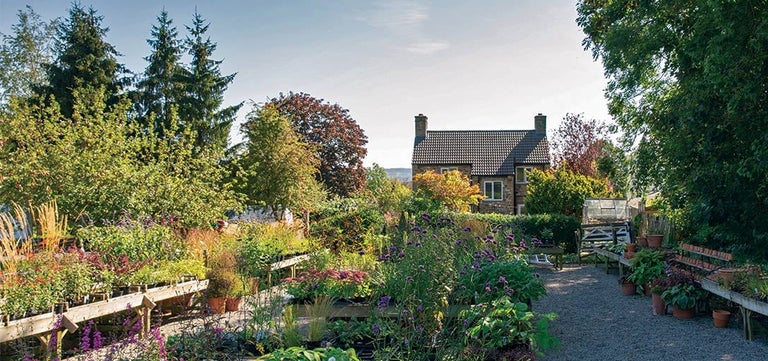
Step inside Kitchen Garden Plant Centre, the award-winning nursery growing more than 300 herb varieties using sustainable, peat-free methods, while championing flavour and biodiversity
“Taste this,” says Neil Jones, proffering a young leaf plucked from a beef and onion tree (Toona sinensis). “And you must smell this,” he adds, rubbing a fuzzy sprig of lemon balm (Melissa offcinalis) to add a fresh citrus twist to the heady layers of scent inside the polytunnel. It’s slow going, walking through the growing spaces at the Kitchen Garden Plant Centre: each of the Gloucestershire nursery’s 300-plus herb cultivars cries out to be stroked, sniffed and nibbled.
"We have 50 types of mint – we want everyone to experience this incredible diversity"
The mint are all so different “Mentha ‘Jessica’s Sweet Pear’ is amazing for making a fruity tea, and ‘Blackcurrant’ makes a fabulous sorbet. Strong and oily Japanese peppermint is ideal if you’ve got a cold.”

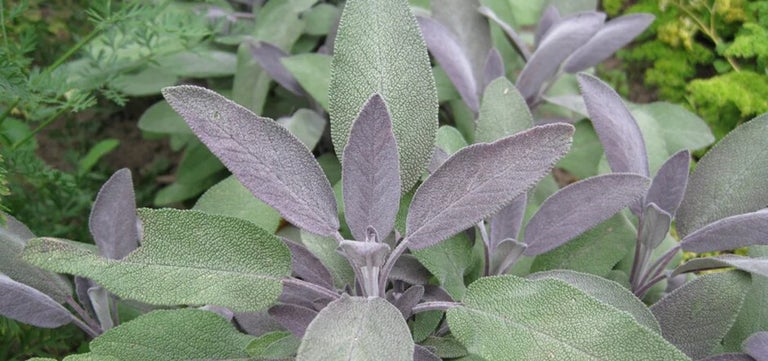
Smell, taste and touch are well catered for, but the nursery also offers a feast for the eyes. With venerable specimens of silvery lavender cotton (Santolina chamaecyparissus) swelling over the rim of a colossal terracotta pot and square anise hyssop stems stretching up to 1m high, these plants are surprisingly handsome left to grow to their full potential. They also offer an extensive colour range from golden-edged Salvia officinalis ‘Icterina’to crimson-stemmed salad burnet and pretty cascades of thyme ‘Pink Chintz’.
“You can use herbs in so many ways,” says Neil. “Maybe you’re interested in trying new tastes, or perhaps you fancy a border plant that’s useful as well as beautiful. By planting more herbs in your garden, you can explore a world of flavours, just waiting to be discovered.”
Since 2015, the Kitchen Garden Plant Centre has risen from humble beginnings to a thriving business with 13 RHS Gold medals under its belt. When the couple bought their house in a sizeable plot near the Forest of Dean, it was overgrown and littered with the remains of a derelict nursery, but with fertile sandy loam.

Entrepreneur Neil used to grow and houseplants and sell them outside his home as a schoolboy, while Niamh trained at the University of Bristol Botanic Garden. “Acers were my speciality,” says Neil, who, at 13, was Japanese maples as a weekend job, and continued working closely with the trees as a nurseryman then manager in Lincolnshire, Gloucestershire and Devon. “But Niamh wanted a herb garden, so we went to car boot sales to sell plants, and loved the interaction. So herbs became the base of our business. We both love to propagate – herbs are ideal because most are quick to raise, and we grow everything here from seed or .”
A self-built polytunnel was followed by six more over 10 years, with different functions. In the cosy bubble-wrapped propagation tunnel, neat trays of betony clusters sit on heated mats beside filigree feathers of bronze fennel and miniature musk mallow . Gradually, the plants are moved into a cooler environment, with tunnel vents providing a more generous airflow. “It can take as little as six weeks to grow a young plant to plug size in midsummer, then it has three weeks in a pot before it’s good to go,” says Neil. “But we grow things cold to make them tough. We mostly sell 9cm pots for starter herb gardens, so it’s important that when those roots hit the soil, the plant is strong and ready for growth.”

The last polytunnel houses hundreds of ready-for-sale plants in round pots, the staging covered in a vibrant patchwork of green tones kept lush by the overhead irrigation system. Since 2020, many are sold via mail order and a new parcel-packing shed was built last year. Nursery Supervisor Vicky joined the team in 2024, her previous role was growing and foraging for a Michelin-starred restaurant so she’s well-qualified for tasting new cultivars. “We do everything ourselves,” says Neil. “From taking cuttings and collecting seed to taking photos and writing descriptions for the labels, the plant’s full journey happens on site.
"I started at 5am and was watering last night until 9pm, and then I lie in bed and think about all the jobs that still need doing, and what’s next."

“Neil is always coming up with new ideas,” says Niamh. A recent addition is a signature garden of mature herbs, ringed by a pallet and chicken-wire fence to keep local wildlife out. “There are deer, foxes, badgers and so many rabbits that I massively overplant just to feed them,” says Neil. “They must be the healthiest rabbits around!”
Working with nature has always been part of the plan. “We take care of the land and put more back into it than we take out, and we don’t use weedkillers, so I never apologise for the nettles,” says Neil. The polytunnels are chemical-free too. “Sticky traps alert us to what we’re dealing with – sciarid fly or greenfly or whitefly – then I isolate the problem. The 300m-long mixed hedge we planted is full of ladybirds that help no end.”

The food forest garden, started eight years ago, contains edible fare for both humans and wildlife. Bright orange sea buckthorn berries and clusters of red fruit on the spiny Zanthoxylum piperitum ‘Sichuan pepper’ stems in early summer are followed by jostaberries, goji berries, medlar and quince. Even the perimeter hedge of Elaeagnus x submacrophylla (Ebbinge’s silverberry) produces cherry-sized edible fruit. More layers will be added in gradually as the beech, walnut and Pinus pinea (stone pine) mature and form a nut-rich canopy.
herbs are already providing some groundcover, such as Crithmum maritimum (rock samphire) and Persicaria odorata (Vietnamese coriander), whose leaves get hotter with age, and can really pack a punch. “Perennials are so easy to look after, too – why grow plain old French tarragon (Artemisia dracunculus) when you can have the much hardier A. dranunculus ‘Tolergon’?” says Neil. “And many are evergreen, like creeping lemon thyme, so you can harvest year-round.”
“It’s so good in a chopped salad,” says Niamh. “Would you like to taste it?”

Mentha longifolia subsp. schimperi: "Blend this Eastern mint with gunpowder green tea and sugar for an authentic Moroccan mint tea."
Green credentials
The nursery has been peat-free since it opened in 2015 with no pesticides or weedkillers used across the site. They re-use recyclable pots, a borehole provides water and solar panels are increasingly supplying the site’s energy needs. Wildlife makes good use of the hundreds of metres of native hedging and food forest garden.