
What is the future of roses?
As climate change forces us to rethink the way we garden, Ambra Edwards ponders what’s next for the nation’s favourite flower: the rose
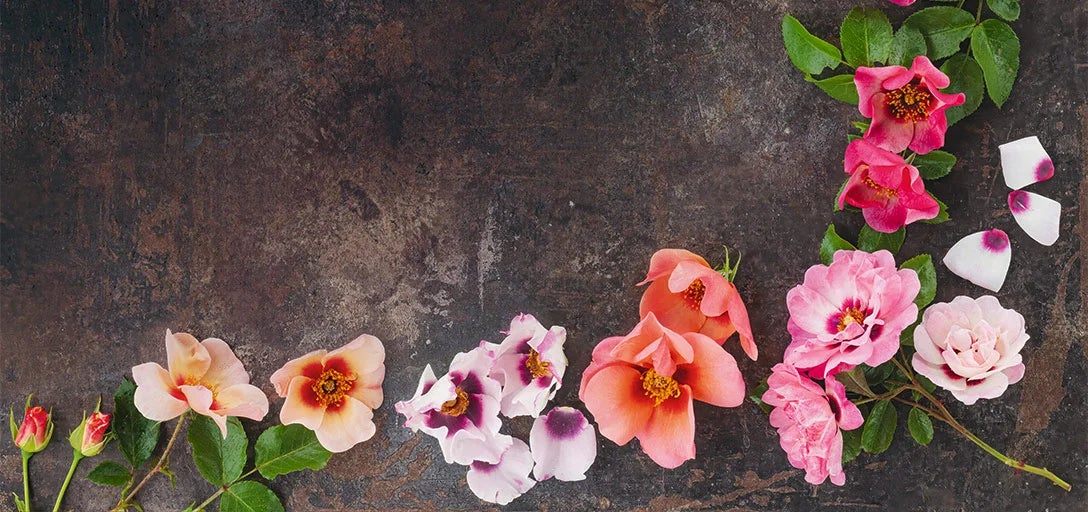
Thanks to their roots as desert plants, this group of twinkling-eyed roses can take the heat in a changing 21st-century climate
Persica hybrids trace their parentage back to the species Rosa persica, to Iran, Afghanistan and Russia. This low-growing, spindly rose with small, smooth-edged grey-glaucous leaves is found scrambling in its natural desert environment – nothing we’d immediately recognise as a rose in our gardens.
I grow more than 60 of these beautiful hybrids in my National Plant Collection in Norfolk, bringing together roses from the UK and across the world. They range from patio roses to shrubs and climbers, such as R. Peter’s Persica (‘Chewgoldeye’) and R. Chawton Cottage (‘Harxcel’). With their growing recognition, proven performance and natural heat tolerance, Rosa persica hybrids are well placed to thrive in the climate of tomorrow.
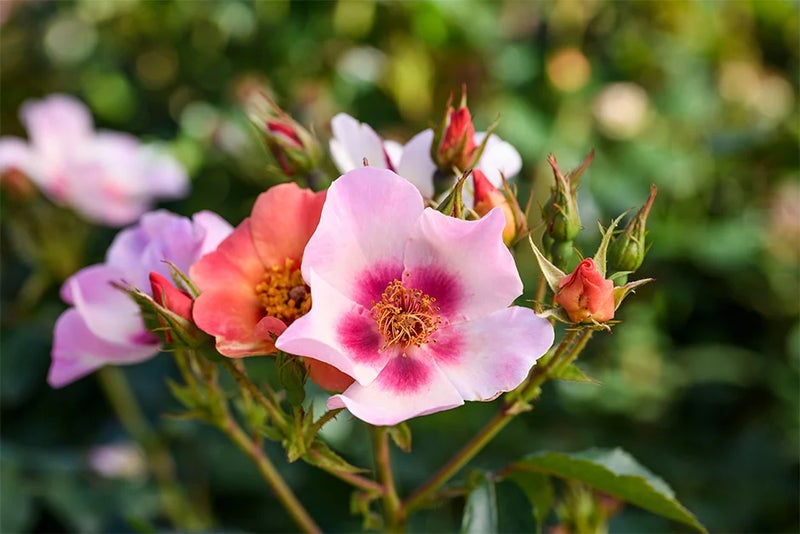
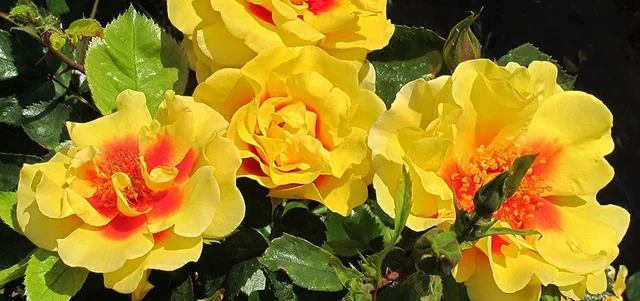
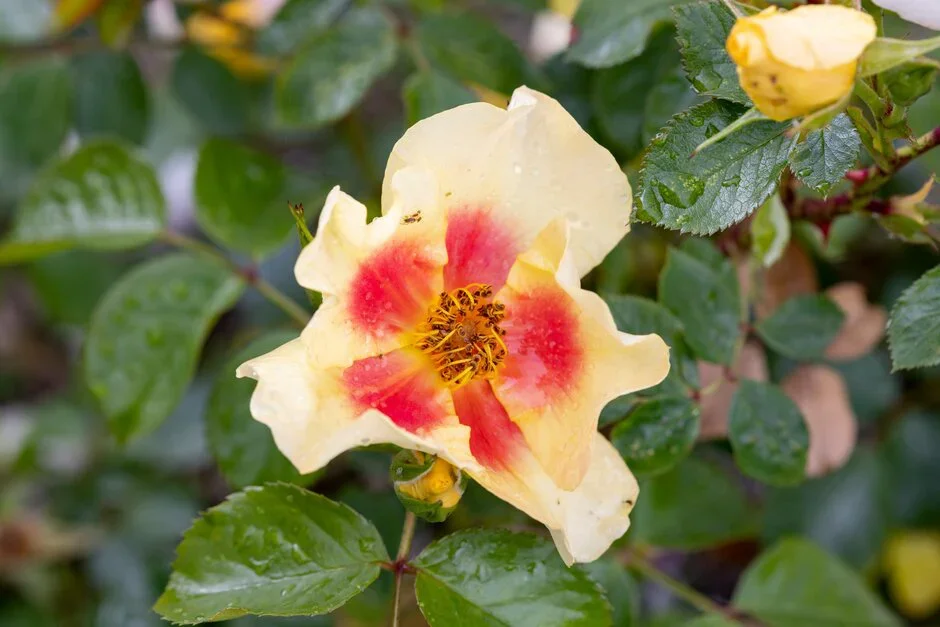
A notable feature of persica hybrids is the deep red blotch at the base of each petal, which creates an eye at the centre of its bright yellow, single flowers. This feature is unique to Rosa persica and captured the attention of plant hunters in the 1700s. The aim was to bring the rose back to western Europe and cross it with others to create hybrids that captured this beautiful eye trait. However, this was no easy task. It’s taken more than 200 years of perseverance to get to the 30 or so garden-worthy hybrids now available in the UK.
Breeding stumbled in the 1800s due to issues with sterility alongside difficulties in cultivating a desert plant in the more temperate European climate. A dead end was met. However, the story came back to life in the 1960s when Jack Harkness and Alec Cocker, eminent rosarians of their day, decided to look at Rosa persica anew. Fresh wild plant material was collected and a rigorous breeding programme embarked upon, creating new Rosa persica hybrids.
It took Harkness a further 20 years to produce four hybrids for commercial release in the 1980s: Rosa Tigris (‘Harprier’); R. Euphrates (‘Harunique’); R. Nigel Hawthorne (‘Harquibbler’); and R. Xerxes (‘Harjames’). While Harkness had succeeded in bringing persicas to market, they suffered from disease and didn’t capture the public’s attention at that time. Harkness then opened up his breeding work to others for free. A group of amateur rose breeders including Chris Warner, Ronnie Rawlins, Len Scrivens, Maurice Guest and Peter James took up the challenge, working together to take persica hybrids to the next generation.
"Many resist disease – perfect for gardening in the 21st-century."
A further 20 years passed before Peter James introduced R. Eyes For You (‘Pejbigeye’) in 2004. This purple-eyed persica was the first to repeat flower – a must for any modern rose. Chris Warner also became a full-time rose breeder and has since gone on to spearhead the development of perisca hybrids in the UK and across the globe, with such favourites as R. Eye of the Tiger (‘Chewbullseye’), R. Bright as a Button (‘Chewsumsigns’) and R. For Your Eyes Only (‘Cheweyesup’). This last one was 2015 Rose of the Year, awarded by Roses UK following trials, it received national press coverage and distribution, which really put persica hybrids on the map. With their growing recognition, proven performance and natural heat tolerance, Rosa persica hybrids are well placed to thrive in the climate of tomorrow.
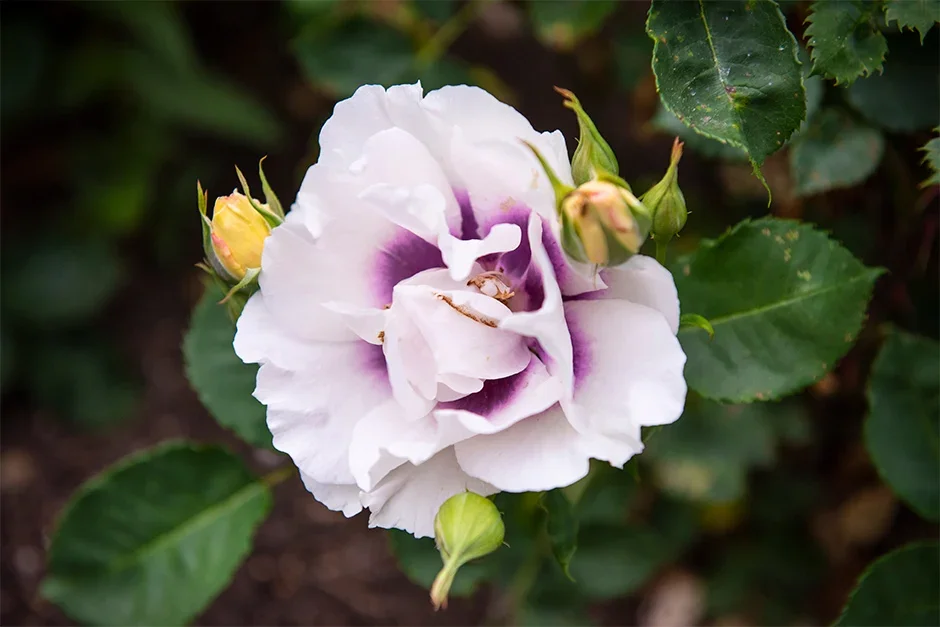
Persicas are adaptable to both light and heavy soils and, like all roses, will benefit from the addition of organic matter into the soil when planting. They’re long-lived, so you want to give them the best start possible. Roses generally need a daily dose of three to four hours of direct sunshine, but don’t be put off if you haven’t got the perfect situation. If your plot is a touch shadier, choose a healthy and vigorous , such as R. For Your Eyes Only (‘Cheweyesup’), which will cope better with a more stressful situation.
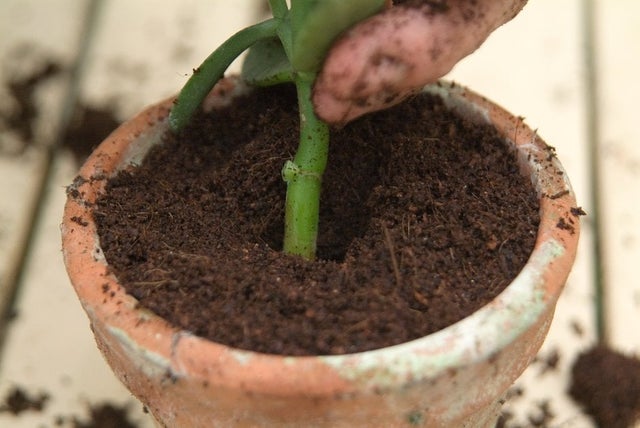
Many persicas suit being grown in pots due to their compact habit and great health. Use a 50:50 mix of a peat-free John Innes no. 2 or 3, mixed with peat-free multipurpose . The ideal mix will have enough substance to retain moisture, but not be too heavy to lift and move. Multi-purpose compost on its own is too freedraining and quickly depletes .
Some roses have a reputation for being hard-to-grow or requiring spraying with chemicals. Many modern hybrids, including persicas, break this mould. However, you still need to tend your roses. They’re hungry plants, so use a granular feed in spring and mid-summer – and, whether in the ground or in a pot, use liquid feed too. A well-fed rose will keep most diseases at bay.
"Don’t cut stems off if you find blackspot on the leaves in summer as this will weaken an already stressed plant. Instead, remove all affected leaves and keep feeding to encourage regrowth and reflowering."
Many persica hybrids are blackspot resistant, but the best advice to treat it and other diseases is to practise good husbandry. Clear away dead and diseased leaves, and in early spring to prevent spores in the soil becoming airborne and re-infecting new leaves as they emerge. Don’t cut stems off if you find blackspot on the leaves in summer as this will weaken an already stressed plant. Instead, remove all affected leaves and keep feeding to encourage regrowth and reflowering.
A rose monoculture can encourage disease, so plant them in mixed borders with herbaceous perennials such as Salvia nemorosa ‘Caradonna’,Nepeta or hardy geraniums. Consider the width of the rose and surrounding plants so they aren’t overcrowded.
Persica hybrids benefit from pruning. As they can take a range of forms including shrubs and climbers, prune them according to type. Never be afraid of pruning – it won’t kill a rose. It’s best done in January or early February while the rose is dormant. If in doubt, prune to form a wellbalanced and shapely shrub. Deadhead through summer to encourage re-flowering, but consider leaving some spent flowers in late summer so you can enjoy hips through the autumn and winter.
The diversity of form and colour of persica hybrids, coupled with generally good disease resistance, means they are easy-to-grow and garden-worthy roses, perfect for gardening in the 21st century. The myth that roses are hard to grow is to be dispelled.
Daniel’s notes
Family:Rosaceae (along with apples, spiraea and potentillas)
Cultivars: More than 60 hybrids globally; with 30 or so commercially available in the UK
Growing conditions: Full sun to partial shade; adaptable to light or heavy soils
Hardiness: H7 (-15°C to -20°C)
Wildlife value: Great for pollinators, with flowers from late May to October
Problems: Mainly disease resistant, but some can suffer blackspot and other rose diseases. Subject to usual rose pests including aphids and sawfly
Propagation: Bud-grafting or by cuttings
Suppliers: Widely available. Specialists include C&K Jones; Harkness Roses; Pocock Roses; Style Roses; and Trevor White Roses
This page is an adaptation of an article published in the June 2025 edition of The Gardenmagazine, free to RHS members every month when you join the RHS.