Rosa persica

RHS Plant Profile
barberry-leaved rose
barberry-leaved rose RHS

Synonyms

Hulthemia persica

Plants for pollinators
Roses Shrubs

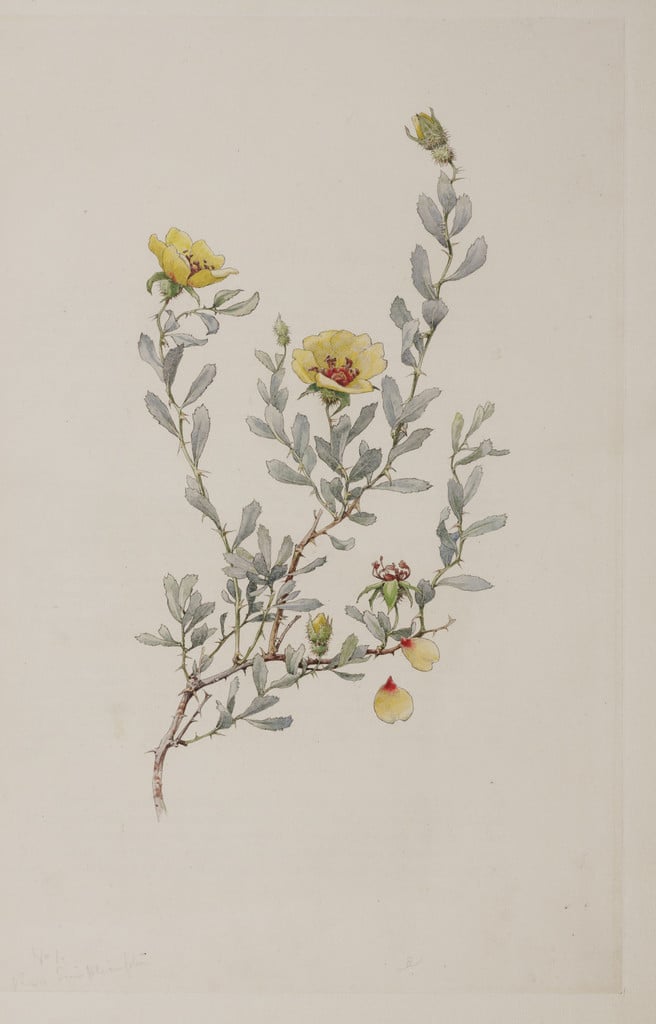
A sparsely-branched, spreading, species rose to 50cm with silvery-grey leaves composed of a single leaflet. The small, single flowers, sporadically produced in late spring and early summer, are bright yellow with a deep red blotch at the base of each petal. They may be followed by large, dark brown hips with long bristles

Position

Full sun

Soil Types

Chalk, Loam, Sand

Max Height

0.1-0.5 metres

Max Spread

0.5-1 metres

Size

Time to Maturity
2–5 years
Max Spread
0.5-1 metres
Max Height
0.1-0.5 metres

Growing Conditions

Chalk Loam Sand
Moisture
Well–drained
pH
Alkaline or Neutral

Position

Full sun
Aspect
South–facing
Exposure
Exposed
Hardiness
H6
Drought Resistance
Yes

Colour & Scent

Season Stem Flower Foliage Fruit
Spring
Summer
Autumn
Winter

Botanical Details

Family
Rosaceae
Native to GB/Ireland
No
Foliage
Deciduous
Habit
Bushy
Potentially harmful
Fruit are ornamental - not to be eaten. Wear gloves and other protective equipment when handling. Pets: Fruit are ornamental - not to be eaten - see the HTA guide to potentially harmful plants for further information and useful contact numbers
Genus
Rosa can be deciduous or semi-evergreen shrubs or scrambling climbers, with usually thorny stems bearing compound pinnate leaves and solitary or clustered flowers. Flowers may be followed by showy red or purple fruits in some varieties.
Name Status
Correct
Plant Range
Asia

How to Grow

Cultivation

Grow in fertile, humus-rich, well-drained soil in full sun. Mulch with well-rotted organic matter in late winter or early spring, and for best flowering apply a general rose or shrub fertiliser in early spring and again in early summer. See rose cultivation

Propagation

Propagate by softwood cuttings in early to mid spring, hardwood cuttings in late summer to autumn or by chip budding in summer; propagate by seed; species roses can be propagated by seed but need stratification and germination may take two seasons

Suggested planting locations and garden types

  • Cottage and informal garden
  • Gravel garden
  • Wildlife gardens

Pruning

See pruning group 20 (shrub roses), don't deadhead flowers if fruits (hips) are required

Pests

May be susceptible to aphids, including rose aphid, the most common rose pest. May also be susceptible to rose leafhopper, glasshouse red spider mite, scale insects, caterpillars, large rose sawfly, rose leaf-rolling sawfly and leaf-cutter bees. Deer and rabbits can also cause damage

Diseases

May be susceptible to rose black spot, rose rust, replant disease, rose dieback, and rose powdery mildews. May also be susceptible to disorders rose blindness and flower balling and sometimes honey fungus