Narcissus ‘Telamonius Plenus’ – the resilient daffodil
James Armitage travels back four centuries to tell the tale of apothecary John Parkinson, and one extremely durable daffodil.
James Armitage
Editor, The Plant Review and The Orchid Review Yearbook
3-minute read
Have you ever stood looking at a plant in your garden and thought, “I’m sure I didn’t put that there”? Like a floral Captain Kirk, it just suddenly seems to have materialised out of nowhere. Some plants excel at doing this, chief among them Narcissus ‘Telamonius Plenus’.
The key to this dauntless bulb’s disappearing act in reverse is its hard-as-nails, never-say-die resilience. Be it in orchards, hedgerows, churchyards or old gardens, it shows an amazing will to persist, its merry yellow flowers bursting forth long after the souls who planted it have shuffled off their mortal coils. And there’s certainly been ample time for this penchant for perseverance to assert itself.
Tale of a durable daffodil
Ancient, unusual and full of character, Narcissus ‘Telamonius Plenus’ has brightened the late-winter landscape for centuries
The origins of ‘Telamonius Plenus’ are still not absolutely certain, but to probe them we need to peer through the mists of horticultural time all the way back to early-17th-century London and the garden of one of the greatest names in the history of horticulture: John Parkinson.
Born in 1567, Parkinson moved to London from Yorkshire when he was 14 years old to begin his training as an apothecary (something like a pharmacist today). He rose quickly in his profession and became apothecary to King James I and then Royal Botanist to King Charles I. A founder member of the Worshipful Society of Apothecaries, he was responsible for a botanical garden at Long Acre, near Covent Garden.
Horticulturist, academic, plantsman extraordinaire and obsessive acquirer of unusual plants, Parkinson’s influence on gardens and gardening reaches down the centuries even unto the present day. More than any of his other notable achievements, Parkinson is perhaps best remembered for the most famous of his written works, Paridisi in Sole, Paradisus Terrestris, a kind of gardening manual published in 1629. In it, under sections on the flower garden, kitchen garden and orchard garden, he offers instruction on such things as soil improvement, propagation and planting, as well as discussing the plants then available to grow.
Daffodils, clearly, were of major interest to both Parkinson and his 17th-century readers. He devotes 41 pages to them, described under a chaotic array of archaic nomenclature. Among these entries can be found, bearing the tongue-twisting name Pseudonarcissus aureus Anglicus maximus, or Mr Wilmer’s Great Double Daffodil, a plant that we could still recognise today as Narcissus ‘Telamonius Plenus’.
One daffodil, many names
Alamy
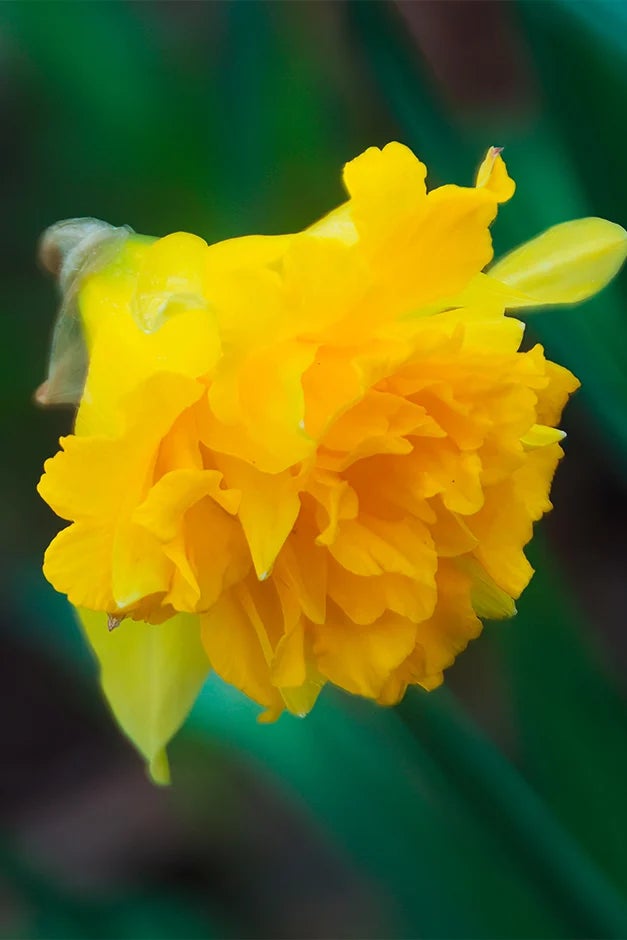
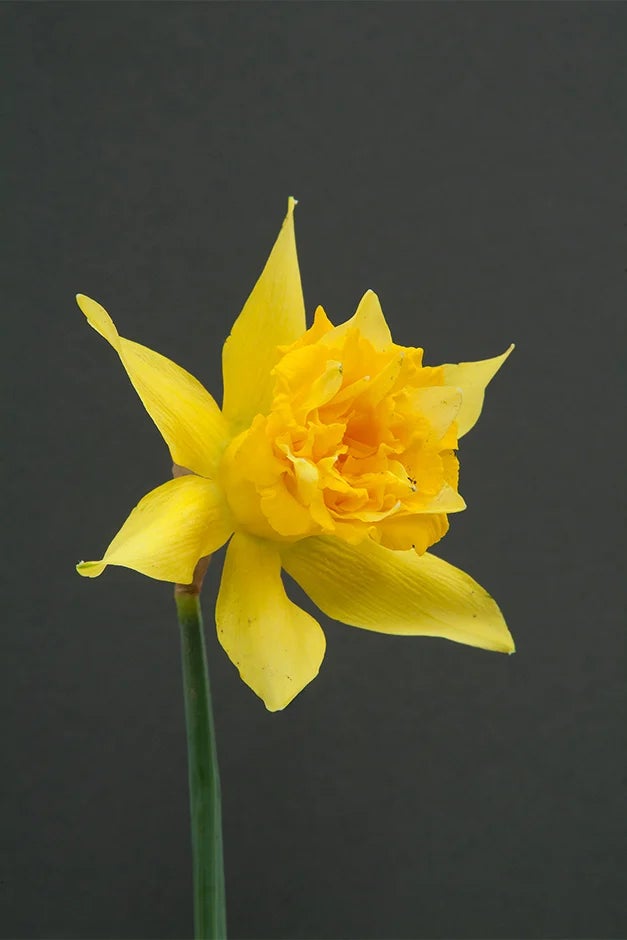
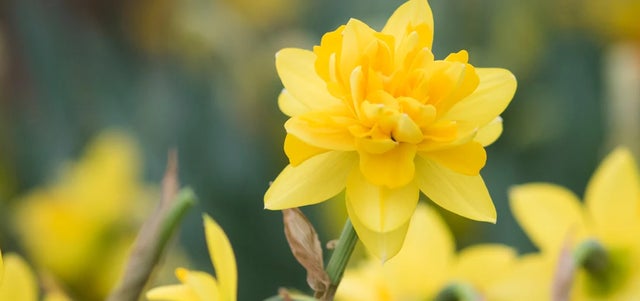
The charming double flowers of ‘Telamonius Plenus’ sometimes have identifiable trumpets, at others a chaotic starburst of uplifting colour
Found in parks, hedgerows and gardens, this daffodil is famed for its longevity
The ultimate origin of this plant remains mysterious, but Parkinson gives the credit for its introduction to a Flemish resident in London called Vincent Sion, who he describes as “an industrious and worthy lover of faire flowers”. Parkinson goes on to explain that Sion, without apparently remembering from where he had obtained the plant, had “cherished it in his Garden for many yeares without bearing of any flowers until the yeare 1620.”
When at last in that year it did flower, Sion had never seen the like and showed it to John de Franqueville, a London merchant and noted gardener, thinking that it was from him that he may have received the plant in the first place. John de Franqueville reported it was not known to him either and, thus encouraged of its novelty, Sion shared his daffodil with others, including Parkinson.
"Over the centuries, this daffodil has attracted names like wasps to a jam tart."
Why then this moniker, Mr Wilmer’s Great Double Daffodil? Parkinson, with a tut-tutting note of disapproval, provides the answer. It appears another early recipient of the plant was Mr George Wilmer, a florist of Stratford Bowe who, seeking to take credit for the find, “would needs appropriate it to himself as if he were the first founder hereof, and call it by his owne name”. From that point on, the plant attracts different names like wasps to a jam tart. Over the years it has been found hanging out under such diverse handles as ‘Centifolio’, ‘Guernsey Cabbage Daffodil’ and ‘Wilmot’s Double Daffodil’. Its most common alternative name, and one sometimes still found on garden centre shelves, is ‘Van Sion’, a fitting reminder of its discoverer.
Nurseryman Peter Barr provided this name in 1862 but, alas, the more unwieldy and obscure ‘Telamonius Plenus’ had already been affixed to it in 1819 by botanist and entomologist Adrian Haworth. This was the first name given to the plant after 1753 – the date of publication of Carl Linnaeus’s book Species Plantarum, considered the starting point for modern botanical nomenclature – so is the one that must stick.
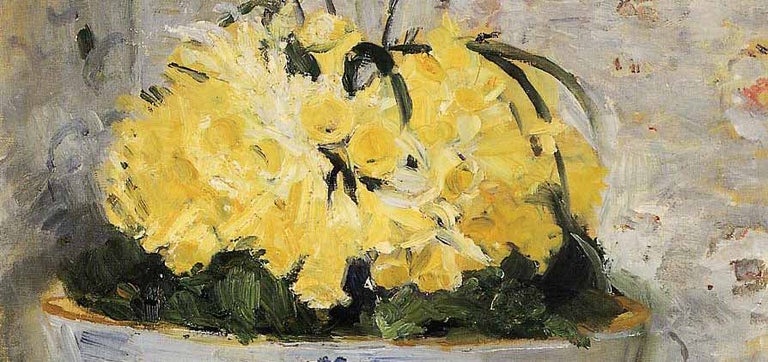
Whatever its name, ‘Telamonius Plenus’ is a striking and, in its way, charming daffodil that can take on two distinct forms. Sometimes the blooms bear discernible tepals and a trumpet brimming with a crush of doubled flower parts; other times they are mop-headed, hectic pompoms of yellow and green ribbon. However, these states are too haphazardly interchanged to be given separate names. As a garden plant it gives no trouble, needing only a reasonably decent soil, good light, and perhaps splitting and replanting every few years.
Needless to say, once established, its tough-as-old-boots nature means that it’s likely to be a faithful garden companion for many years to come.
John Parkinson’s legacy
RHS Digital Collections
Engraved title page, bearing a portrait of John Parkinson, from John Parkinson’s Theatrum botanicum
It’s not just ‘Telamonius Plenus’ that shows a tendency to longevity. For someone born in the 16th century, Parkinson himself made a great age, and his life was characterised by extraordinary productivity. His other written works included Theatrum Botanicum (1640), which describes nearly 4,000 plants. He was instrumental in introducing a wealth of new plants to Britain, particularly from the US state of Virginia and the eastern Mediterranean, and he maintained a busy correspondence with other botanical bigwigs of the day such as John Gerard and John Tradescant.
However, his last years were not easy. He was a Catholic at a time when Catholicism was blamed for many ills of the land, and as a servant to royalty was viewed with further suspicion. King Charles I was executed in January 1649 and Parkinson died of old age in August the following year, aged 83. By the time of his death he was impoverished, his treasured library dispersed and the garden at Long Acre abandoned.
Did you know?
A trailblazer in the study and cultivation of garden plants, John helped lay the foundations of gardening today.
Nevertheless, his friends carried his body through the streets to the church at St Martin-in-the-Fields where he was buried. ‘Telamonius Plenus’ is not the only ancient Narcissus you might still find enlivening the modern landscape. Parkinson’s Paradisus includes woodcut plates showing other double daffodils. Indeed, Narcissus are generally long-lived and cultivars from the Victorian and Edwardian eras, such as N. ‘Rip van Winkle’, also have a habit of popping up uninvited.
So the next time you cut back an old shrub and find yourself confronted with a bulb you can’t account for, go easy with the weeding fork. You could be in the presence of a piece of horticultural history.
Appearance: A variable daffodil with double flowers, in yellow-shaded green, which sometimes has recognisable tepals and corona, other times just a frenzy of flower parts.
Qualities: A reliable, distinctive bulb, and a great talking point.
Likes: Substantial soils that rarely dry out, and a position in sun or part shade.
Growing tips: If bulbs come up blind (without flowers), lift and separate into smaller clumps, replanting to at least twice the depth of the bulb. Do not cut back foliage until it starts to turn yellow.
Works in: Mixed plantings with other old cultivars such as Rosa gallica var. officinalis and hose-in-hose primulas. Can be grown in pots or as a cut flower.
This page is an adaptation of an article published in the February 2025 edition of The Gardenmagazine, free to RHS members every month when you join the RHS.