10 award-winning shrubs for autumn berries
Shrubs with autumn berries bring colour from the berries themselves, and the birds they attract. The other good news is that they are easy to grow

Magnificent trees of every size to illuminate your garden with fiery hues as the days shorten, while offering climate resilience or value to wildlife
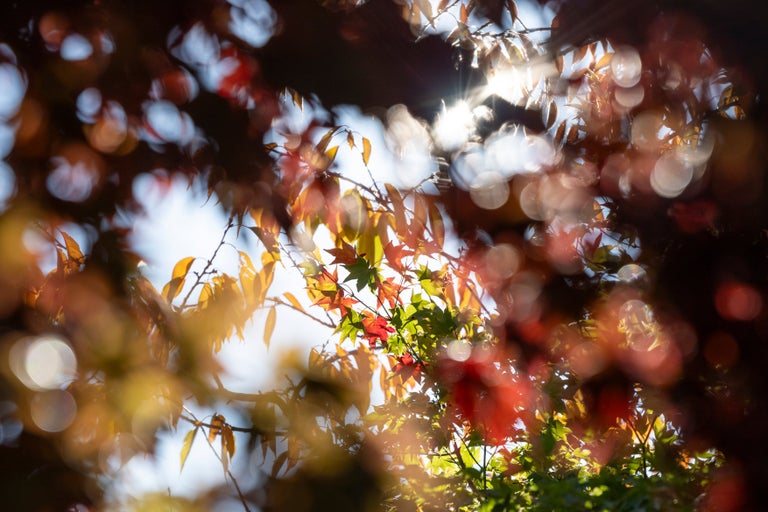
One of the most magical things about autumn is the glorious golden, red and orange hues that light up gardens and countryside as trees prepare to drop their leaves for winter. Choosing a tree specifically for its autumn performance ensures colour and joy in your garden long after many flowering plants have packed up for the year.
We've rounded up eight of the best trees for autumn colour, while also thinking about climate resilience and wildlife value. With trees from 1.5m to an eventual 18m tall, there's one here for every space. They're ordered below from smallest to largest to make it easy to find the best candidates for your garden.

A smaller of the British spindle, Euonymus alatus 'Compactus' packs a punch with almost inconceivably bright pink autumn leaves – a display enhanced by pink seed capsules that open to reveal bright orange seeds, which are loved by wildlife.
Holding an RHS Recommended: Award of Garden Merit, this tiny tree is endlessly versatile, being a perfect specimen tree for a small space or even growing a large container, as well as earning its place as part of a mixed border to contribute structure and autumn colour.


A natural of Amelanchier arborea and Amelanchier laevis, which grows wild in a corner of southeast Canada and northeast USA, this ever-popular designer tree is a go-to choice for good reason. Its size lends itself to versatility, being perfect for small gardens, or used as a repeating theme in larger spaces. Its spreading, multi-stemmed habit give it a beautiful shape, while the small leaves create a delicate canopy that provides light, dappled cover without plunging the ground beneath into deep shade.
Providing multiple seasons of interest, the display kicks off in spring with the emergence of the bronze-tinged new leaves, which are then joined by clouds of delicate white blossom. In autumn, those small leaves that provided summer relief turn fiery shades of orange, red and pink, before falling to reveal the tree's beautiful structure over winter.


Forming a graceful spreading tree that will eventually be wider than it is tall, Persian ironwood makes a lovely specimen tree, or for smaller spaces, lends itself well to pleaching (a 'hedge on stilts' – often used above a fence or to screen off different areas of a garden).
In autumn, it produces perhaps the widest range of colours of any of the trees on this list, with leaves in all shades from yellow to red and orange to pink, often all at once. A surprise second season of interest follows in late winter and early spring, when clusters of tiny, hot pink flowers stud the bare stems. Native to Iran and Azerbaijan, this is a tree for the future, triumphing over heat and drought.


The first time I encountered this tree, it was in full autumn regalia, providing a wondrous focal point at the centre of Chelsea Physic Garden. Ever since then, I don't think I've found another tree that quite so exquisitely greets each season with a showstopping new performance.
Spring brings the emergence of feathery bronze-pink foliage, stunning against a blue sky. While the leaves mellow to green in early summer, generous sprays of tiny yellow flowers burst into the foreground, giving the tree its common name of golden rain tree. Once , these develop into tresses of pinkish-green lantern-like seedpods, which ripen over the summer to brown. The display reaches a grand finale between September and November, when the feathery leaves turn golden, lifting the whole tree into a breathtaking state of incandescence for several weeks.
Choosing a tree should never just be about looks, however striking. But delivering robustly at a practical level too, this South East Asian gem offers climate resilience in the UK, and is even an RHS Plant for Pollinators.


If you've been admiring golden leaves in the autumn hedgerows, chances are that some of them are this seasonal stalwart of the British countryside. One of our most colourful native trees, field maple lights up in autumn with bright yellow, five-lobed little leaves.
Supporting pollinators with its flowers, moth caterpillars with its leaves, and small mammals and birds such as finches with its winged seeds, the UK's only native maple is an ideal choice for wildlife gardens or anywhere with space for it to develop into its beautiful natural shape. It also lends itself very well to trimming, making it an ideal choice for or mixed hedging.
If you live in southeast England and have noticed field maples in your area struggling in summer droughts and looking wilted, consider opting instead for the closely related but more heat-resistant Montpellier maple, Acer monspessulanum . This comes from the Mediterranean and can be distinguished by its leaves having three lobes instead of field maple's five.


If you fancy fiery crimson foliage, this RHS Recommended: Award of Garden Merit winner is a reliable choice, boasting long-lasting colour and a tidy, rounded shape. Clusters of small crimson flowers in spring, winged seeds in summer and glossy three-lobed leaves create year-round interest. A stalwart performer, 'October Glory' thrives in moist soil and is tolerant of occasional flooding, so is an ideal choice for high rainfall areas.


Native to the USA and Central America, Liquidambar styraciflua is famous for its autumn leaves. While there are many great cultivars available, 'Lane Roberts' is one of the very best for autumn colour, with its distinctive maple-like five-lobed leaves turning a deep wine-red or even blackish purple, with hints of orange and yellow, for several weeks.
'Lane Roberts' holds an RHS Recommended: Award of Garden Merit and makes a superb specimen tree for a larger garden – but if you don't have the room, you needn't miss out, as it also lends itself well to pleaching. It's tolerant of high temperatures and city pollution, but with a preference for moist soil, is a better choice for higher rainfall areas rather than the most drought-prone parts of southern and eastern England.


Hailing from Southeast Asia and producing a stunning golden display in autumn, Zelkova serrata holds an RHS Recommended: Award of Garden Merit and is a climate-resilient choice for spaces where it has room to grow. It's used as a street tree for shade, and in parks and urban avenues, in many parts of the world – not just its native range, but also the USA (notably cities such as New York, Boston and Philadelphia), Australia and some European countries such as the Netherlands.
It's already been used in a few parts of London, such as Pimlico and Wembley Park's Avenue of Champions, but its potential as a street tree is likely to be increasingly tapped as temperatures rise.

Please note: ultimate height and spread figures are approximate, and will vary depending on conditions and pruning.