Top 12 plants for autumn pollinators
Summer’s bloom-packed borders may be starting to wind down, but don’t let the buffet close early. Discover 12 top autumn-flowering plants to help pollinators through the leaner months

Autumn doesn’t have to mean a garden full of fading flowers and fallen leaves; with the right plants, borders can remain colourful well into the season, trees and shrubs can provide striking foliage and berries and late-flowering plants can offer food for pollinators. It’s also a useful time to plant for the future, giving many trees and shrubs time to establish before the following summer.
The key is to think beyond flowers: foliage, fruit, seedheads and stems all contribute to an autumn garden, extending its interest while providing food and shelter for wildlife.
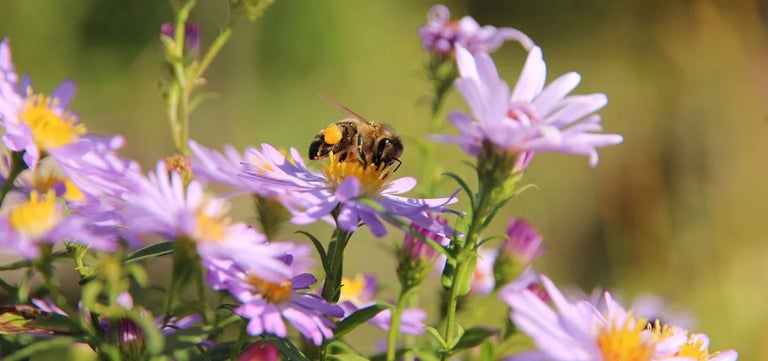
To keep borders colourful into autumn, choose plants that flower at different times rather than relying on summer favourites alone. Michaelmas daisies ( Symphyotrichum ), Japanese anemones ( Anemone × hybrida ), rudbeckias and sedums ( Hylotelephium ) can all extend the display, depending on variety and growing conditions.
For a long-lasting display, try Aster × frikartii ‘Mönch’ , with its lavender-blue daisy flowers, or Anemone × hybrida ‘Honorine Jobert’ , which produces white flowers from late summer into autumn. Rudbeckia fulgida var. sullivantii ‘Goldsturm’ adds golden-yellow flowers with dark centres. All three offer distinct colours and shapes, helping create a varied border.

Think about height and structure, too. Tall asters can rise above lower-growing perennials, while grasses provide movement between clumps of flowers. Late-flowering plants also offer and pollen for insects when other sources are becoming scarce. Where possible, choose single-flowered forms, which generally make these resources more accessible.
Ivy ( Hedera helix ) is one of autumn’s most valuable plants for wildlife, flowering when many other sources have dwindled.
Its small, yellow-green blooms attract honeybees, bumblebees, hoverflies, butterflies and the ivy bee – a solitary bee whose life cycle is closely linked to ivy’s flowering season.
The benefits continue after flowering. Mature ivy produces blue-black berries that feed birds in winter, while its evergreen foliage offers shelter year-round.

Ivy flowers on mature growth, so cutting it back hard every year can prevent flowering and fruiting. Where space allows, retain a section to mature, keeping growth under control around gutters, windows and roof spaces.
Trees can provide some of the most dramatic changes in an autumn garden, but the best choice depends on the space available and the display you want.
Japanese maples ( Acer palmatum ) are compact, slow-growing trees prized for their finely divided leaves and vivid autumn colours. They suit smaller gardens and containers and prefer a sheltered position with well-drained soil. Red-leaved varieties generally need some sunlight to develop their strongest colour, although delicate foliage can scorch in hot sun or drying winds.

For another small-garden option, amelanchiers offer spring blossom, summer berries and fiery autumn foliage; Amelanchier lamarckii has good orange and red autumn colour. In larger gardens, liquidambar ( Liquidambar styraciflua ) can produce striking shades of scarlet and purple.
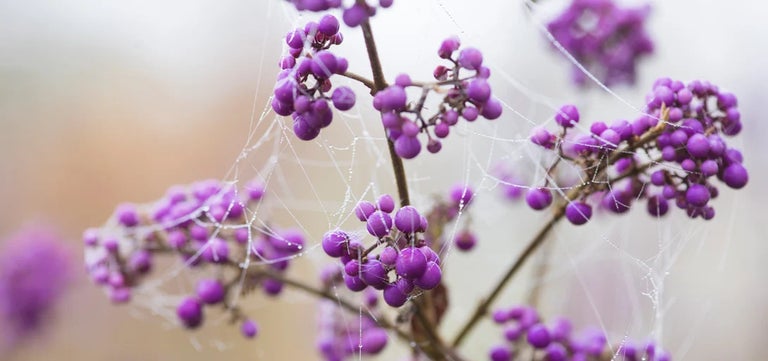
As flowers fade, berries introduce colour and provide food for wildlife. Callicarpa produces distinctive clusters of violet-purple fruits, while holly ( Ilex aquifolium ) offers glossy evergreen leaves and red berries on female plants after . Viburnums and pyracantha are great wildlife friendly shrubs that give lots of seasons of interest and also provide homes and food for wildlife.

For a longer-lasting display, choose plants that fruit at different times rather than relying on a single shrub. Berry production depends on factors including pollination, weather and growing conditions, and birds may eat fruits quickly.
Combine berry-producing shrubs with evergreens to maintain structure after leaves have fallen. Where possible, leave suitable fruits on plants for wildlife rather than removing them all during autumn tidying.
Ornamental grasses such as Miscanthus and Molinia bring movement and texture to autumn borders. Their plumes catch the low sunlight, creating interest after many flowering plants have faded.
Their value continues into winter, when frost highlights their shapes and standing stems provide shelter for small creatures. Some seedheads also provide food for seed-eating birds.

Resist cutting everything back in autumn. ornamental grasses are generally cut back in late winter or early spring, before new growth emerges. Evergreen grasses usually need only a light tidy-up to remove dead foliage. Leaving suitable stems standing over winter can also provide structure and wildlife habitat.
Autumn is a great time to add plants that will improve the garden for years to come. You can plant many trees and shrubs between October and April, as long as the ground isn’t frozen or . Container-grown plants can be planted at other times, but may need more watering during warmer weather.
For winter interest, dogwoods such as Cornus alba ‘Sibirica’ and Cornus sanguinea ‘Midwinter Fire’ develop colourful stems after their leaves fall, adding red, orange and amber tones to borders.
A selective autumn tidy-up can help wildlife, too. Remove diseased plant material, but consider leaving healthy stems and some leaf litter in suitable areas to provide shelter for overwintering creatures. Water newly planted trees and shrubs during dry spells while their roots establish.

By combining late flowers, colourful foliage, berries and winter stems, you can create a garden that supports wildlife and offers interest well beyond summer.