Meet the new 2026 RHS Partner Gardens
Eden Project joins the RHS Partner Gardens as more new gardens, including five overseas, are announced for the year ahead, giving RHS Members* even more to discover in 2026

Eden, Cornwall joins the RHS Partner Garden scheme in 2026. Here, its co-founder Sir Tim Smit and Director of Horticulture Peter Jones, talk Eden’s evolution, exotic pest control and why its 28 acres of outdoor gardens deserve more attention
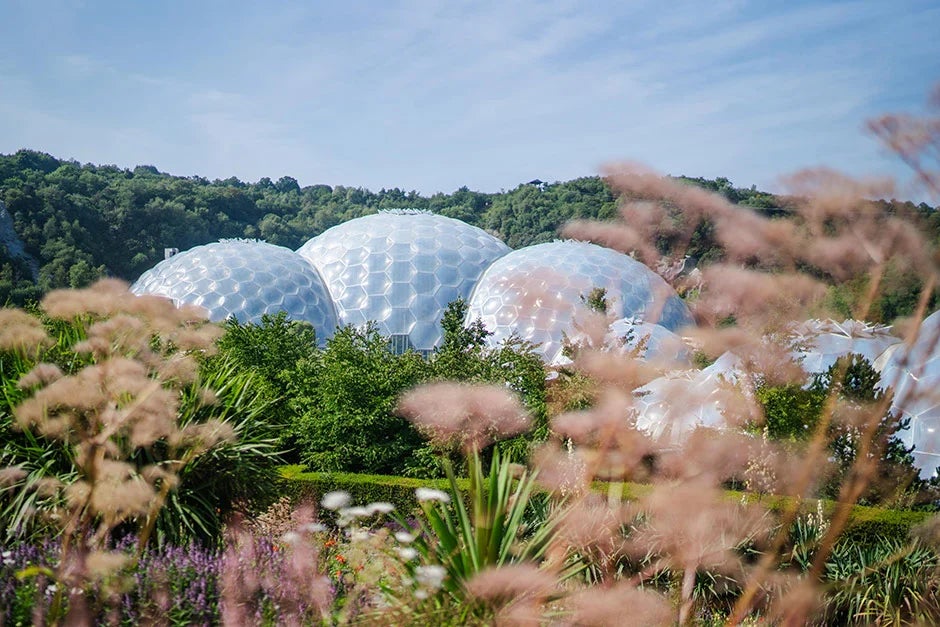
In 2026, the Eden Project in Cornwall becomes an RHS Partner Garden and in March celebrates its 25th anniversary. The epic landscape near St. Austell, on the south coast of Cornwall, is home to two glass biomes, an eductional hub with hedgehog-like spikes and 28 acres of innovative and experimental landscaping. Add to this a year-round programme of seasonal events, including ice skating and world-class musical acts, and you have a destination that holds many surprises. Perhaps not what anyone expected when Sir Tim Smit first announced the plans:
“I remember the first moment I saw the site. I’d been driving on the A30 and caught the Goonbarrow clay spoil heap near St Austell shining ochre red in the sunset. It was akin to a Sir Arthur Conan Doyle-like lost world discovered in the crater of a volcano. People had described this almost lunar landscape as doomed, but I thought it was beautiful. I’ve always loved going big and wanted people to be mesmerised by the scale of the Eden Project.
“Today it’s a powerful example of how nature, science and society can work together for a better future. It showcases global biodiversity, promotes sustainable living and raises awareness about climate change and conservation. It also inspires a sense of wonder - you walk into the Rainforest Biome and are transported. But it’s not just about spectacle: every one of the 3,000 different species of plants within has a story too. I believe we’ve created a slice of magic at Eden.”
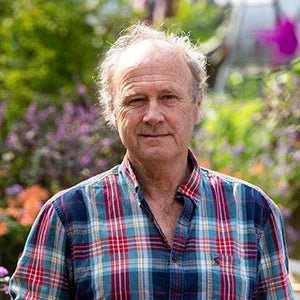
"Eden is a powerful example of how nature, science and society can work together for a better future."

Peter Jones, Director of Horticulture, has recently joined the team at Eden, Cornwall after 19 years at RHS Garden Wisley: “It’s been a big shift, but a really exciting one. Like RHS Wisley, Eden is a living, evolving landscape. It has wonderfully wild and naturalistic environments and others that are wholly cultivated, but above all it’s a place that tells stories about how important plants are to people, be it for food or materials. I’ve likened Eden, Cornwall to a 25-year-old human: past its teenage years, ready to mature and focus on its future.”
Peter was really keen to introduce Eden to the RHS Partner Garden scheme and hopes RHS Members will be excited at the opportunity to visit this world-class garden: “Eden is a place to return to, to see the seasons change and to be inspired again and again. Whether it’s the biomes, the outdoor gardens or the wider estate, there’s always something new to discover. For our anniversary this year, we’re planting a Jubilee Avenue at the entrance with climate-resilient trees such as Metasequoia, Liquidambar, and Tilia henryana, as well as 1,000 spring-flowering . We’re renovating the Silver Staircase, which was originally planted with silver-leaved species and we’re also reintroducing iconic sculptures in the outer landscape. We’re planting 50 Prunus yedoensis, as part of the Sakura Project, which aims to plant cherry trees across the UK, to create a beautiful seasonal display and cultural link with Japan.”
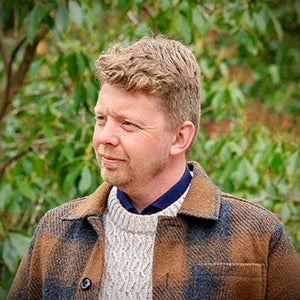
"Eden is a place to return to, to see the seasons change and to be inspired again and again."
Sir Tim is equally excited about joining the scheme: “I want to infect new visitors to Eden with a zealotry about the importance of soil health and an understanding of the diversity of plants. We need to champion horticulture as an applied science, just like pharmacy, engineering and medicine. I’m delighted Eden is partnering with the RHS, we can do amazing things together.”

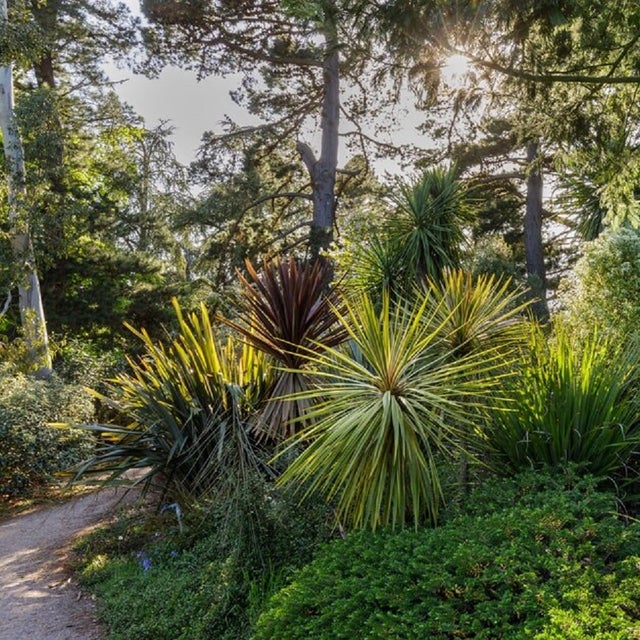
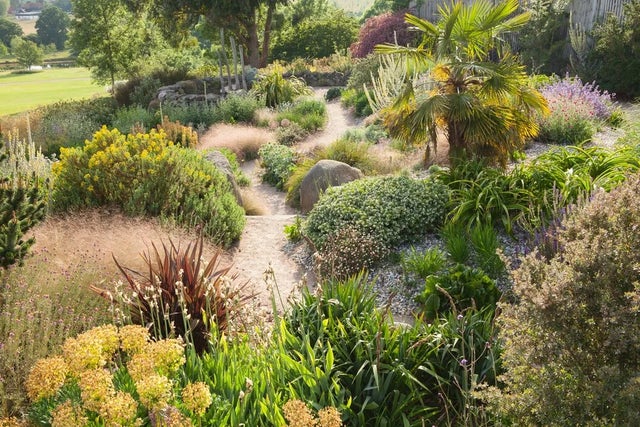
Eden has one of the best contemporary landscapes in the country, designed by landscape architect, Dominic Cole, and it deserves more attention says Peter, “We’ve got 3,700 different species and cultivars in 28 acres of outdoor gardens. In the South Africa Garden, giant proteas and aloes shine, while the Western Australia Garden features flora thriving in nutrient-poor soils. The whole site is 200 acres and there are still rarely seen areas in development. There’s a Chilean plantation on the outer estate with trees such as Monkey Puzzle, and we’ve even got a peat bog, which is incredibly important environmentally.
Behind the Core building is a peaceful area inspired by Japanese style and is Peter’s favourite space: “I love the peaceful woodland valley there. It’s beautifully planted with climate-resilient species including Metasequoia and acers, which gives it a Japanese feel.”
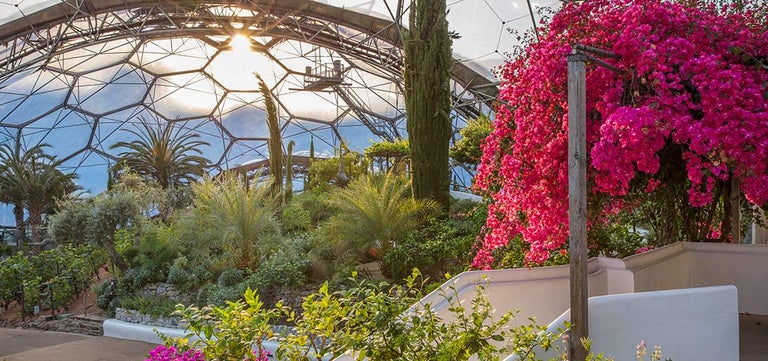
There are also woodland walks, which Peter thinks many visitors haven’t yet discovered, but the standout feature are the biomes – giant glass structures that look like something from a sci-fi movie. The Rainforest Biome is home to more than 1,000 different plant species and cultivars including the baobab tree – a real showstopper – a citron that looks like a lemon on steroids and one of the largest chocolate plantations in the country. The Mediterranean Biome is jam-packed with grass trees, kangaroo paws, cork trees and three ancient olive trees believed to be between 600 and 1,500 years old that were relocated from Spain and Portugal.

The biomes and plant nursery are heated by geothermal energy provided by a single geothermal well. This involved drilling 5.3km through hard granite into the Earth’s crust to reach hot rocks that heat water pumped down to them to 85C. This is then used to heat the biomes, the nursery and about half of the buildings on site, saving up to 500 tonnes of CO2 per year – the equivalent of 227 UK homes heated with gas.
Eden is also home to some unusual guests. “We use a range of biological controls to keep on top of any pests and diseases, some more unusual than others - our resident geckos, White’s tree frogs and a flock of rather splendid roul-roul birds are great at keeping insect levels down,” says Peter.

In May 2026, the Eden Project is bringing a show garden to the RHS Chelsea Flower Show in London. Designed by Harry Holding and Alex Michaelis, and supported by Project Giving Back, The Eden Project: Bring Me Sunshine Garden will reflect the coastal environment of Eden’s next site in Morecombe, Lancashire.
Tim explains, “We’re growing 1,500 plants for it at Eden, Cornwall. It’s a garden of regeneration and hope, and one that invites young people, especially those often overlooked, to explore practical skills and pathways into the green industries. Growing things, food especially, is fundamentally important for us all and we have to improve the education around this.”
"There is no point in children being able to recite the Kings and Queens of England but not know how their food grows."

Eden, Morecombe is due to open in November 2028. Built on a former funfair site, it will be a based on the rhythms of tides, music, and nature and will include a biome and seasonal gardens. For the Eden Project team it’s all about regeneration, both environmental and social. Next will be Eden, Dundee, which will be built on a former gasworks site. Again, it’s about transforming a post-industrial site into something green and inspiring. They’ve also just opened the new Oriental Eden in China which focuses on our relationship with water, as Sir Tim says: “I’m very excited about Morecombe, which is like Heathrow for birdlife!”
With show gardens, a birthday celebration and new Eden’s developing across the globe, what else is in store for this creative-thinking team? Sir Tim says many plans are afoot: “Eden is about inspiring change. We want people to come here and leave transformed, whether it’s by a plant they’ve never seen before, a story they’ve never heard, or a feeling they didn’t expect. We’re exploring new sites, new technologies, and new ways to connect people with nature. Who knows, maybe one day there’ll be an Eden in space! I hate mediocrity and fear of ambition. We need to embrace marvelousness.”
"My role is to dispel the idea that good things can’t happen - I’m the prince who kisses frogs to make transformation real."
RHS Partner Garden information