
Meet the new 2026 RHS Partner Gardens
Eden Project joins the RHS Partner Gardens as more new gardens, including five overseas, are announced for the year ahead, giving RHS Members* even more to discover in 2026

Whether you’re seeking winter warmth, fascinating plant collections or simply a fresh way to enjoy gardens year-round, these remarkable glasshouses are well worth a visit
From Victorian structures filled with exotic treasures to cutting-edge biomes showcasing plants from across the globe, RHS Partner Gardens offer inspiring indoor experiences whatever the season.
We’ve brought together a selection of RHS Partner Gardens featuring unusual and memorable glasshouse collections, where RHS Members can enjoy free entry on selected days. Explore stunning orchids, fragrant winter blooms, tropical rainforests and historic conservatories. Discover how glasshouses allow extraordinary plants – and their stories – to thrive far beyond the limits of the British climate.
Join the RHS and enjoy free access to more than 240 gardens in the UK and around the world at selected times >

The Glasshouse at Thornbridge Estate is an impressive Victorian structure filled with an array of exotic plants and . Shielded from the elements, the impressive display of Bird of Paradise brings a welcome pop of colour to the winter months, some of these specimens having been in situ for 20 years.
The Glasshouse is also home to a newly acquired collection of aeoniums, featuring many eye-catching cultivars and hybrids.

Waterperry’s Victorian Glasshouse is home to a magnificent Seville Orange Tree, which is around a hundred years old. In 1932, the British horticulturalist Miss Beatrix Havergal took over the lease for Waterperry. She spent the first five years preparing the land by felling and clearing trees, building glasshouses and improving the soil for production. Miss Havergal stated that her memories of the beautiful oranges grown at Waterperry inspired her to set up her famous Ladies’ Horticultural School there.

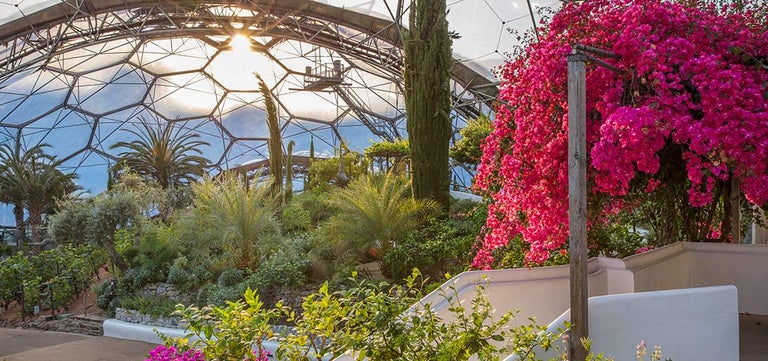
The Eden Project transformed a former clay mine with no soil or plants into a beautiful global garden and is home to the largest greenhouse in the world. The Rainforest Biome here is home to four of the world’s rainforests, featuring plants and stories from Southeast Asia, West Africa, Southern and Central America, and the tropical islands.
Visitors can discover the story of the Hawaiian canoe plants , stroll through the Malaysian Garden, learn more about the world-shaping rainforest crops such as coffee, chocolate and rubber, and venture up into the canopy where the vital role rainforests play in cooling the Earth and regulating our climate is revealed.

The original Denmans Garden conservatory was built in the mid to late 19th century. Its exact original purpose is unknown, but it was located in what was then the kitchen garden associated with Westergate House. It likely contained unusual fruits and possibly vegetables. The conservatory was enlarged by Joyce Robinson, the founder of the contemporary garden, and later rebuilt altogether by John Brookes in the early 2000s to house tender plants. Among these is an amazing Brugmansia , which is decades old and flowers profusely.
The walls of the conservatory are clothed in yellow and white banksia roses , Sollya heterophylla , and other flowering vines. Planted in the gravel are salvias, Fascicularia bicolour , Beschoneria yuccoides , Fuschia microphylla , agapanthus, Abutilon , Hedychium , and Cestrum 'Newellii' .
Potted plants include interesting varieties of salvias, streptocarpus, scented geraniums, aeoniums, and other succulents, as well as Tibouchina urvilleana , clivia, ferns and, throughout winter and spring, forced .

Winter may be quiet outdoors, but inside the Botanical Glasshouse at the Walled Gardens of Cannington, the new year begins with a surprising richness of scent, colour and texture. The collection spans four climatic zones – Arid, Dry Temperate, Wet Temperate and Tropical – allowing visitors to enjoy plants at their best even in the coldest months.
Among the first delights of the season are two beautifully perfumed species: the Amazon lily Eucharis x grandiflora and Pittosporum cornifolium . Other seasonal standouts include Sparrmannia africana , Citrus medica (Citron), Clivias and Bougainvillaea.
For visitors, January and February offer a tranquil moment to explore the glasshouse collections without the bustle of spring and summer. The diversity of climate zones allows plants from across the world to thrive during what is usually the dullest part of the year. Whether for their scent, colour, or simply the pleasure of being surrounded by greenery, the glasshouse at Cannington is most inviting in winter.

The Gilbert Orchid House (formerly known as the ‘Bryotron’) at Winterbourne House and Gardens has an intriguing history. It was originally built by the British Antarctic Survey in the 1960s to grow bryophytes (non-vascular land plants like mosses and lichens). In a fascinating attempt to replicate the conditions found in Antarctica, the glasshouse was built as a north facing structure and was only later converted into a tropical house.
As its name suggests, the Gilbert Orchid House features many species of orchid along with air plants like Tillandsia , and tropical carnivorous specimens such as Nepenthes . A favourite of the Head Gardener at Winterbourne is the bat flower Taccachantrieri , which has rather unusual dusky grey and purple gothic flowers.
Find all the RHS Partner Gardens by visiting the RHS Partner Garden search and entering your chosen county in the search bar.
Please note: Opening times and RHS Member days vary. Please check with the garden before you attend to avoid disappointment.