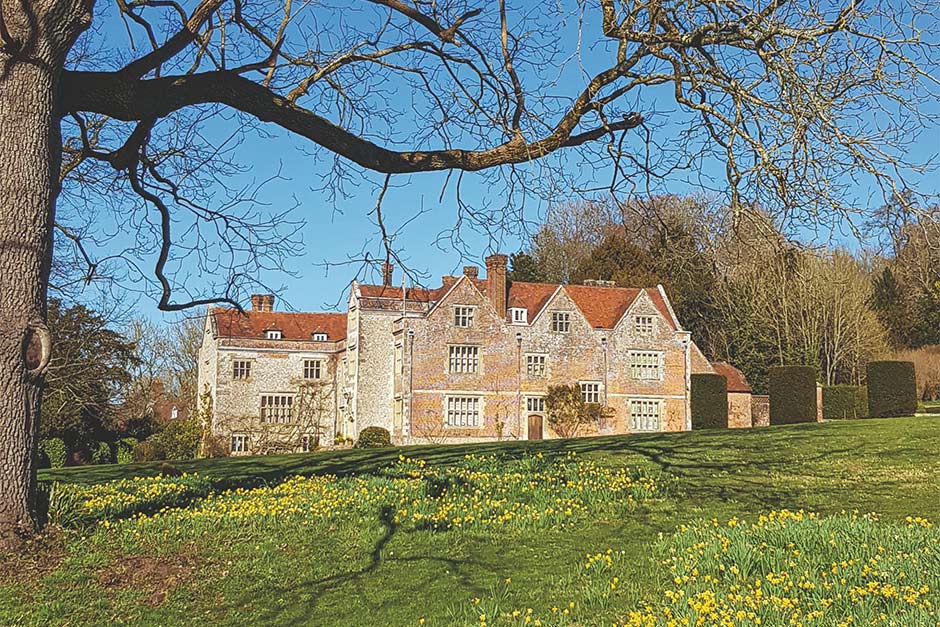
While Jane Austen is renowned for her novels, she was also a keen gardener. Her plots are rich with natural imagery, infused with symbolism and influenced by her time spent at Chawton House
RHS Editorial Team
3-minute read
From 1809 to 1817, Jane Austen lived in a house in the Hampshire village of Chawton, not far from the estate inherited by her brother Edward.
This estate, known as Chawton House, is now an RHS Partner Garden. The site had a significant influence on Jane Austen’s writing and now holds the UK’s only collection of pre-20th-century women’s writing, with 16,000 preserved novels, diaries, poetries, cookbooks and other works, many of which are inspired by the natural world.
In celebration of the 250th anniversary of her birth in December 2025, Katie Childs, Chief Executive of Chawton House, and Julia Weaver, Head Gardener, explained how gardening had a big influence on her life and work.
Jane Austen was an inveterate walker and that is reflected in her writing: the gardens and landscapes she knew all make their way into her novels.
“You can go on treasure hunts through her work, finding locations,” said Katie Childs, Chief Executive of Chawton House. “To my mind, her brother’s home, Godmersham Park, was the inspiration for Pemberley, with its long carriageway and its walled garden with little doors in the walls. Also, a hedge that a character leans on to rest in a scene in Persuasion is thought to be the Broadlands Row hedge at Chawton.”
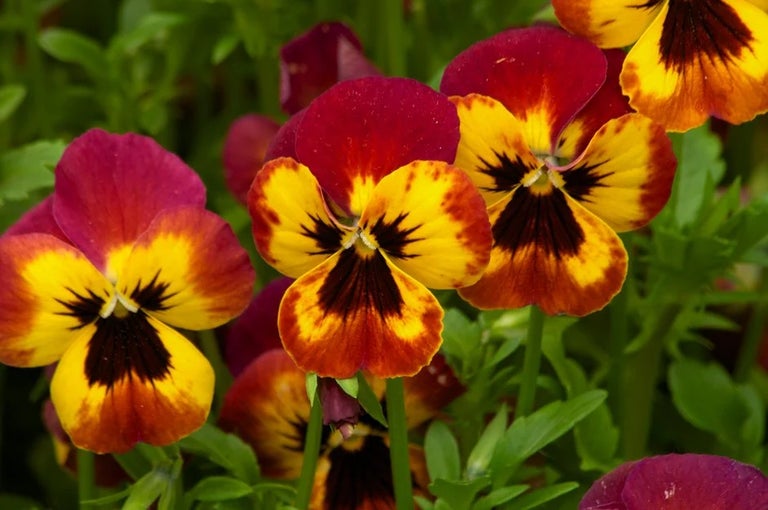
There are so many flowers with symbolic meaning in Jane Austen’s writing, in both her published work and private letters. In Pride and Prejudice, for example, Darcy gives Elizabeth a bouquet of violets, which are a symbol of purity and innocence. By doing that, he’s marking her out as different from the other female characters in the novel.
“The language of flowers just exploded in the 19th century, becoming very fashionable in France and then spreading across England. At Chawton, we have a book on display explaining how to create a bouquet you should send when you love someone, but you’re slightly disappointed in them,” said Katie.
"The language of flowers just exploded in the 19th century, becoming very fashionable in France and then spreading across England."
Katie Childs, Chief Executive of Chawton House
In her work, Jane Austen also uses plants to signal social status. Again in Pride and Prejudice, Lady Catherine de Bourgh says, “There’s a prettyish kind of a little wilderness” at Elizabeth’s family home. “It’s a cutting remark because, at that time, wildernesses were unfashionable as a style of planting. By comparison, Jane mentions that Pemberley has waterlilies and a hothouse, illustrating Darcy’s wealth,” explained Katie.
Jane, her mother, her sister and their Chawton cook were all tremendously knowledgeable about plants and they grew all sorts of fruit. For these unmarried and widowed women, the garden was also a larder, an affordable way to vary their diet.
At one point, Jane ribbed her little sister Cassandra about her gardening skills, writing in a memorable letter to her that “I will not say that your mulberry trees are dead, but I am afraid they are not alive”. In another letter, she was really annoyed that their currant harvest had failed, so they would have to go and buy fruit to make their household supply of wine.
"In a memorable letter to her sister Cassandra, Jane Austen wrote, ‘I will not say that your mulberry trees are dead, but I am afraid they are not alive’."
Often during the Regency period, women also used the garden to have private conversations and exchange ideas, which they weren’t as easily able to do within the confines of the house. A passage in Mansfield Park tells of Fanny out in the garden pruning roses, which shows that women at the time really were doing the gardening and getting their fingers dirty in the soil.
In 1807, when she was planning her garden, Jane wrote that “I could not do without a Syringa”, as it featured in verses by her favourite poet William Cowper.
These are the kind of wildflowers usually taken for granted but that were invested with so much meaning for Jane Austen: they grew all around the churchyard in Steventon, Hampshire, where she grew up.
Rosa (roses)
RosaFor Jane, roses are the ultimate democratic flower because they’ll grow in grand manicured gardens like Darcy’s, or wild and tumbling round the door of the author’s own cottage.
In her letters, Jane urged her sister Cassandra to collect mignonette seeds from their brother’s estate, showing how women grew their gardens in a kind of swap economy.
Some of these sweetly fragrant plants, along with other flowers grown at Chawton House, festooned the 2m-high RHS Letters at RHS Hampton Court Palace Garden Festival 2025. The floral installation was created by award-winning floral artists Rachel Kennedy and Xue Wang, in collaboration with Chawton House’s Head Gardener, Julia Weaver. The installation marked the 250th anniversary of Jane Austen’s birth.
The RHS Letters at RHS Hampton Court Palace Garden Festival 2025
The RHS Letters were adorned with cottage garden classics that Jane knew, loved and often referred to in her letters, such as pinks, sweet williams and columbines, and draped romantically with honeysuckle. In Sense and Sensibility, the walls of Barton Cottage were said to be ‘not covered with honeysuckles’, as a way to highlight its rather downtrodden appearance.
Roses also featured heavily in the RHS Letters design, such as Rosa gallica var. officinalis and white R. x alba ‘Alba Maxima’. In the 19th century, these blooms would have been used for their beauty and to scent the home, as well as in syrups, vinegars and medicines.
New Pride and Prejudice inspired Rose Walk
Chawton House
The Pride & Prejudice Rose Walk at Chawton House, packed with creamy, peach-tinted roses also named after Jane Austen’s classic novel
A new herbaceous border and an enhanced Pride & Prejudice Rose Walk were introduced in 2025 to coincide with her 250th birthday celebrations.
The herbaceous border in the walled garden, originally built by Jane’s brother Edward Knight, includes sweet williams, peonies, philadelphus and lilacs – all plants Jane wrote about in her letters to family and friends.
Head Gardener Julia said: “Jane lived here before the hybridisation of a lot of modern plants, so, as well as the shrubs mentioned in her letters, I’ve included British natives such as scabiousand cornflowers that she’d have seen in the fields when she was walking.”
The Pride & Prejudice Rose Walk, also in the walled garden, is planted up with Rosa Pride & Prejudice (‘Harwindow’). “I’ve added six more,” said Julia, “and underplanted with perennials, including hardy geraniums and Lamium.”
RHS Partner Garden Chawton House
Elsewhere at Chawton House, further improvements will be made as part of a three-year plan to deepen the garden’s links to Jane Austen. The footings of glasshouses from Jane’s time will be rebuilt and the Women Writers Rose Garden will be replanted with R. Sense and Sensibility (‘Harwoods’), named after Jane’s first published novel.
Other Austen-inspired plants at Chawton House include Dianthus deltoidesand Greengage plum.“In a 1811 letter written to her sister, Jane said: ‘The whole of the shrubbery border will soon be very gay with pinks and sweet williams, in addition to the columbines already in bloom’,” said Julia. In the same year, Jane also wrote: “We are likely to have a great crop of Orleans plums, but not many greengages – on the standard scarcely any, three or four dozen, perhaps, against the wall.”
Visit RHS Partner Garden Chawton House
RHS Members enjoy free days out to Chawton House when open, excluding February.
Please check the gardens’ website before you visit, as times and access may change.