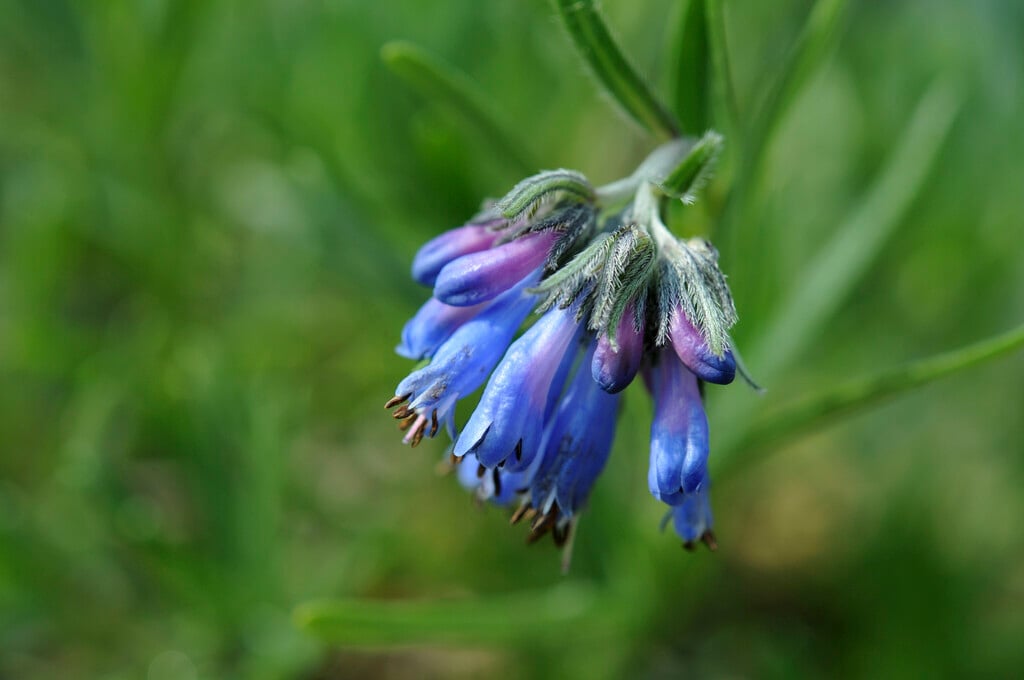
Moltkia petraea
A low-growing, clump-forming hardy semi-evergreen perennial to around 25cm in height, with narrow, dark blue-green foliage with white undersides covered in fine hairs. Clusters of tubular, dark blue flowers appear on thin stems in late spring to early summer, attracting a wealth of pollinators. A great plant for an alpine garden, sandy border or crevice. Drought-tolerant once established

Buy this plant
Size
Ultimate height
0.1–0.5 metresTime to ultimate height
2–5 yearsUltimate spread
0.1–0.5 metresGrowing conditions
Moisture
Well–drainedpH
Acid, NeutralColour & scent
| Stem | Flower | Foliage | Fruit | |
| Spring | Blue | Blue Green White | ||
|---|---|---|---|---|
| Summer | Blue | Blue Green White | ||
| Autumn | Blue Green White | |||
| Winter | Blue Green White |
Position
- Full sun
Aspect
South–facing or West–facing
Exposure
ShelteredDrought resistance
Yes Hardiness
H4Botanical details
- Family
- Boraginaceae
- Native to GB / Ireland
- No
- Foliage
- Semi evergreen
- Habit
- Clump forming
- Genus
Moltkia can be evergreen or deciduous, subshrubs or perennials, with simple, lance-shaped or linear leaves and funnel-shaped or tubular blue, purple or yellow flowers in late spring and early summer
- Name status
Correct
- Plant range
- Balkans
How to grow
Cultivation
Grow in poor, well-drained, preferably alkaline soil in full sun. Protect from excessive winter wet and cold, drying winds
Propagation
Propagate by seed or softwood cuttings
Suggested planting locations and garden types
- City and courtyard gardens
- Cottage and informal garden
- Gravel garden
- Mediterranean climate plants
- Rock garden
- Flower borders and beds
Pruning
Cut back old top growth in winter
Pests
Generally pest-free
Diseases
Generally disease-free
Get involved
The Royal Horticultural Society is the UK’s leading gardening charity. We aim to enrich everyone’s life through plants, and make the UK a greener and more beautiful place.