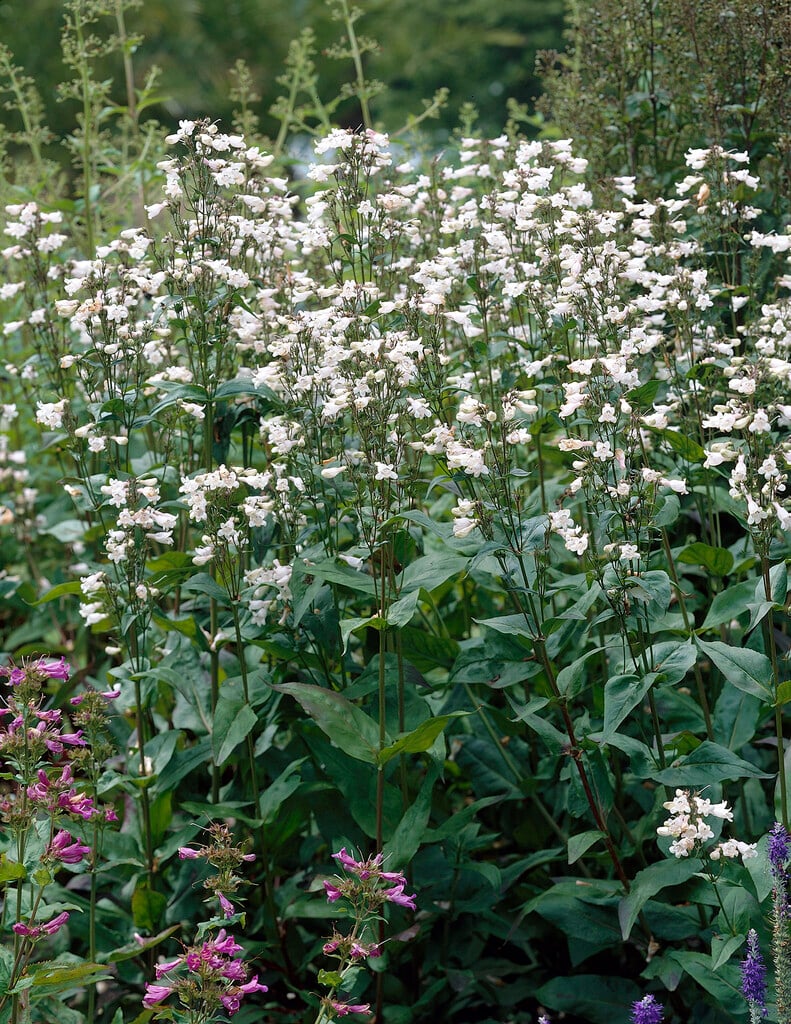
Penstemon digitalis

RHS Plant Profile
foxglove beard-tongue
foxglove beard-tongue visionspictures.com
Plants for pollinators
Herbaceous Perennial

Vigorous semi-evergreen perennial to 1m tall, with basal mid-green leaves to 15cm long and purple flushed stems. Panicles or tiers of tubular pale lavender or white flowers each 2.5cm long are produced during summer

Position

Full sun, Partial shade

Soil Types

Chalk, Loam, Sand

Max Height

0.5-1 metres

Max Spread

0.1-0.5 metres

Size

Time to Maturity
2–5 years
Max Spread
0.1-0.5 metres
Max Height
0.5-1 metres

Growing Conditions

Chalk Loam Sand
Moisture
Well–drained
pH
Acid or Alkaline or Neutral

Position

Full sun Partial shade
Aspect
South–facing or West–facing or East–facing
Exposure
Exposed or Sheltered
Hardiness
H5

Colour & Scent

Season Stem Flower Foliage Fruit
Spring
Summer
Autumn
Winter

Botanical Details

Family
Plantaginaceae
Native to GB/Ireland
No
Foliage
Semi evergreen
Habit
Clump forming
Genus
Penstemon may be deciduous or evergreen perennials or subshrubs, with simple, narrow leaves and racemes or panicles of bell-shaped or funnel-shaped flowers in summer and early autumn
Name Status
Correct
Plant Range
United States

How to Grow

Cultivation

Grow in fertile, well-drained soil in full sun or partial shade. In cold areas, protect plant overwinter with dry winter mulch. See penstemon cultivation

Propagation

Propagate by seed in late winter or spring, softwood cuttings in early summer or semi-ripe cuttings in midsummer

Suggested planting locations and garden types

  • Coastal
  • Cottage and informal garden
  • City and courtyard gardens
  • Gravel garden
  • Prairie planting
  • Wildlife gardens
  • Flower borders and beds

Pruning

Deadhead after flowering to maintain vigour and prolong flowering, then cut back to 15cm in late winter or early spring

Pests

May be susceptible to slugs, snails, aphids and leaf and bud eelworms

Diseases

May be susceptible to downy mildews, grey moulds, powdery mildews and a fungal leaf spot