Aesculus × neglecta 'Autumn Fire'
Carolina horse chestnut 'Autumn Fire'
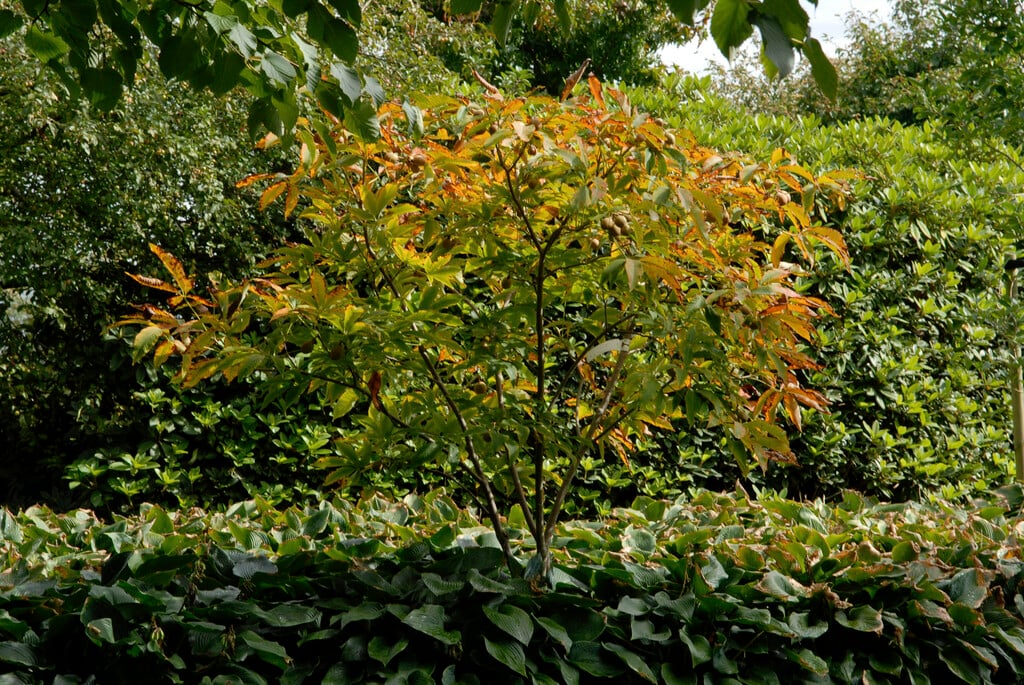
A medium sized deciduous tree to 20m tall, copper coloured young foliage, turning dark-green in the summer before developing shades of orange, yellow and red in the autumn. The upright panicles of of creamy-white flowers which are light red at the base, appear in mid-summer followed by smooth round fruit
Size
Ultimate height
Higher than 12 metresTime to ultimate height
20–50 yearsUltimate spread
2.5–4 metresGrowing conditions
Moisture
Moist but well–drained, Well–drainedpH
Acid, Alkaline, NeutralColour & scent
| Stem | Flower | Foliage | Fruit | |
| Spring | Orange Pink | |||
|---|---|---|---|---|
| Summer | Cream White Red | Green | ||
| Autumn | Orange Red Yellow | Brown | ||
| Winter |
Position
- Full sun
Aspect
East–facing or North–facing or South–facing or West–facing
Exposure
Exposed Hardiness
H7Botanical details
- Family
- Sapindaceae
- Native to GB / Ireland
- No
- Foliage
- Deciduous
- Habit
- Spreading branched
- Potentially harmful
- Humans/Pets (dogs): harmful if eaten. Wear gloves and other protective equipment when handling For further information and contact numbers regarding pets, see the HTA guide to potentially harmful plants
- Genus
Aesculus can be deciduous trees or large shrubs with showy flowers, palmately-lobed leaves and sometimes good autumn colour
- Name status
Accepted
How to grow
Cultivation
Grows best in deep, fertile, moist but well-drained soil in sun or partial shade; only suitable for large gardens. For further information, see our advice on tree cultivation
Propagation
Propagate by semi-ripe cuttings or seed
Suggested planting locations and garden types
- Architectural
- Low Maintenance
Pruning
Pests
May be susceptible to horse chestnut scale and leaf-mining moth
Diseases
May be susceptible to coral spot, canker and leaf spot
Get involved
The Royal Horticultural Society is the UK’s leading gardening charity. We aim to enrich everyone’s life through plants, and make the UK a greener and more beautiful place.