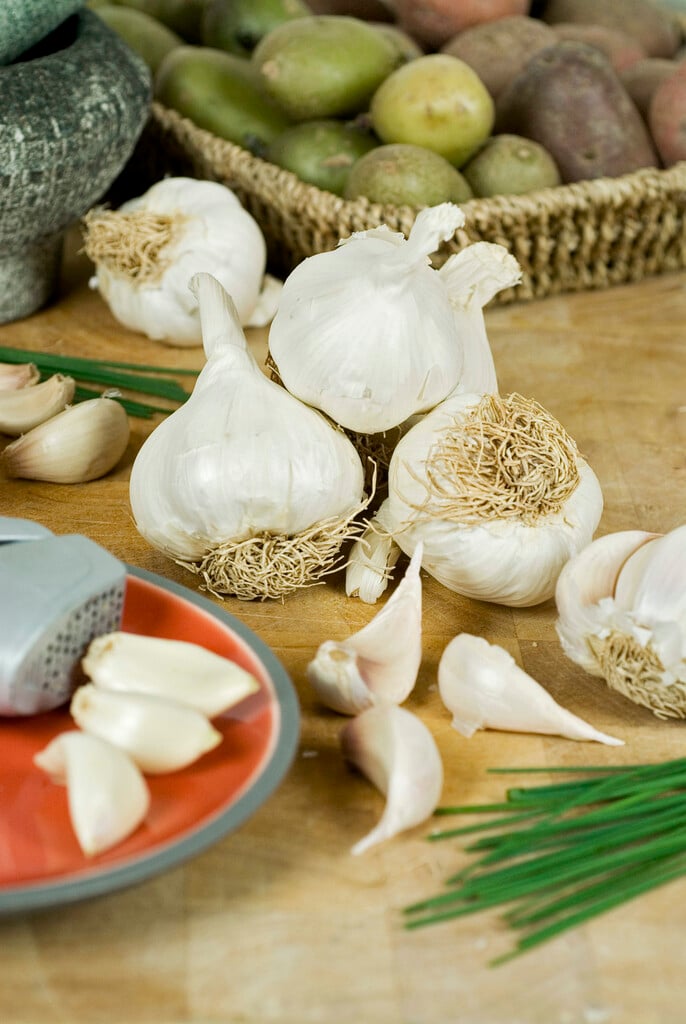
Allium sativum 'Arno'
garlic 'Arno'
Perennial vegetable grown as an annual, the edible, strongly scented, compact bulbs are divided into cloves with long, narrow, flat green leaves on a tall stalk in summer. This variety produces large bulbs with pink cloves contained in a whitish skin

Size
Ultimate height
0.1–0.5 metresTime to ultimate height
1 yearUltimate spread
0.1–0.5 metresGrowing conditions
Moisture
Moist but well–drained, Well–drainedpH
NeutralColour & scent
| Stem | Flower | Foliage | Fruit | |
| Spring | ||||
|---|---|---|---|---|
| Summer | Green | |||
| Autumn | Green | |||
| Winter |
Position
- Full sun
Aspect
South–facing or West–facing
Exposure
Sheltered Hardiness
H4Botanical details
- Family
- Amaryllidaceae
- Native to GB / Ireland
- No
- Foliage
- Deciduous
- Habit
- Clump forming
- Potentially harmful
- Skin irritant/allergen. Wear gloves and other protective equipment when handling Pets: TOXIC if eaten - see the HTA guide to potentially harmful plants for further information and useful contact numbers
- Genus
Allium are bulbous herbaceous perennials with a strong onion or garlic scent, linear, strap-shaped or cylindrical basal leaves and star-shaped or bell-shaped flowers in an umbel on a leafless stem
- Name status
Accepted
How to grow
Cultivation
Grow in fertile, moist but free draining soil in full sun. Also suitable for container growing in a pot which is at least 10cm deep. Grow in a free-draining medium and be careful not to over-water. Harvest bulbs once tops begin to yellow and fall over. See garlic cultivation, and our video Grow your own garlic: planting and choosing varieties, for further advice
Propagation
Propagate by splitting bulbs into individual cloves and planting at double their depth
Suggested planting locations and garden types
- Patio and container plants
- Cottage and informal garden
- Wildlife gardens
Pruning
No pruning required
Pests
Generally pest-free, new growth may suffer from slugs. May be susceptible to allium leaf miner, onion thrips and onion fly
Diseases
May be susceptible to onion rot, downy mildew and rust
Get involved
The Royal Horticultural Society is the UK’s leading gardening charity. We aim to enrich everyone’s life through plants, and make the UK a greener and more beautiful place.