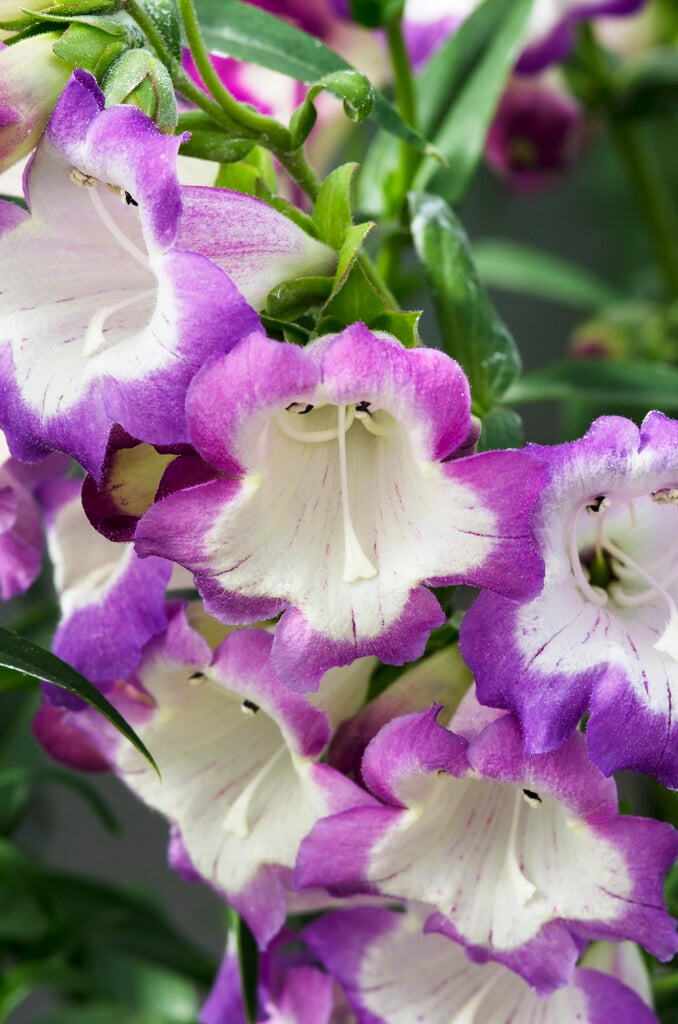
Penstemon 'Grape Taffy'PBR

RHS Plant Profile
penstemon 'Grape Taffy'
penstemon 'Grape Taffy' visionspictures.com
Plants for pollinators
Herbaceous Perennial

A vigorous, upright, clump-forming, semi-evergreen perennial to 60cm, with branches from the base and lance-shaped, mid-green leaves. From early summer to late autumn produces showy spikes of large, bell-shaped, rich red-purple flowers with white throats

Position

Full sun

Soil Types

Loam, Chalk, Sand

Max Height

0.5-1 metres

Max Spread

0.1-0.5 metres

Size

Time to Maturity
2–5 years
Max Spread
0.1-0.5 metres
Max Height
0.5-1 metres

Growing Conditions

Loam Chalk Sand
Moisture
Well–drained
pH
Acid or Alkaline or Neutral

Position

Full sun
Aspect
South–facing or West–facing
Exposure
Exposed or Sheltered
Hardiness
H5

Colour & Scent

Season Stem Flower Foliage Fruit
Spring
Summer
Autumn
Winter

Botanical Details

Family
Plantaginaceae
Native to GB/Ireland
No
Foliage
Semi evergreen
Habit
Clump forming
Genus
Penstemon may be deciduous or evergreen perennials or subshrubs, with simple, narrow leaves and racemes or panicles of bell-shaped or funnel-shaped flowers in summer and early autumn
Name Status
Accepted

How to Grow

Cultivation

Grow in fertile, well-drained soil in full sun or partial shade. In cold areas, protect plant overwinter with a dry winter mulch. See penstemon cultivation for further advice

Propagation

Propagate by softwood cuttings in early summer or semi-ripe cuttings in midsummer

Suggested planting locations and garden types

  • City and courtyard gardens
  • Cottage and informal garden
  • Patio and container plants
  • Wildlife gardens
  • Flower borders and beds
  • Cut flowers

Pruning

Regular deadheading can encourage a longer flowering season. In autumn, cut back to by about a third to tidy and reduce windrock, but leave enough to protect the crown over winter. In mid- to late spring cut back to lowest new shoots

Pests

May be susceptible to aphids and chrysanthemum eelworm

Diseases

May be susceptible to powdery mildews