Caryopteris × clandonensis Blue Empire ('Elst33'PBR)
bluebeard [Blue Empire]
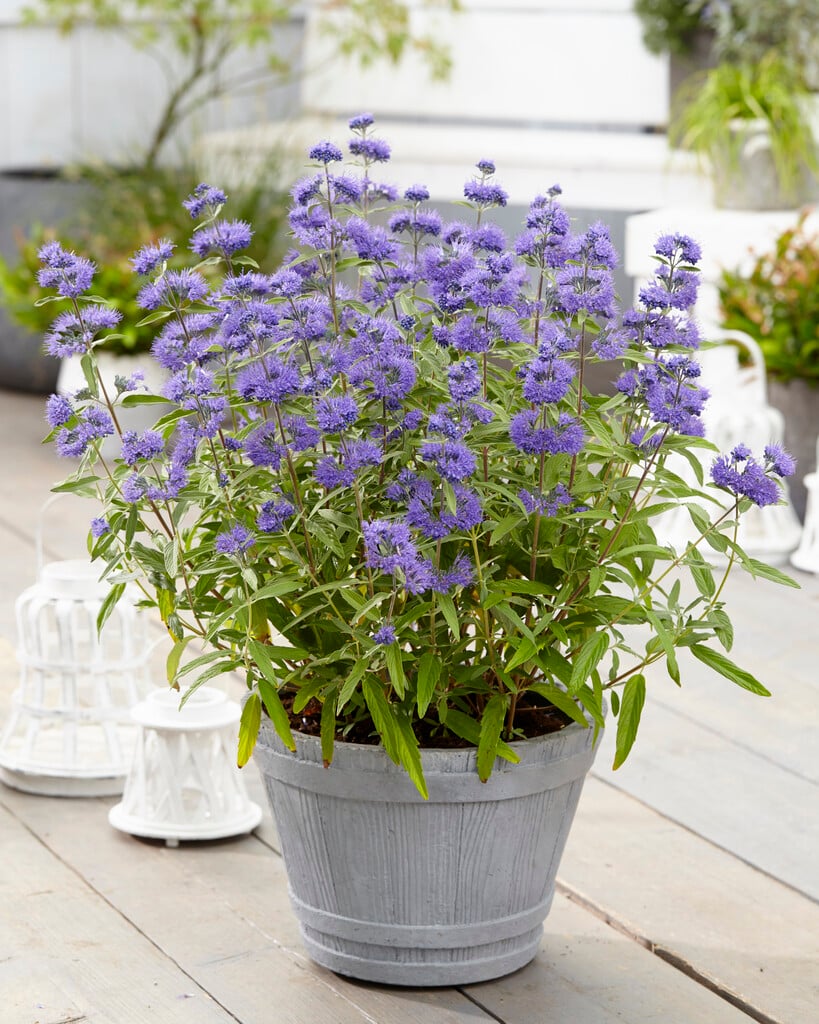
A deciduous shrub to around 1m high, with a compact, bushy habit and narrow, grey-green leaves. Fluffy clusters of deep blue flowers with prominent stamens are produced from the upper leaf axils and tips of the stems in late summer and early autumn
Size
Ultimate height
0.5–1 metresTime to ultimate height
2–5 yearsUltimate spread
0.5–1 metresGrowing conditions
Moisture
Well–drainedpH
Acid, Alkaline, NeutralColour & scent
| Stem | Flower | Foliage | Fruit | |
| Spring | Green Grey Silver | |||
|---|---|---|---|---|
| Summer | Blue | Green Grey Silver | ||
| Autumn | Blue | Green Grey Silver | ||
| Winter |
Position
- Full sun
Aspect
South–facing or West–facing
Exposure
Sheltered Hardiness
H4Botanical details
- Family
- Lamiaceae
- Native to GB / Ireland
- No
- Foliage
- Deciduous
- Habit
- Bushy
- Genus
Caryopteris can be deciduous shrubs or perennials, with aromatic, simple leaves and small blue or white flowers in compact axillary clusters in late summer and autumn
- Name status
Trade
How to grow
Cultivation
Grow in moderately fertile, well-drained soil in a sunny sheltered spot; ideal against a sunny wall. Some drought tolerance once established. Will not tolerate wet, poorly drained soil
Propagation
Propagate by softwood cuttings from spring to mid-summer, semi-ripe cuttings from mid- to late summer or hardwood cuttings from late autumn to mid-winter. As this plant is protected by Plant Breeders' Rights, any propagation should be for personal rather than commercial use
Suggested planting locations and garden types
- City and courtyard gardens
- Cottage and informal garden
- Patio and container plants
- Wildlife gardens
- Gravel garden
- Low Maintenance
- Flower borders and beds
Pruning
Flowers on new growth so can be cut back hard in spring, see pruning group 6
Pests
May be susceptible to capsid bug
Diseases
May be susceptible to honey fungus
Get involved
The RHS is the UK’s gardening charity, helping people and plants to grow - nurturing a healthier, happier world, one person and one plant at a time.