Rhododendron 'Kure-no-yuki' (Kurume) (EA/d)
rhododendron 'Kure-no-yuki'
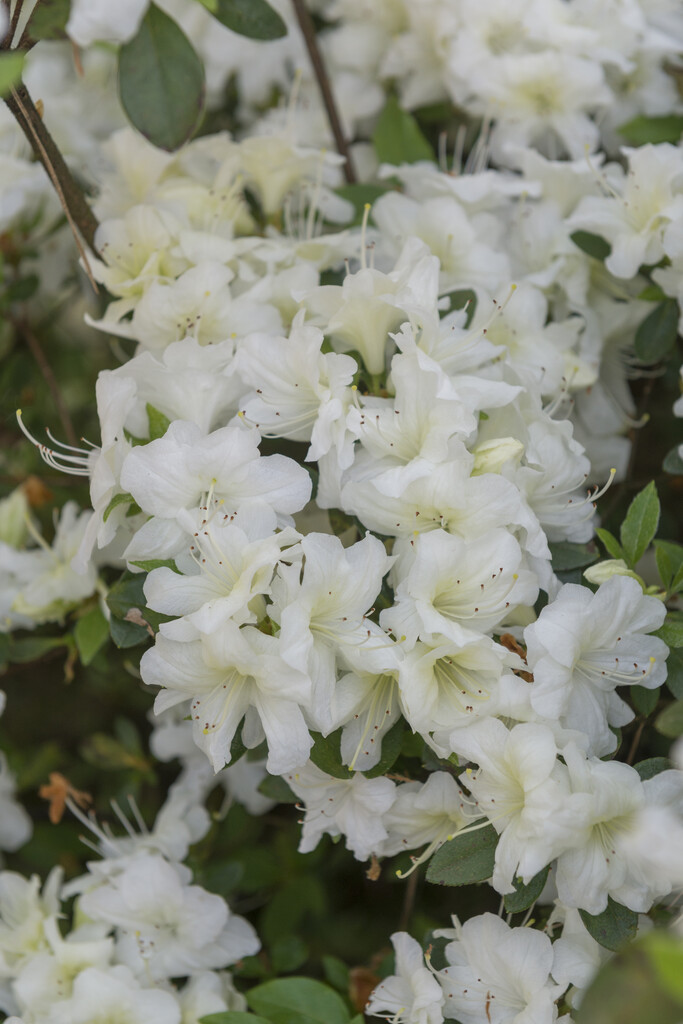
A dwarf, compact evergreen old variety of azalea with oval leathery and glossy dark green leaves and masses of white flowers which appear in May. Ideal for cascading over walls or in the front of a flower border but not fully hardy so performs best in a sheltered location
Buy this plant
Size
Ultimate height
0.5–1 metresTime to ultimate height
10–20 yearsUltimate spread
0.5–1 metresGrowing conditions
Moisture
Moist but well–drainedpH
AcidColour & scent
| Stem | Flower | Foliage | Fruit | |
| Spring | White | Green | ||
|---|---|---|---|---|
| Summer | Green | |||
| Autumn | Green | |||
| Winter | Green |
Position
- Partial shade
Aspect
South–facing or West–facing
Exposure
Sheltered Hardiness
H4Botanical details
- Family
- Ericaceae
- Native to GB / Ireland
- No
- Foliage
- Evergreen
- Habit
- Bushy
- Potentially harmful
- Harmful if eaten. Wear gloves and other protective equipment when handling. Pets (dogs, cats, rabbits, tortoises) Harmful if eaten - for further information and contact numbers regarding pets, see the HTA guide to potentially harmful plants
- Genus
Rhododendron can be evergreen or deciduous shrubs or trees, with simple leaves, sometimes with a dense colourful indumentum of hairs on the lower side, and funnel-shaped, bell-shaped or tubular flowers that may be solitary or in short racemes
- Name status
Accepted
- Horticultural Group
- Evergreen azaleas are compact evergreen shrubs with small leaves and terminal racemes of small, funnel-shaped, usually unscented flowers in early summer
How to grow
Cultivation
Grow in moist but well-drained, leafy, humus-rich acid soil in part shade with shelter; see rhododendron cultivation for further advice
Propagation
Propagate by semi-ripe cuttings in late summer, layering in autumn or grafting in late summer or late winter
Suggested planting locations and garden types
- Cottage and informal garden
- Patio and container plants
- Flower borders and beds
- Garden edging
- Underplanting of roses and shrubs
- Wall side borders
Pruning
Pests
May be susceptible to vine weevil, rhododendron leafhopper, pieris lacebug, scale insects, caterpillars and aphids
Diseases
May be susceptible to Rhododendron diseases, powdery mildews, rhododendron petal blight, rhododendron bud blast, silver leaf and honey fungus
Get involved
The Royal Horticultural Society is the UK’s leading gardening charity. We aim to enrich everyone’s life through plants, and make the UK a greener and more beautiful place.