Salvia × jamensis Belle de Loire ('Barsabel')
sage [Belle de Loire]
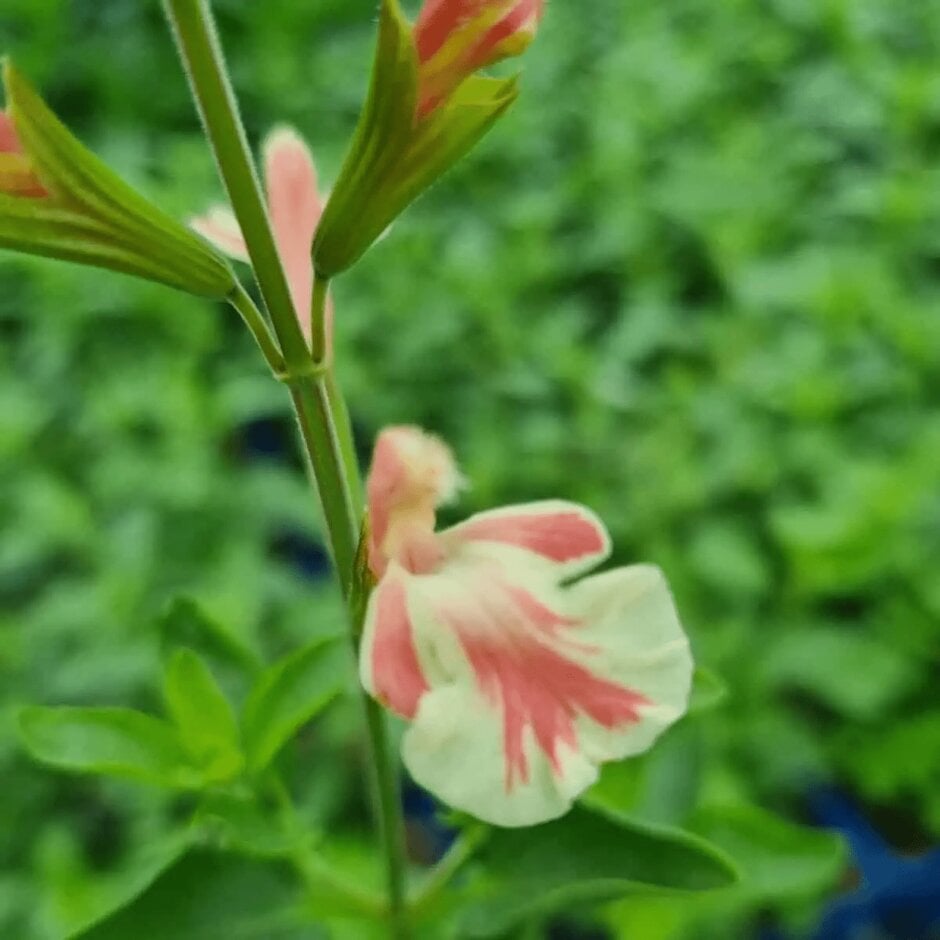
An upright, clump-forming perennial to around 70cm, with aromatic grey-green foliage and long spikes of bicoloured orange and yellow flowers from spring to autumn, which become more cream to salmon pink in colour as the temperatures become cooler towards the autumn
Size
Ultimate height
0.5–1 metresTime to ultimate height
2–5 yearsUltimate spread
0.1–0.5 metresGrowing conditions
Moisture
Moist but well–drained, Well–drainedpH
Acid, Alkaline, NeutralColour & scent
| Stem | Flower | Foliage | Fruit | |
| Spring | Orange Yellow | Grey Silver Green | ||
|---|---|---|---|---|
| Summer | Orange Yellow | Grey Silver Green | ||
| Autumn | Pink Cream | Grey Silver Green | ||
| Winter |
Position
- Full sun
- Partial shade
Aspect
East–facing or South–facing or West–facing
Exposure
Exposed or Sheltered Hardiness
H4Botanical details
- Family
- Lamiaceae
- Native to GB / Ireland
- No
- Foliage
- Deciduous
- Habit
- Clump forming
- Genus
Salvia can be annuals, biennials, herbaceous or evergreen perennials, or shrubs. They have paired, simple or pinnately lobed, often aromatic leaves and 2-lipped flowers in whorls, forming simple or branched spikes or racemes
- Name status
Trade
How to grow
Cultivation
Grow in light, moderately fertile, moist but well drained soil, in full sun or light dappled shade. Protect from excessive winter wet. See sage cultivation
Propagation
Propagate by division in spring, by basal or softwood cuttings in spring or early summer, or by semi-hardwood cuttings in late summer or autumn
Suggested planting locations and garden types
- City and courtyard gardens
- Coastal
- Cottage and informal garden
- Patio and container plants
- Mediterranean climate plants
- Gravel garden
- Wildlife gardens
- Flower borders and beds
Pruning
Pruning group 9 in spring; cut back spent flower spikes to prolong flowering
Pests
Diseases
May be susceptible to honey fungus (rarely), powdery mildews, verticillium wilt and foot and root rots
Get involved
The RHS is the UK’s gardening charity, helping people and plants to grow - nurturing a healthier, happier world, one person and one plant at a time.