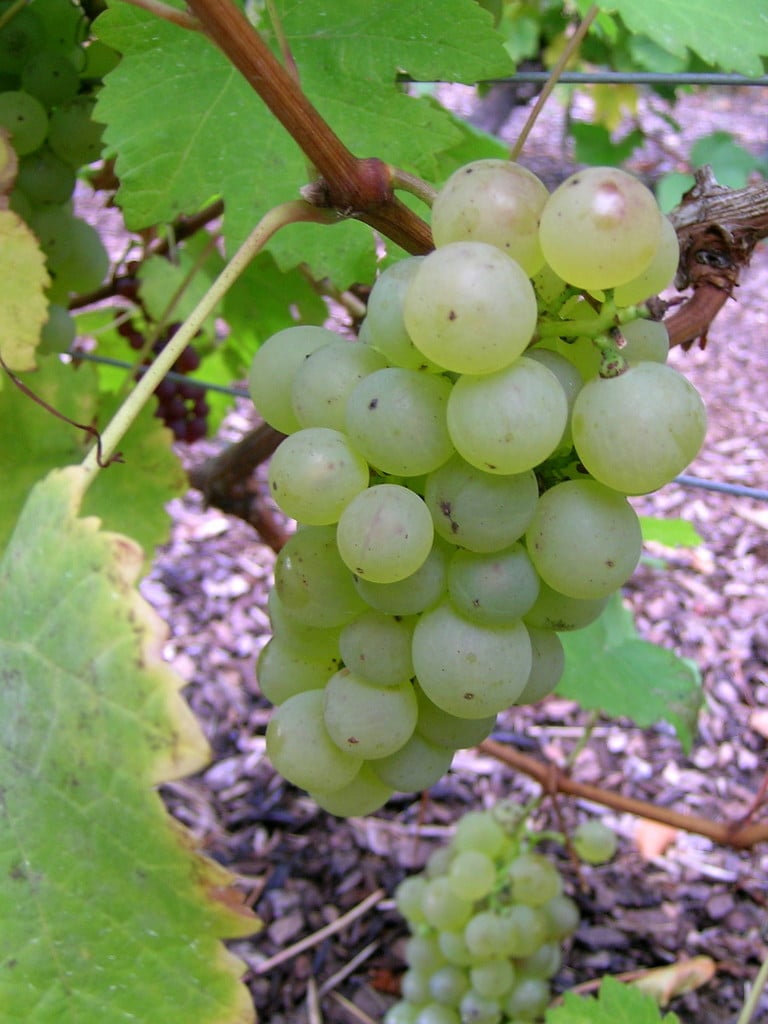
Vitis vinifera 'Chasselas' (G/O/W)

RHS Plant Profile
grape 'Chasselas'
grape 'Chasselas' RHS

Synonyms

Vitis vinifera 'Chasselas d'Or'
Vitis vinifera 'Chasselas de Moissac'
Vitis vinifera 'Golden Chasselas'

Fruit Edible

A vigorous grape vine suited to outdoor or greenhouse cultivation, producing sweet, juicy, pale green to golden yellow fruit that is suitable for wine-making or as a dessert grape. The leaves turn yellow in autumn

Position

Full sun

Soil Types

Chalk, Loam, Sand

Max Height

8-12 metres

Max Spread

2.5-4 metres

Size

Time to Maturity
5–10 years
Max Spread
2.5-4 metres
Max Height
8-12 metres

Growing Conditions

Chalk Loam Sand
Moisture
Well–drained
pH
Alkaline or Neutral

Position

Full sun
Aspect
West–facing or South–facing
Exposure
Sheltered
Hardiness
H5

Colour & Scent

Season Stem Flower Foliage Fruit
Spring
Summer
Autumn
Winter

Botanical Details

Family
Vitaceae
Native to GB/Ireland
No
Foliage
Deciduous
Habit
Climbing
Potentially harmful
Pets (dogs): Harmful if eaten whether fruits are edible or ornamental - for further information and contact numbers regarding pets, see the HTA guide to potentially harmful plants
Genus
Vitis are vigorous deciduous climbing shrubs with tendrils and attractively lobed leaves, insignificant green flowers followed by often edible fruits; some have excellent autumn foliage colour
Name Status
Unresolved
Horticultural Group
Suitable for cultivation under glass, such as in a greenhouse or orangery

How to Grow

Cultivation

Grow in well-drained, ideally neutral to alkaline soil, mulching with well-rotted compost or manure in the first years after planting, and training as required. Outdoors needs a warm, sunny position, see outdoor grape cultivation, or grow under glass, see indoor grape cultivation

Propagation

Propagate by hardwood cuttings in late autumn or winter, or by softwood cuttings or semi-ripe cuttings from late spring to midsummer or grafting onto Phylloxera resistant rootstocks

Suggested planting locations and garden types

  • City and courtyard gardens
  • Cottage and informal garden
  • Mediterranean climate plants
  • Climber and wall shrubs
  • Edible fruit
  • Wall side borders

Pruning

Pruning is required to encourage flowering and fruiting, and to increase air circulation and so reduce the risk of disease: see grape pruning and training

Pests

May be susceptible to grapevine blister mite, glasshouse red spider mite, brown scale, woolly vine scale and spotted wing drosophila (fruit fly) and may be susceptible to mealybugs under glass

Diseases

May be susceptible to Powdery mildews, grey moulds, honey fungus and virus diseases. For further advice see grapevine diseases