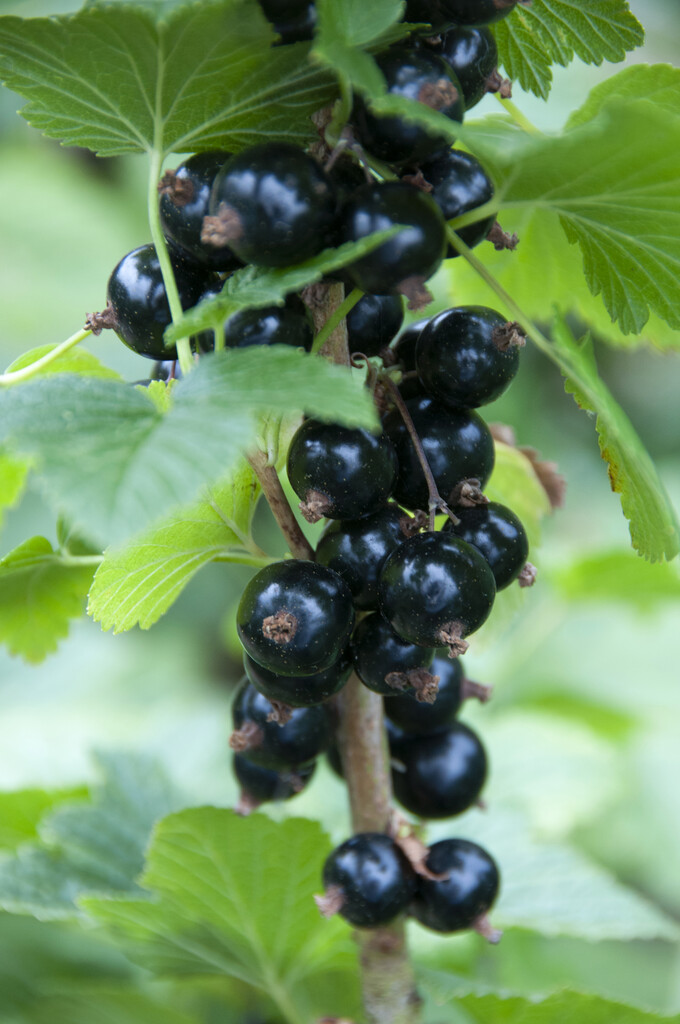
Ribes nigrum 'Ben Tirran' (B)

RHS Plant Profile
blackcurrant 'Ben Tirran'
blackcurrant 'Ben Tirran' visionspictures.com
Plants for pollinators
Fruit Edible Shrubs

A deciduous shrub with early-maturing fruit, usually ripening at the end of July or early August, so it can be useful to extend the cropping season. It produces high-yielding, good quality fruits with a great flavour that are good for all culinary uses. As it is late flowering it is seldom damaged by frost. Blackcurrants are self-fertile and have clusters of insignificant yellow-green flowers in spring.

Position

Full sun, Partial shade

Soil Types

Clay, Loam, Sand

Max Height

1-1.5 metres

Max Spread

1-1.5 metres

Size

Time to Maturity
2–5 years
Max Spread
1-1.5 metres
Max Height
1-1.5 metres

Growing Conditions

Clay Loam Sand
Moisture
Moist but well–drained
pH
Acid or Alkaline or Neutral

Position

Full sun Partial shade
Aspect
East–facing or North–facing or South–facing or West–facing
Exposure
Sheltered
Hardiness
H6

Colour & Scent

Season Stem Flower Foliage Fruit
Spring
Summer
Autumn
Winter

Botanical Details

Family
Grossulariaceae
Native to GB/Ireland
No
Foliage
Deciduous
Habit
Bushy
Genus
Ribes can be deciduous or evergreen shrubs, sometimes spiny, with simple, usually palmately lobed leaves and small tubular or bell-shaped, solitary or racemose flowers borne in spring or summer, followed by juicy, sometimes edible berries
Name Status
Accepted
Horticultural Group
This genus produces blackcurrants

How to Grow

Cultivation

Blackcurrants prefer a sunny site with well-drained but moisture-retentive soil, but will cope in most other soil conditions and tolerate light shade. Mulch annually with well-rotted manure or compost and apply a general purpose fertiliser in spring. Please see our blackcurrant cultivation page for more growing tips.

Propagation

Propagate by hardwood cuttings

Suggested planting locations and garden types

  • Cottage and informal garden
  • Wildlife gardens
  • Edible fruit

Pruning

Prune in winter. Blackcurrants fruit best on younger wood so aim to remove up to one quarter of the oldest stems at ground level to encourage new growth from the base.

Pests

May be susceptible to gall mites, gall midge and aphids

Diseases

May be susceptible to a leaf spot, powdery mildews, coral spot and sometimes honey fungus