Nepeta clarkei
Clark's catmint
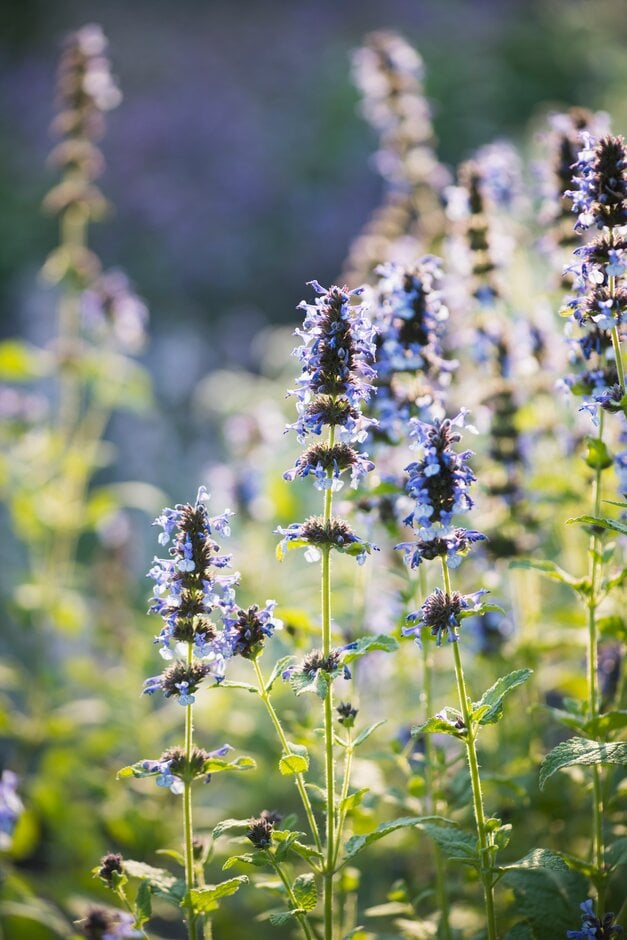
An upright, aromatic, clump-formingperennial to 70cm, with branching stems and toothed,bright green leaves.From mid-summer to mid-autumn produces spires of light purplish-blue flowers, with deep purple calyces, arranged in whorls
Size
Ultimate height
0.5–1 metresTime to ultimate height
2–5 yearsUltimate spread
0.1–0.5 metresGrowing conditions
Moisture
Well–drainedpH
Acid, Alkaline, NeutralColour & scent
| Stem | Flower | Foliage | Fruit | |
| Spring | Green | |||
|---|---|---|---|---|
| Summer | Blue Purple | Green | ||
| Autumn | Blue Purple | Green | ||
| Winter |
Position
- Full sun
Aspect
South–facing or West–facing
Exposure
Exposed or Sheltered Hardiness
H6Botanical details
- Family
- Lamiaceae
- Native to GB / Ireland
- No
- Foliage
- Deciduous
- Habit
- Bushy
- Genus
Nepeta can be annuals or, more commonly, perennials, with paired, usually aromatic leaves, and terminal spikes or panicles of 2-lipped, tubular flowers
- Name status
Correct
How to grow
Cultivation
Grow in well-drained soil in full sun but will tolerate light shade
Propagation
Propagate by seed, or by division in spring or autumn; take softwood stem-tip cuttings in early summer or semi-ripe cuttings in early autumn
Suggested planting locations and garden types
- City and courtyard gardens
- Coastal
- Cottage and informal garden
- Gravel garden
- Wildlife gardens
- Flower borders and beds
- Cut flowers
- Ground cover
Pruning
Deadhead spent flowerheads and cut hard back at the end of the flowering season or in early spring
Pests
Diseases
Powdery mildews can be problematic
Get involved
The Royal Horticultural Society is the UK’s leading gardening charity. We aim to enrich everyone’s life through plants, and make the UK a greener and more beautiful place.