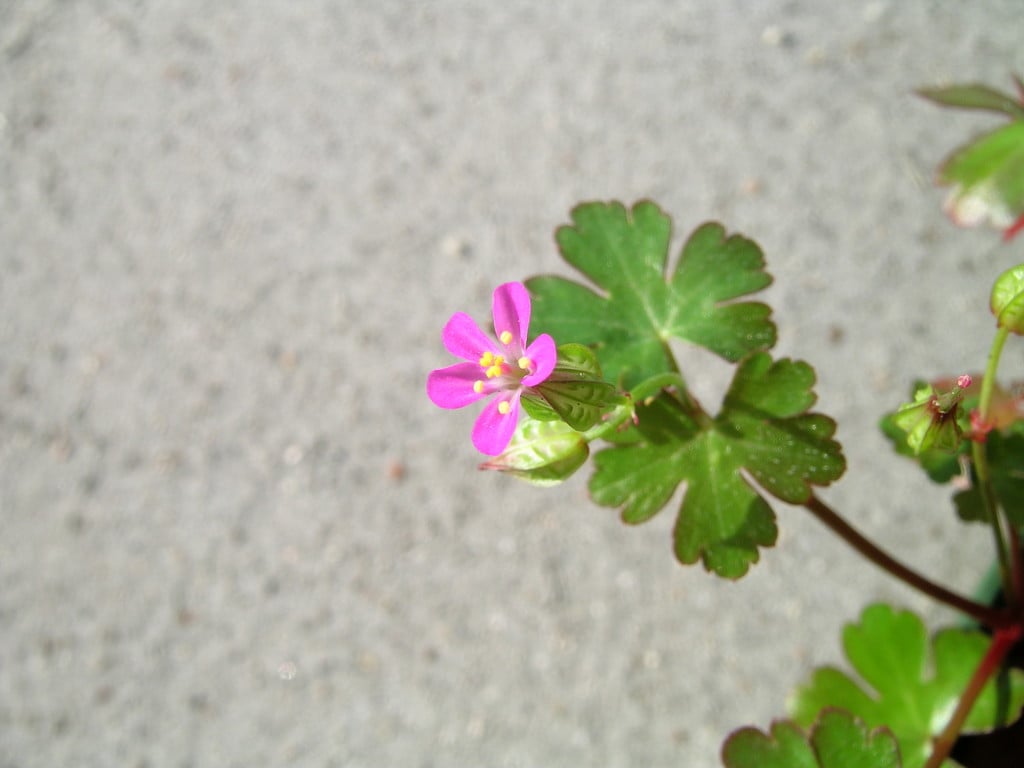
Geranium lucidum

RHS Plant Profile
shining cranesbill
shining cranesbill RHS

Other common names

pig yr aran disglair

Plants for pollinators
Annual Biennial

An annual to 40cm tall with branched, ascending, brittle and fleshy stems and glossy green, red-tinged leaves that are rounded to kidney-shaped with five to seven lobes and blunt teeth. Tiny pink flowers are borne in pairs from spring into summer

Position

Full sun, Partial shade

Soil Types

Chalk, Clay, Loam, Sand

Max Height

0.1-0.5 metres

Max Spread

0.1-0.5 metres

Size

Time to Maturity
1–2 years
Max Spread
0.1-0.5 metres
Max Height
0.1-0.5 metres

Growing Conditions

Chalk Clay Loam Sand
Moisture
Well–drained or Moist but well–drained
pH
Alkaline or Neutral

Position

Full sun Partial shade
Aspect
East–facing or North–facing or South–facing or West–facing
Exposure
Exposed or Sheltered
Hardiness
H6

Colour & Scent

Season Stem Flower Foliage Fruit
Spring
Summer
Autumn
Winter

Botanical Details

Family
Geraniaceae
Native to GB/Ireland
Yes
Foliage
Deciduous
Habit
Clump forming, Matforming
Genus
Geranium can be annuals, biennials and perennials, herbaceous or evergreen, with rounded, usually palmately lobed or divided leaves, and lax inflorescences of rounded, 5-petalled flowers
Name Status
Correct

How to Grow

Cultivation

Grows naturally in well-drained, alkaline soils in full sun or partial shade and often found on limestone rocks and walls; also grows on verges, banks, in gardens and on uncultivated land

Propagation

Spreads readily by seed

Suggested planting locations and garden types

  • Wildlife gardens
  • Wildflower meadow

Pruning

No pruning required

Pests

Generally pest-free

Diseases

May be susceptible to powdery mildews