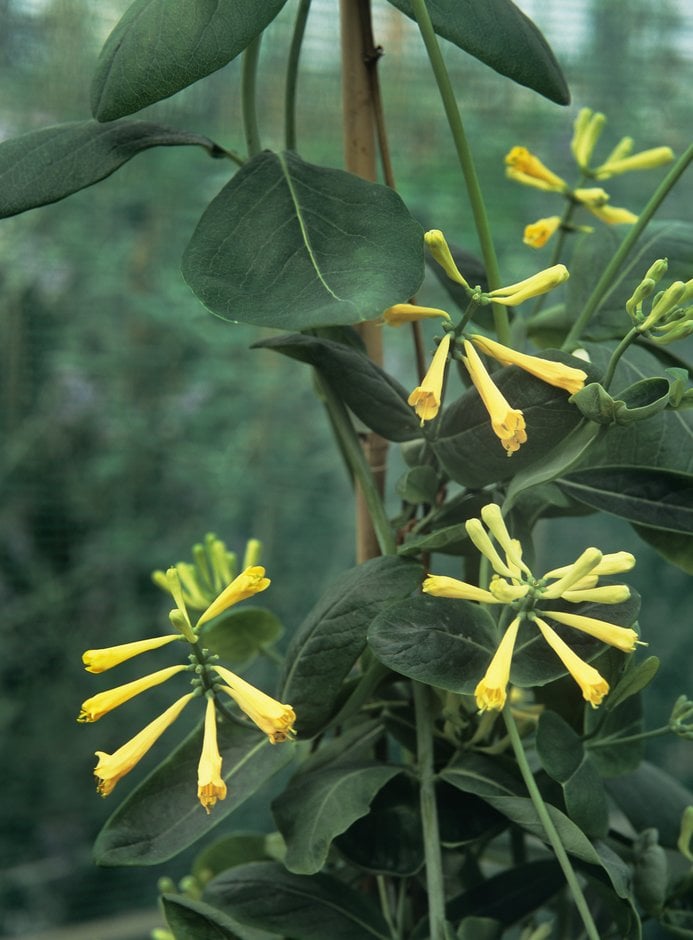
Size
Ultimate height
2.5–4 metresTime to ultimate height
5–10 yearsUltimate spread
0.5–1 metresGrowing conditions
Moisture
Moist but well–drainedpH
Acid, Alkaline, NeutralColour & scent
| Stem | Flower | Foliage | Fruit | |
| Spring | Yellow | Blue Green | ||
|---|---|---|---|---|
| Summer | Yellow | Blue Green | Red | |
| Autumn | Blue Green | |||
| Winter | Blue Green |
Position
- Full sun
- Partial shade
Aspect
West–facing or South–facing or North–facing or East–facing
Exposure
Exposed or Sheltered Hardiness
H5Botanical details
- Family
- Caprifoliaceae
- Native to GB / Ireland
- No
- Foliage
- Evergreen
- Habit
- Climbing
- Potentially harmful
- Fruit are ornamental - not to be eaten. Wear gloves and other protective equipment when handling. Pets: Fruit are ornamental - not to be eaten - see the HTA guide to potentially harmful plants for further information and useful contact numbers
- Genus
Lonicera can be deciduous and evergreen shrubs, or climbers with twining stems. The tubular or two-lipped flowers, often very fragrant, are followed by red or black berries
- Name status
Correct
How to grow
Cultivation
Vigorous honeysuckle best in partial shade but tolerates full sun, thrives in any moist but well-drained soil
Propagation
Propagate by layering, hardwood cuttings or semi-hardwood cuttings
Suggested planting locations and garden types
- City and courtyard gardens
- Cottage and informal garden
- Coastal
- Low Maintenance
- Flower borders and beds
- Wall side borders
Pruning
Pruning group 11 after flowering
Pests
May be susceptible to honeysuckle aphids, Thrips and glasshouse whitefly
Diseases
May be susceptible to powdery mildews, fungal leaf spot, silver leaf and honey fungus (rarely)
Get involved
The Royal Horticultural Society is the UK’s leading gardening charity. We aim to enrich everyone’s life through plants, and make the UK a greener and more beautiful place.
