Shutterstock
 Appearance
There are many different peperomias to choose from, with attractive foliage in a range of colours, shapes and textures, including succulent, ridged, striped or glossy. Peperomias are usually small plants, less than 30cm (1ft) tall, some with upright stems, some horizontal and others trailing. The slender flower spikes are usually cream or green.
Preferences
Peperomias are happy in bright, indirect light, in temperatures of 18–30°C (65–86°F). Let the top few centimetres of compost become dry before watering. Most peperomias prefer humid air, such as in a steamy bathroom, but will adapt to the lower humidity in most homes.
Dislikes
Take care not to overwater, as peperomias are susceptible to root rot in persistently damp conditions. Keep them out of cold draughts and always above 10°C (50°F). Deep shade will cause weak, spindly growth, direct sun in summer can scorch the leaves, and a location close to a radiator will cause dehydration.
Did you know?
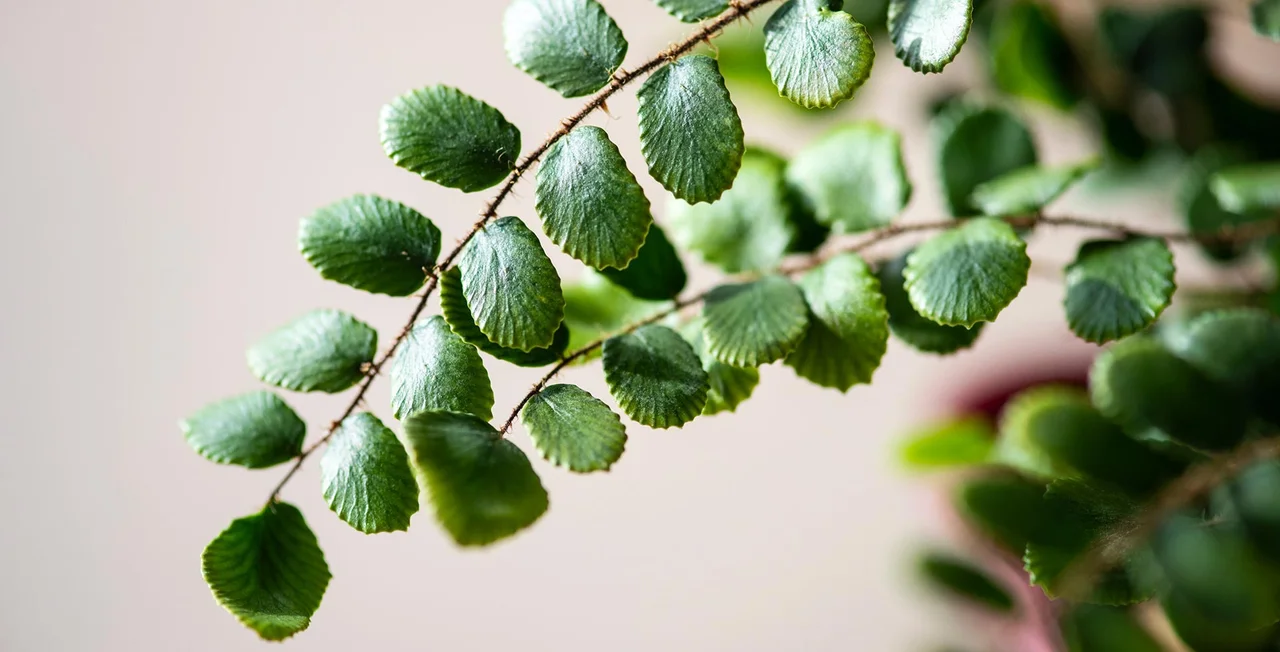
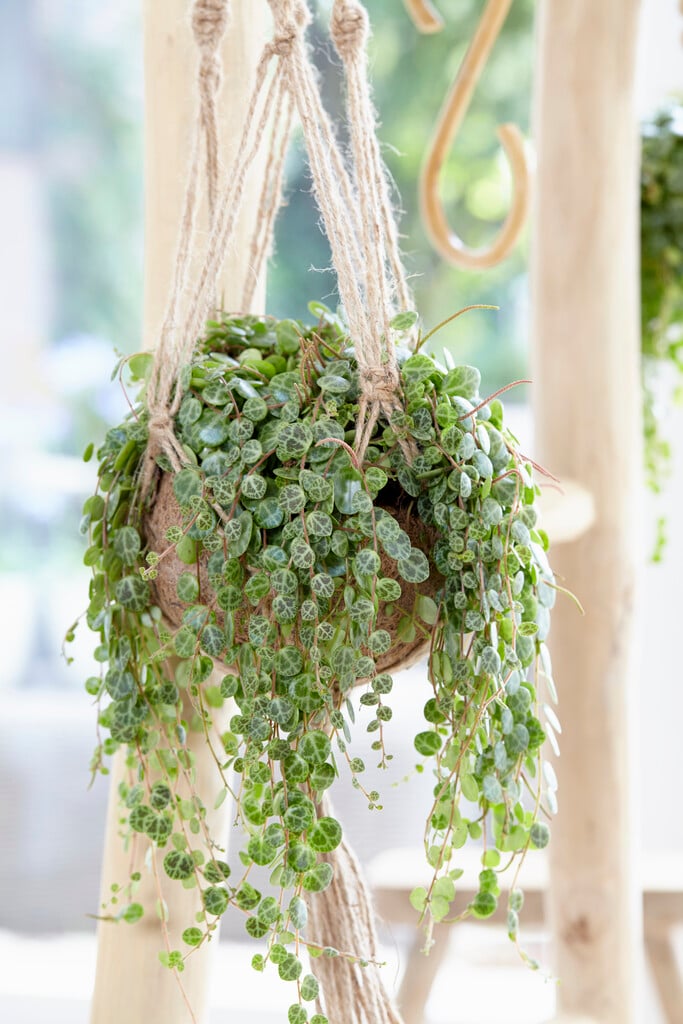
Peperomia prostrata is better known as string of turtles, as its long trailing stems are covered in intricately veined leaves that resemble little turtle shells. This characterful plant is ideal for growing in a hanging planter, where you can admire the unique foliage at close quarters.
RHS Growing Guide
FREE
Read our comprehensive free RHS Growing Guide:
How to grow peperomia

Introducing Peperomia
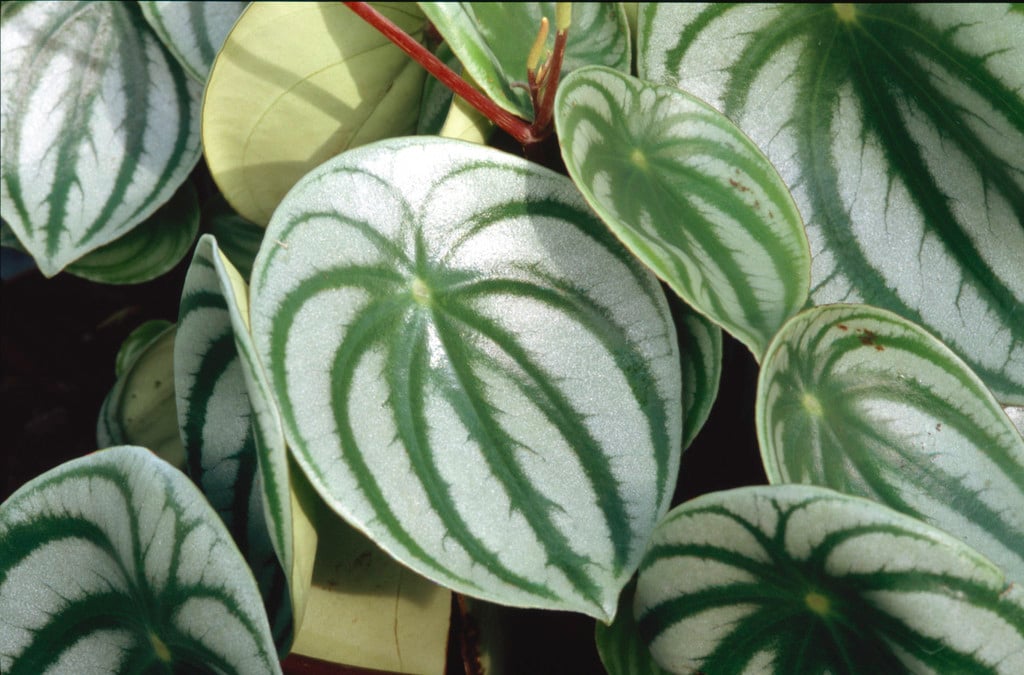
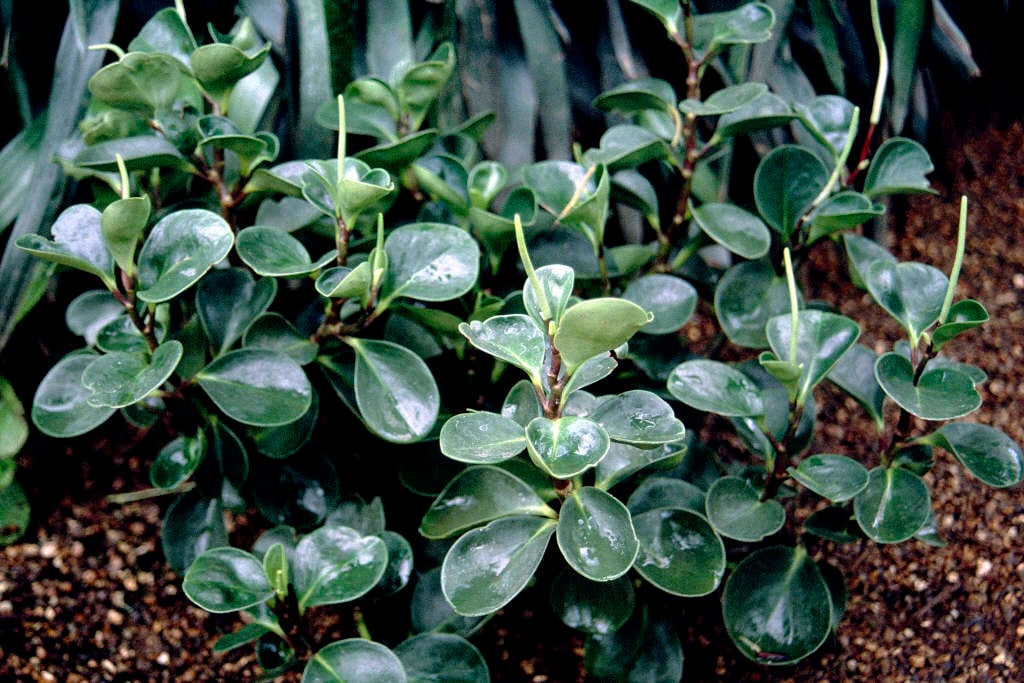
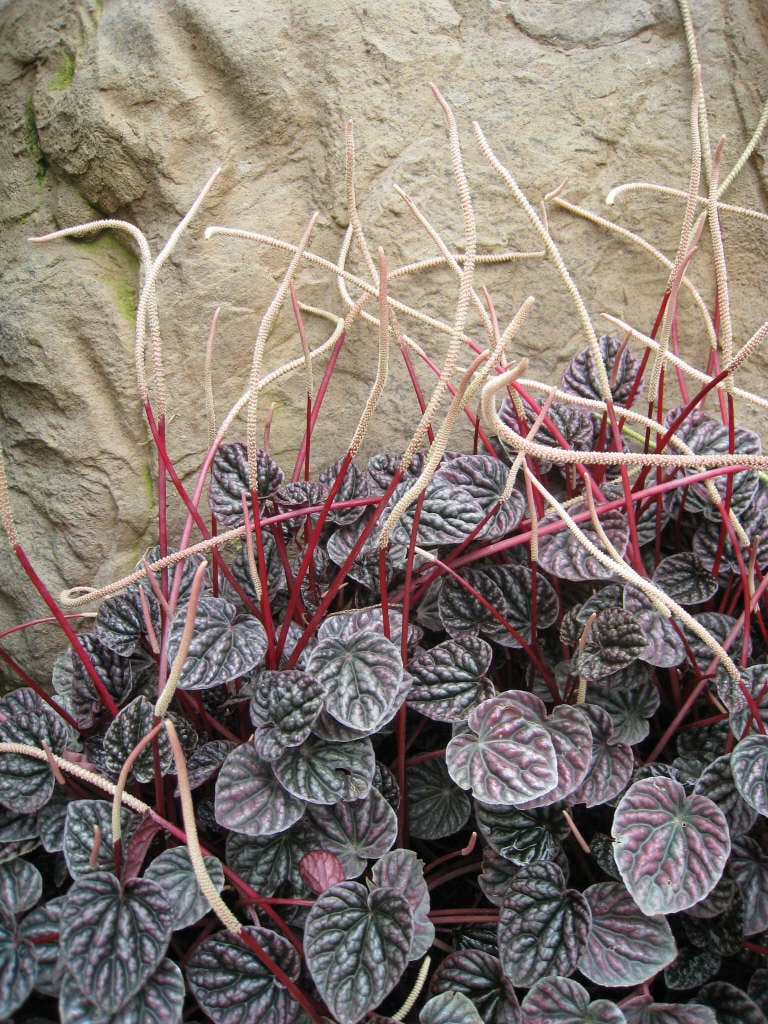
Peperomia obtusifolia (Magnoliifolia Group) 'USA'
baby rubber plant 'USA'
- Height
- 0.1–0.5 metres
- Width
- 0.1–0.5 metres
Peperomia caperata 'Little Fantasy'
radiator plant 'Little Fantasy'
- Height
- No preference
- Width
- 0–0.1 metre
x of x
Showing
x to x
of x