Planet-friendly gardening
10 things all gardeners can do now

Gardening is all about nature but it still relies on plastic – our recent survey shows that 77% of gardeners recycle their plastic pots. To tackle the global crisis of plastic pollution we need to look at eliminating all single-use plastic in gardening
We will eliminate all single-use plastic; encourage reduced plastic use; ensure that all packaging is 100 percent reusable, recyclable or compostable in RHS operations and encourage these gardening practices to our members and visitors
How are we going to do this?
‘When you start to seriously and methodically look at what plastic you use where and what for, it’s astounding just how much there is. Many people are now doing this within their homes and with more and more local councils collecting plastic from the kerbside it’s never been easier to recycle waste plastic.
‘Although gardening is about nature it still relies on plastic; plastic pots and growing media bags to name just two. Our new targets will make us focus on the next steps, working towards using less plastic (reduce and cut down our plastic use), use better plastic (switch to recycled, recyclable or compostable products in our operations) and use no plastic (choose, wherever possible, alternative materials, such as paper, glass or aluminium) in our operations.’
"We are now thinking of our plastic use in a holistic way, all the while encouraging and hoping our members and all gardeners will do the same."
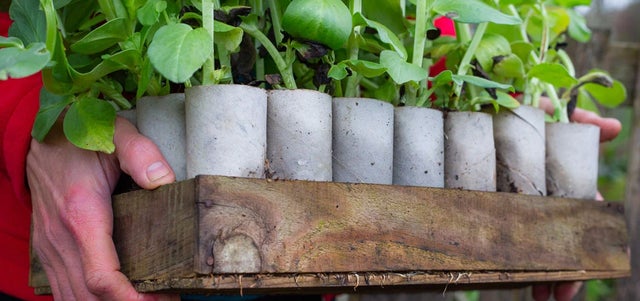
‘In 2019 we replaced the plastic wrappers used to send out our magazines, The Garden, The Plant Review and The Orchid Review with paper wrap. This resulted in removing 5.25 million items of single-use plastic each year. Readers can now recycle the wrapper or use it to make pots for growing seeds.
‘For decades we have adopted the circular-loop system for plastic pots in our gardens by recycling and reusing them and we aim to adopt this circular-loop system for other plastic use in RHS Gardens, Flower Shows and throughout all business activities.
‘The supply chain is a really important place to focus on and we are working with all our contacts to accurately work out what we use and where so we can fully understand our plastic use and then minimise the negative impacts by switching to no plastics, other sustainable alternatives or better plastics. We are also working with the horticulture and landscape industry and government.’
‘We are currently trialling several initiatives. One is a fully-compostable cardboard membership card and we have an aim of rolling it out for new and renewed memberships from December 2021. In RHS Gardens we are testing non-plastic tree guards for where they are needed for new tree and shrub planting. This is a developing area of research and we hope soon to be able to offer gardeners advice on some of the best ones to use.
‘For gardeners we have launched and will continue to develop the RHS Planet-Friendly Gardening Campaign offering tips on what to do at home to reduce plastic use in the garden. All results of research and trials will be shared with gardeners through this campaign and embedded throughout our educational programmes.
‘We now have in place a post-doctoral fellowship working with us for the next five years to develop and launch a Planet-Friendly Sustainability Calculator for gardeners by 2025. Plastic will be one of the important elements within this calculator.’
‘Gardening and gardeners can make a meaningful contribution to reducing and storing carbon which in turn will help mitigate the climate and crisis we are all now facing. The choices we all make can add up to a significant difference and if gardeners start with considering plastic then great things can be achieved.’
Six things to do to help eliminate single-use plastic by 2030
Target 1: Climate positive by 2030
Target 2: Biodiversity positive by 2025
Target 3: Biosecurity neutral by 2025
Target 4: Water neutral by 2030
Target 5: Circular plastic by 2030
Target 6: Zero waste to landfill by 2030
Target 1: Enable more people to enjoy the benefits of gardening
Target 2: Design a new evidence-based blueprint for wellbeing gardens by 2025
Target 3: Develop and embed sustainable horticulture within education, research and training