Getting Started
Fancy growing something unusual that isn’t widely available in supermarkets? Then this odd-looking but tasty and versatile brassica is a good choice. Kohlrabi forms a swollen stem base, often called a bulb, which can be green, white or purple on the outside, with pale green or white flesh inside. It’s best harvested young, when tender, crisp and juicy, ideal for eating raw in salads and coleslaws. It can also be lightly steamed, roasted or sautéed. It has a sweet flavour, like broccoli or mild turnip, to which it’s closely related. The young leaves can also be cooked like greens.
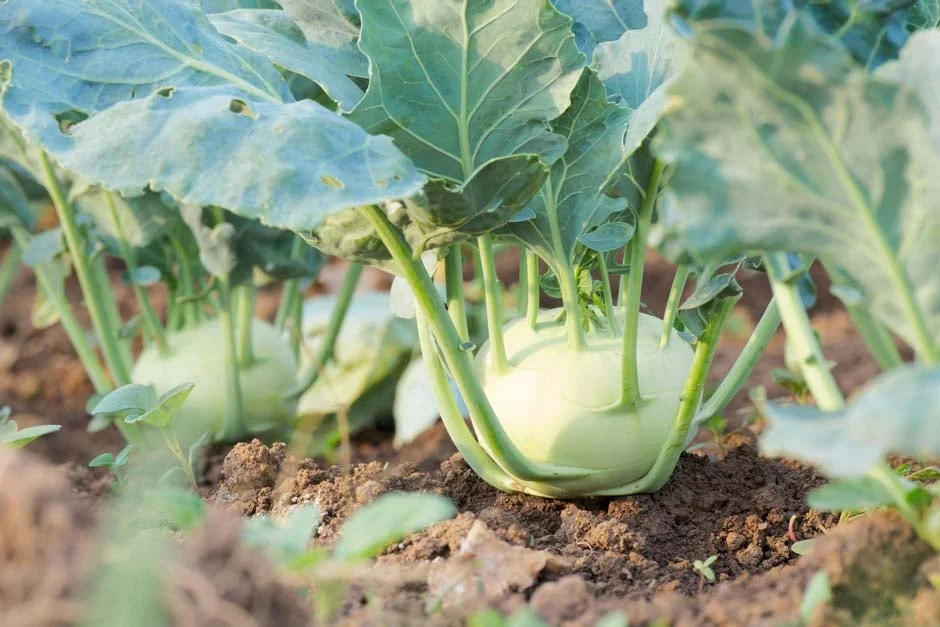
Seeds can be sown indoors in spring or outside from mid-spring to late summer, for harvesting from late spring through to early winter. Compared to many other brassicas, kohlrabi is fast growing, especially early in the year, so it's ideal for filling gaps on the veg plot. You can harvest it as baby veg in as little as six weeks and at full size after about twelve weeks.
Jobs to do now
Thin seedlings
Harvest
Water in dry spells
Month by Month
Sow
Plant Out
Harvest


Choosing What To Grow
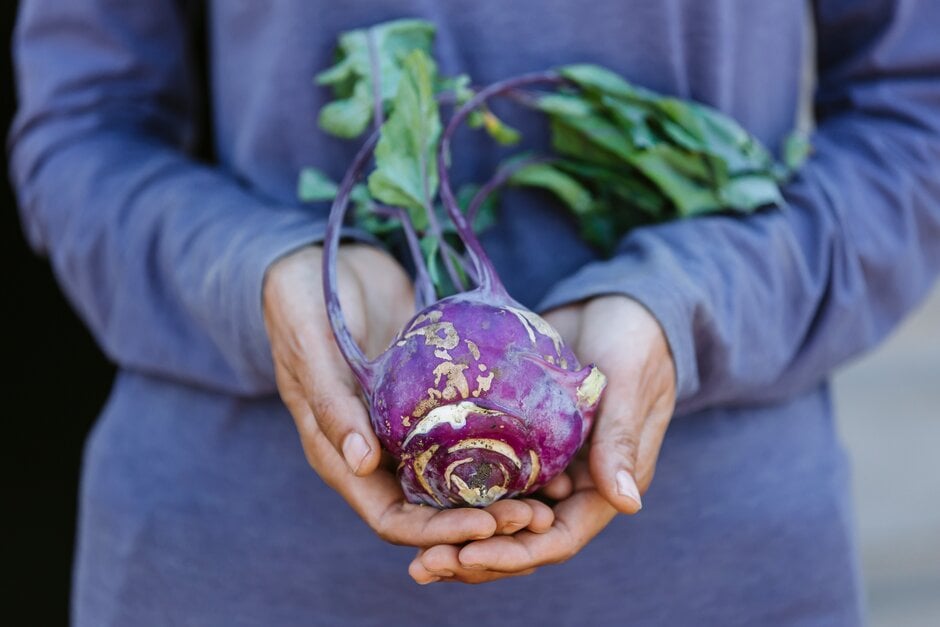
There are many varieties of kohlrabi to choose from, with green, white or purple skin (all are white or pale green inside). Purple varieties make a particularly attractive addition to the veg plot, and also tend to be hardier and slower to mature, ideal for sowing in late summer. F1 hybrid varieties tend to produce vigorous plants and a reliable, consistent crop. It’s also worth choosing varieties that are resistant to bolting (premature flowering).
For varieties that performed particularly well in RHS growing trials, see our list of RHS Recommended: AGM fruit and veg (135kB pdf) and our Recommended Varieties, below. You can also see many crops, including kohlrabi and other brassicas, in the veg plots at the RHS gardens, so do visit to explore how they’re grown, compare the varieties and pick up useful tips and inspiration.
Where to buy
Kohlrabi seeds are widely sold in garden centres and by online seed suppliers. may also be available from similar sources in spring and summer, although the choice of varieties is usually much more limited.
Recommended Varieties


Preparing The Ground
Kohlrabi grows best in a sunny site with fertile, moisture-retentive soil. It doesn't need as much nitrogen as many other brassicas, and will grow in light, sandy soil, as well as . Some varieties will also grow in partial shade, especially in summer. If your soil has a level below 6, consider applying lime to raise the pH and help deter club root disease – you can carry out a simple pH test to check if this is necessary. Kohlrabi is a brassica, so it should be grown with its other cabbage relatives in crop rotations.
Weed the soil thoroughly, then add lots of garden compost – about two bucketfuls per square metre/yard – to improve moisture retention. Firm the ground well, then rake to remove lumps and stones. Alternatively, if you're practicing no-dig, the soil with organic matter ahead of sowing or planting directly into the mulch.
Sowing
Early sowings are best made indoors, as cold temperatures can cause plants to bolt (flower prematurely), meaning the bulb won’t swell. Kohlrabi is easy to sow outdoors in spring and summer – spring sowings tend to grow more quickly, while late-summer sowings provide a crop in autumn and even into early winter. Purple varieties tend to be hardier, so are a good choice for late-summer sowings. If you sow several small batches at regular intervals, you can extend your harvest across multiple seasons.
Sowing indoors
In cooler locations and on heavy clay soil (which is slow to warm up), early sowings are best made indoors. Use a modular tray to help reduce root disturbance when transplanting outdoors. Fill the with peat-free , water to dampen thoroughly, then sow two seeds per module, 1.5cm (½in) deep. If both germinate, remove the smaller or weaker seedling, leaving one per module. Keep in good light and water regularly.
The seeds should germinate in a couple of weeks, and the will be ready to plant outside about three to four weeks later, when no more than 5cm (2in) tall – see Planting below.
Sowing outdoors
Sow kohlrabi seeds outdoors from March to July, or as late as August in locations with mild autumns. In spring, wait until temperatures are above 10°C (50°F), as cold conditions can make plants more prone to bolting. Cover young plants with cloches or biodegradable fleece if a cold snap is forecast. For mid- to late summer sowing, choose hardier purple varieties, so the plants will cope with cooler autumn temperatures.
Choose and prepare your sowing site – see Preparing the ground, above – then make a 1.5cm (½in) deep. Water along the base, then sow the seeds thinly, cover with soil and firm gently. Space additional rows 30cm (1ft) apart.
Kohlrabi seeds germinate readily, usually in less than two weeks. Once the are 2.5cm (1in) tall or have their first true leaves, thin them out to a final spacing of 15cm (6in) apart. Protect seedlings from slugs and snails.
Sowing in containers
Kohlrabi is best sown in the ground, but if you’re short on ground space, you could sow in a large container, especially to harvest as a quick crop of mini veg. Choose a pot at least 30cm (1ft) wide and deep. Position it in sun or semi-shade, then fill with peat-free multi-purpose . Water well to dampen the compost, scatter the seeds thinly, then cover with 1.5cm (½in) of compost. Thin out the to 15cm (6in) apart, keep well watered, and harvest once golf-ball sized.
Planting
Young kohlrabi plants, either grown from seed indoors or bought as , should be planted outside when no more than 5cm (2in) tall – if larger, they may transplant less successfully. Make sure the temperature outside is consistently above 10°C (50°F), as cooler conditions can lead to bolting (premature flowering).
Prepare them for life outdoors by hardening off for a couple of weeks – do this gradually, as a sudden drop in temperature can cause . It may be beneficial to warm the soil before planting. Kohlrabi also transplants less well in warm weather, so aim to plant out in mid- to late spring.
Choose a suitable area and get it ready for planting – see Preparing the ground, above. Carefully remove the young plants from their without disturbing the roots, and plant them 15cm (6in) apart, in rows 30cm (1ft) apart.
Plant Care
Kohlrabi does need some ongoing attention, as it can be prone to bolting if too dry, too cold or too hot. So make sure the soil doesn’t dry out, and apply to hold in moisture. Plants can also be damaged by various insects, so put protection in place.
Watering
Water and young plants regularly until well rooted. With , a lack of water can slow their growth and cause them to turn woody, so keep the soil consistently moist. Kohlrabi grows best in cool, damp weather. If your soil is prone to drying out in summer, focus on early and late crops to avoid summer heat and drought. For more water-wise tips, see our guides below.
Mulching
around the crop once plants are growing well with a thick layer of organic matter, such as garden compost. This helps to hold moisture in the soil, reduce the need for watering and deter weed .
Weeding
Keep the soil weed-free, so and young plants don’t have to compete for light, water and , which can hinder growth. Hand-weed close to the plants rather than , to avoid damaging the swollen stems.
Protecting the crop
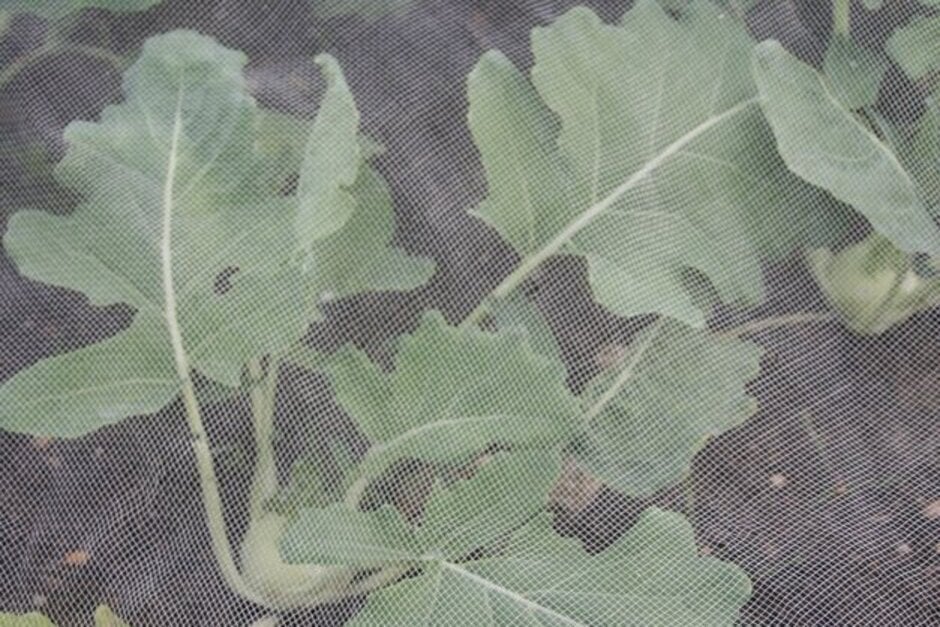
Cover kohlrabi plants with insect-proof mesh to keep cabbage butterflies away. Young plants may also need protection from slugs and snails, especially in damp weather. For more tips, see Problems below.
Harvesting
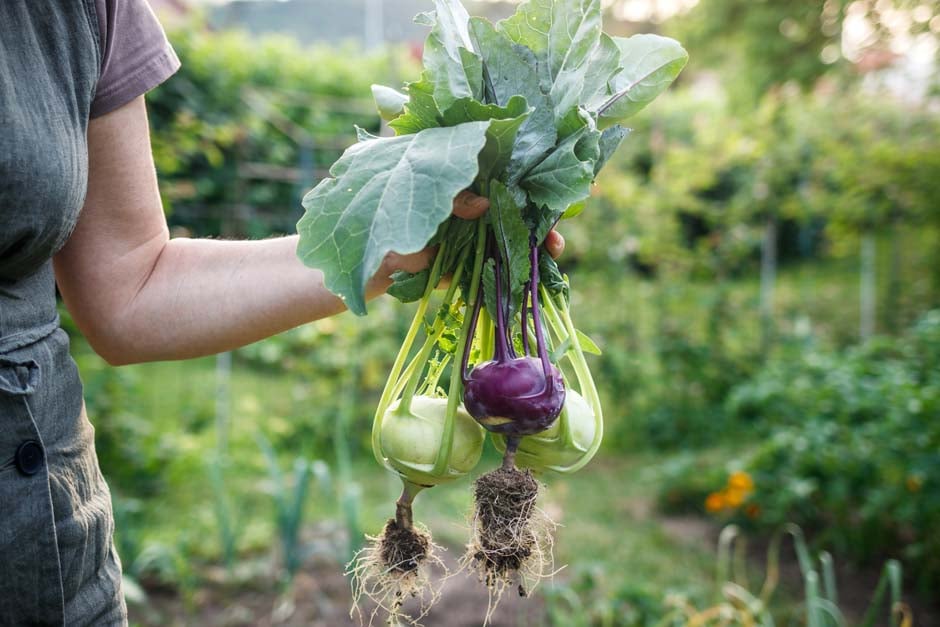
Harvest kohlrabi when young, between golf-ball and tennis-ball size, to enjoy them at their sweetest, with a mild flavour and succulent, crunchy texture. If you leave them to get too big, they lose their flavour and tenderness, and they can easily turn woody, particularly in hot, dry weather. With repeated sowings, kohlrabi can be harvested from May through to November, and potentially into December in milder areas. Protect with cloches or biodegradable fleece if you haven’t finished harvesting before wintry weather arrives.
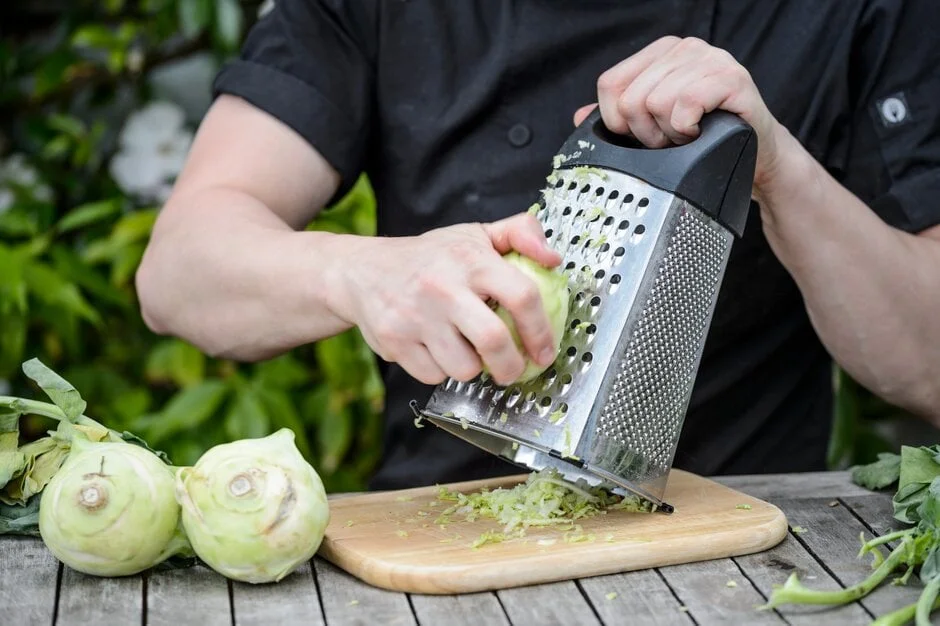
To prepare kohlrabi, it’s usually best to remove the outer skin, then grate or chop finely to use in salads and coleslaw. Kohlrabi can also be lightly steamed, sautéed or added to stews. The young leaves can be cooked like kale.
Problem Solving
In hot, dry conditions, kohlrabi can turn woody or bolt (flower prematurely), so keep the ground moist. Early and late crops tend to be more successful, as they avoid summer heat. Harvest when young and tender, especially if conditions turn dry. Cold temperatures can also cause , so avoid sowing too early outdoors, and take care to harden off indoor-sown plants.
Being a brassica, kohlrabi is potentially susceptible to the usual brassica problems, but as it’s quite fast growing, it’s generally less affected than many of its slower relatives. Cabbage caterpillars are the most likely problem, so either cover plants with insect-proof mesh or check the leaves regularly for caterpillars and eggs. For more on these and other issues, see Common problems, below.
Common Problems

Bolting in vegetables
Bolting is the term applied to vegetable crops when they prematurely run to seed, usually making them unusable. A cold spell or changes in day length...


Cabbage caterpillars
Cabbages and other brassicas are a food source for the caterpillars of several species of moth and butterfly.


