
Liz's Allotment Life: Autumn seed sowing and planting for self-sufficiency
Autumn isn't just about preparing for winter. For Liz, it's a chance to plant the crops that will help keep the allotment productive through the early-spring hungry gap
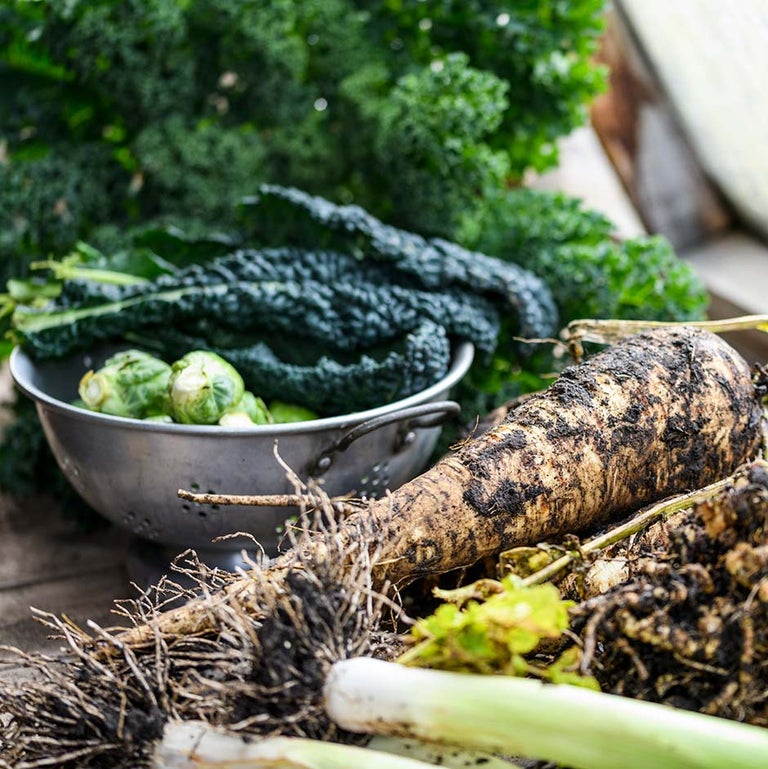
As someone committed to avoiding store-bought fresh fruit and vegetables, surviving the winter and early spring requires careful forward planning. Much of the groundwork has already been done: my leeks and parsnips growing well, cured maincrop potatoes are safely in storage, and the freezer is stocked with preserved produce.

The potatoes have been harvested and are now in storage
However, autumn is far from a quiet time on the plot. It’s an important opportunity to plant for the months ahead, particularly when it comes to vegetables and hardy winter crops .
Autumn planting
With summers becoming increasingly hot and prolonged, autumn is a good time to plant perennials. Planting now gives them longer to establish and put down roots before the heat of the following summer.
Why plant perennials in autumn?
Autumn can be an excellent time to plant hardy perennials. Although cooler air temperatures slow growth above ground, the soil often retains enough warmth for roots to continue establishing, particularly while autumn rain helps maintain moisture. This gives plants time to settle in before the following summer, helping them cope better with periods of hot, dry weather.
I’m planning to put in a few new currant bushes this autumn, although these won’t provide much food for a few years. My main focus is turning a whole bed on my plot over to vegetables.
I already have one small bed of these, and last autumn I made a start on a much larger bed, adding Caucasian spinach , groundnuts, skirret and Egyptian walking onions .
This year I've already planted:
- Three different types of Sorrel
- Garlic cress ( Alliaria petiolata )
- Everlasting onions ( Allium cepa var. perenne )
- Ostrich fern ( Matteuccia struthiopteris )
- Daylilies ( Hemerocallis )
- Herbal teas: planting perennial herbs like rosemary ( Salvia rosmarinus ), lemon balm ( Melissa officinalis ), and chamomile ( Matricaria chamomilla ) to cut out single-use tea bags. My mint plants have already made a big difference, but I do like some variety!

Herbal teas
I have plans to add several more plants before the autumn is out. These perennials won’t be at their peak for a few years, but I may be able to take some light harvests next year.
Bridging the Hungry Gap
Perennial vegetables are key to surviving early spring (March–May), known as the Hungry Gap. During this period, the fresh harvests from the plot are largely coming to an end and I’ve eaten through most of my stored supplies. Perennial vegetables come into their own at this time of year, as their established root systems allow them to get growing early, often before most annual crops are ready to harvest.
Autumn seed sowing
As well as my leeks, I like to have other options for fresh greens through the winter months. Following slug pressure in 2024, I pivoted away from brassica's towards winter salads.
There are several winter salads that can be started at this time of year, although in colder areas a polytunnel or glasshouse would be advantageous for some. I’m growing all of these outside in Surrey without winter protection, and I expect most of them to make it through.
Most overwintering greens require sowing by early to mid-September with the exception of winter purslane and winter spinach. I’d aim to sow them by early to mid-September, either directly outside or in a grow hut. If you haven't sown yet, source hardy now to get ahead.
Crop selection
- Winter Purslane: A wonderful, hardy winter salad crop. Best sown directly and thinned out it yields succulent leaves for continuous cut-and-come-again harvesting.
- Spinach: A reliable winter staple. While cultivars like 'Giant Winter' are standard, I've also grown other cultivars, including 'Lazio' and 'Matador' without any problems. I'd avoid pale, fine-leaved varieties like 'Emilia' , as there more susceptible to frost damage.
- Spring onions: For overwintering spring onions, ‘White Lisbon’ is my favourite. If you don’t harvest it when spring-onion sized, it will swell into a small onion.
- Mustards and mizuna: Both prefer some protection if you can provide it as their leaves are susceptible to frost. While they can survive outdoors in mild regions, growing under cover (polytunnel/glasshouse) or using horticultural prevents frost-scorch and maintains leaf quality.
- Winter Lettuce: Some varieties, such as ‘Winter Density’ , are hardier than others. I’d still recommend growing them in a polytunnel or glasshouse if you have one, particularly if you want reliable winter harvests.
Don’t forget the birds
One caveat I’d add to growing all these winter salads is that birds can be very fond of them. Last winter at RHS Wisley , I had a nightmare with birds pulling up what felt like all of my winter salads.
In the end, I resorted to covering them with horticultural fleece. It didn’t look particularly pretty, but at least it did the job!

Fleece protecting crops on the allotment earlier in the year
Crop of the Week: Carrots
I’ve been harvesting some autumn carrots this week, which has been delightful. They’re the ‘Flyaway’ – grown without any covering. ‘Flyaway’ is bred to be resistant to carrot root fly, which may explain why the roots have escaped damage. I also grew them among other plants, including mint and winter squash, although I can’t say whether this helped deter the flies.

Carrots harvested from Liz's allotment
While the carrot root fly seems to have left the roots alone, the local rabbits have claimed their share! I only have a couple left, which I intend to savour. I’ll enjoy them raw and finely sliced into late-summer salads while the weather is still warm, or roast them as the days get colder. Roasting brings out their natural sweetness, and they need little more than a drizzle of olive oil, freshly ground black pepper and a few sprigs of thyme.
Coming up on the plot
As the weather continues to cool, my thoughts are turning towards autumn jobs such as clearing away mildew-affected growth and mulching. For now, I’ll have to wait and see what the weather brings.
You may also like
-
 Category: Inspiration
-
 Category: Advice
Vegetables: growing for winter
Plan ahead for winter by growing a range of robust crops so that even when the weather is bleak, there’s something tasty to harvest or bring out of storage. - Category: Inspiration
Liz’s Allotment Life: Perennial vegetables in Norway
Liz Mooney travels to Norway to explore perennial vegetables and discover what they could offer UK gardeners