Getting Started
Florence fennel is an attractive plant that forms a white ‘bulb’ at ground level made up of the overlapping, swollen bases of the leaf stalks. This has a sweet, mild aniseed flavour. It’s also known as bulb fennel, although botanically it’s not a true bulb.
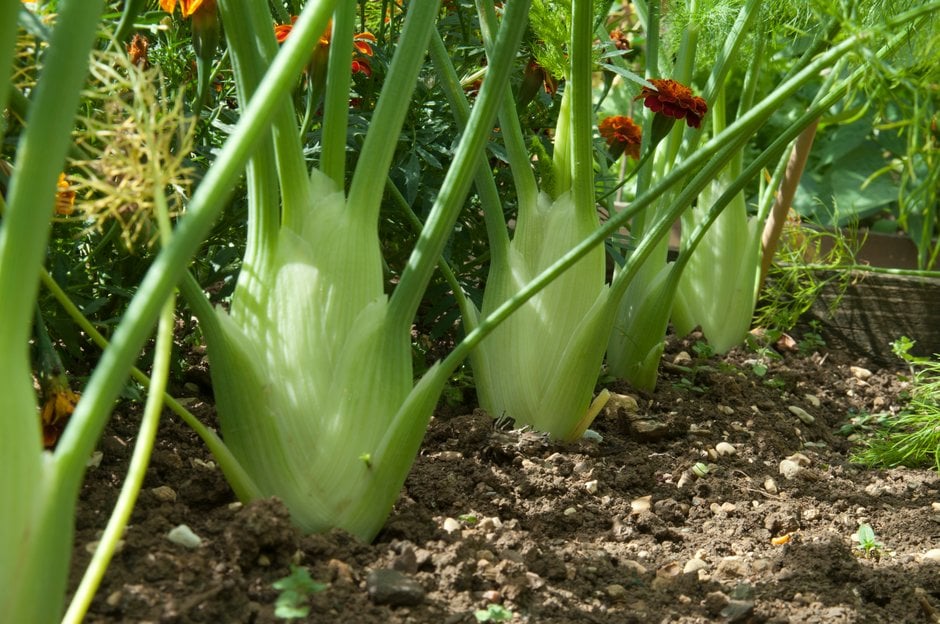
Florence fennel (Foeniculum vulgare var. azoricum) is very closely related to the herb fennel(F. vulgare), but forms a smaller plant, ready to harvest in just a few months. As Florence fennel is quite an expensive vegetable to buy, it’s a worthwhile crop to grow at home. However, it can be tricky, as it bolts (starts flowering) easily, which means the bulb either doesn’t form or turns woody and inedible. It fares best in warm, damp summers and is well worth the effort if you can give it the right conditions. It may be less successful in colder regions and heavy clay soil.
The key to success is to provide regular water, never letting the soil dry out, so plants keep growing strongly. Early to mid-summer is the best time to sow, once temperatures have warmed up. The bulb takes three or four months to mature, but you can harvest at any size – even as mini veg after only about six weeks. Florence fennel is a handsome, upright plant with feathery foliage. It takes up little ground space, so is ideal for small gardens and containers, as well as larger plots.
Florence fennel can be eaten raw, sliced or grated into salads, or cooked in all kinds of dishes. You can steam, grill, roast or braise it, and serve with cheese sauce or butter. It has a sweet, mildly aniseed flavour and goes particularly well with fish. You can also use the chopped young leaves to flavour salads and other dishes.
Jobs to do now
Water in dry spells
Earth-up around bulbs
Harvest
Month by Month
Sow
Plant Out
Harvest


Choosing What To Grow
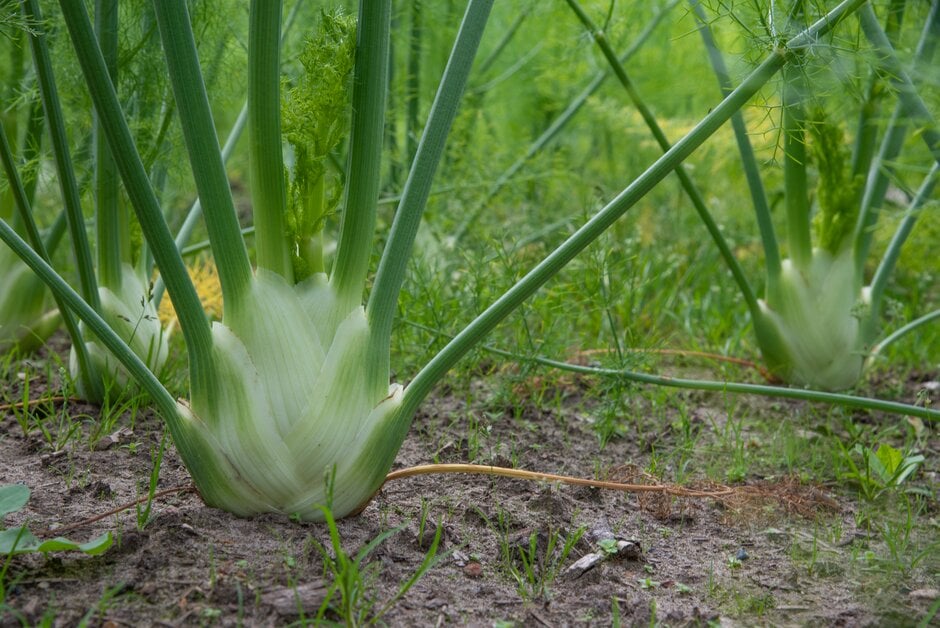
There are several varieties of Florence fennel – most arebolt-resistant, which is useful if your growing conditions aren’t ideal. Some varieties are more suitable for sowing earlier or later. Look in particular for varieties with an RHS Award of Garden Merit (AGM), which shows they performed well in trials – see our list of AGM fruit and veg (135kB pdf) and our recommended varieties below.
If you visit the veg plots in the RHS gardens, you’ll see a wide range of crops being grown, usually including Florence fennel – it’s a great way to compare different varieties and pick up useful growing tips and inspiration.
What and where to buy
Seeds of Florence fennel are widely available in garden centres and from online seed suppliers. Be sure to select Florence fennel, rather than herb fennel. are available from some online suppliers in spring and early summer.
Recommended Varieties


'Rondo' AGM
A quick-growing variety that produces uniform bulbs. It's an early cropper that can be grown under cover.

'Zefa Fino'
A quick maturing variety that forms medium to large bulbs with a slightly flattened shape.
Preparing The Ground
Choose a warm, sheltered, sunny site with fertile, free-draining soil. Add plenty of organic matter, such as well-rotted manure or home-made garden compost, in the autumn, winter or early spring before sowing, to improve the soil structure, drainage and fertility. Florence fennel grows particularly well in soil that was improved for a preceding spring crop. Alternatively, if you practise no-dig, the soil ahead of sowing or planting directly into the mulch.
Florence fennel dislikes heavy clay and ground. If your soil is unsuitable or you’re short on space, you can grow compact varieties in large containers.
Sowing
Fennel dislikes root disturbance, so sow the seeds either direct outdoors or singly into indoors. Early sowings are very liable to bolt (flower instead of forming a bulb), so if you want to give this a try, choose a bolt-resistant variety. It’s best to wait until early summer for sowing outdoors. Due to this late sowing time, Florence fennel is useful to fill gaps after crops such as early potatoes have been harvested.
Sowing indoors
To get an earlier harvest or a head start in colder regions, you can sow Florence fennel in a greenhouse or on a warm windowsill from late spring – don’t be tempted to sow too early, as it dislikes cold temperatures so shouldn’t be outdoors until early summer.
Florence fennel particularly dislikes root disturbance, so use a modular tray and sow just one seed into each module. This means the whole can be kept intact when transplanting. Keep the in good light and water them regularly. They can be transplanted outdoors from early May onwards – see Planting, below.
Sowing outdoors
Sow Florence fennel outdoors in June or July, once temperatures have warmed up. It’s an ideal crop to follow early potatoes or to fill any gaps in your veg plot where spring crops have been harvested. Prepare the ground as detailed above, then make a shallow about 15mm (½in) deep. Water along the base, then sow the seeds thinly along the row. Space neighbouring rows 30cm (1ft) apart.
Gradually thin out the young to 30cm (1ft) apart, taking care not to disturb the roots of the remaining plants. The thinnings can be used in salads. Alternatively, if you’re short on space, you can grow Florence fennel at a closer spacing of 10–15cm (4–6in), then harvest as mini veg when the bulb is about 5cm (2in) wide or tall. Protect young fennel plants from slugs and snails, especially in damp weather.
Sowing in containers
Florence fennel can be sown into large containers filled with moist peat-free multi-purpose . You can grow up to three mature plants in a container about 40cm (16in) wide, or for harvesting as baby veg, the plants can be spaced just 10–15cm (4–6in) apart. Do bear in mind that you will need to water regularly, as containers can dry out very rapidly, which can cause Florence fennel to bolt (flower instead of forming a bulb).
Planting
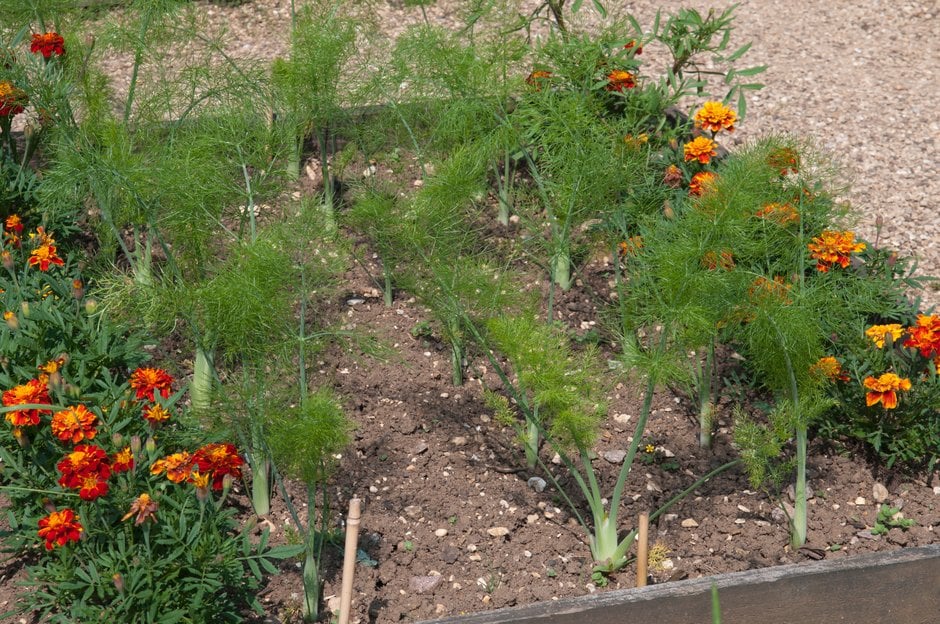
If you’ve grown Florence fennel from seed indoors or bought , you can plant them out from early May onwards, after the last frost. Harden them off first, to gradually acclimatise them to outdoor conditions, then plant them into prepared ground (see above) or large containers of peat-free multi-purpose .
Do your best not to disturb the roots, and position the plants at the same depth as previously growing. Space them 30cm (1ft) apart, or 10–15cm (4–6in) for harvesting as baby veg, and water them in well. Protect young plants from slugs and snails.
Plant Care
Florence fennel needs relatively little maintenance once plants are in the ground. Just be sure to keep plants well-watered and take steps to reduce competition and moisture loss from the soil.
Watering
Florence fennel needs consistently moist soil or , to ensure it grows evenly. It tends to bolt (flower) in dry conditions, which ruins the harvest. Plants in containers are particularly vulnerable, as the compost dries out quickly, so check it regularly. For water-wise advice, see our guides below.
Mulching
Apply a thick layer of , such as garden compost or well-rotted manure, around the plants once they are growing well. This helps to hold moisture in the soil, reducing the need for watering, while also deterring weeds.
Weeding
Keep the ground weed-free, to reduce competition for light, water and . Dense weeds can also offer hiding places for slugs and snails, which like to eat young fennel plants. Weed by hand close to the plants, rather than , so you don’t accidentally damage the developing bulb.
Blanching
Once the stem bases start to swell, mound (or earth up) soil around them to blanch the bulb, which makes it whiter and sweeter. also helps to stabilise the plant and protects the bulb from early frosts.
Harvesting
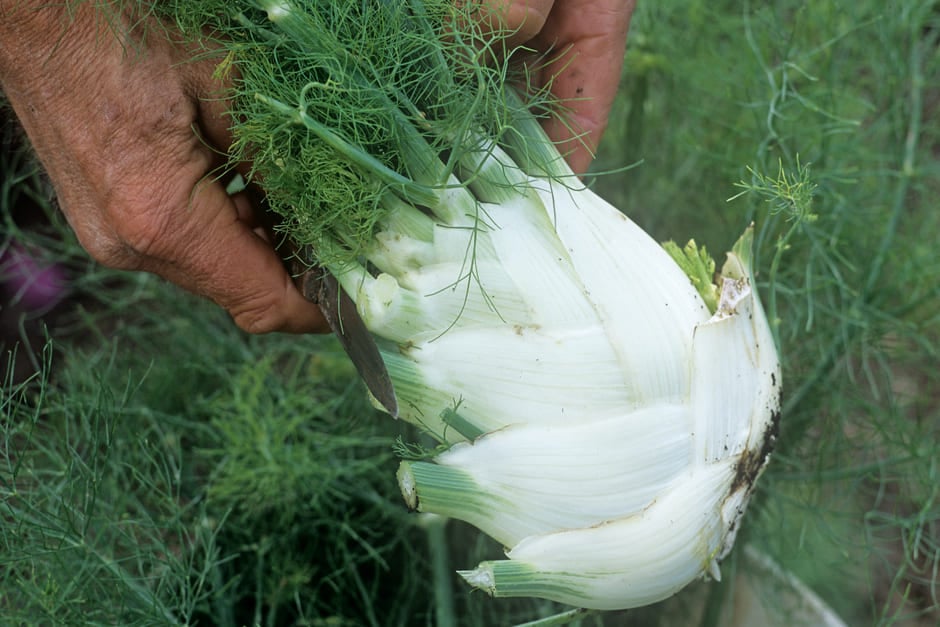
Florence fennel is ready to harvest in late summer and autumn, depending on sowing time. It is usually harvested when the bulb is 10–15cm (4–6in) across, but can be harvested at any size, from just 5cm (2in) upwards. Make sure you harvest before the bulb starts to elongate and send up a flower stem, at which point it becomes woody and inedible.
To harvest, either dig up the whole plant or cut just below the swollen bulb with a sharp knife, leaving the base and roots in the ground. It should then send up small leafy shoots that can be used in salads, but it won’t form another bulb.
Problem Solving
The most common problem with Florence fennel is (flowering), which leads to the bulb either not forming or turning woody. This can be caused by various issues, including cold temperatures in spring, root disturbance when transplanting, and dry conditions in summer. Florence fennel is most successful in warm, damp summers. To deter bolting:
- Choose bolt-resistant varieties, especially for early sowings – however these can still bolt in dry or cold conditions
- Use modular trays if sowing indoors, to reduce root disturbance when transplantingoutdoors later
- Keep early sowings indoors until the weather has warmed up, then harden off carefully and protect with cloches or plastic-free if temperatures are still low
- Delay sowing outdoors until early summer, and protect with cloches or plastic-free fleeceif temperatures are forecast to dip
- Water regularly and generously, never letting the soil dry out completely. Use collected rainwater whenever possible, and water early in the morning, before temperatures rise
Slugs and snails can also be troublesome, eating and young plants – see Common problems, below, for tips on deterring them.
Common Problems

Bolting in vegetables
Bolting is the term applied to vegetable crops when they prematurely run to seed, usually making them unusable. A cold spell or changes in day length...

Slugs and snails
Slugs and snails are common garden animals, and they are well suited to the damp, mild climate of the UK. A few species feed on garden plants, but mos...
