Getting Started
Mizuna and mibuna are Japanese greens with a mildly spicy flavour, for eating raw or lightly cooked. The plants take up little space and are ideal in containers as well as in the ground. Sow repeatedly for harvests across most of the year.
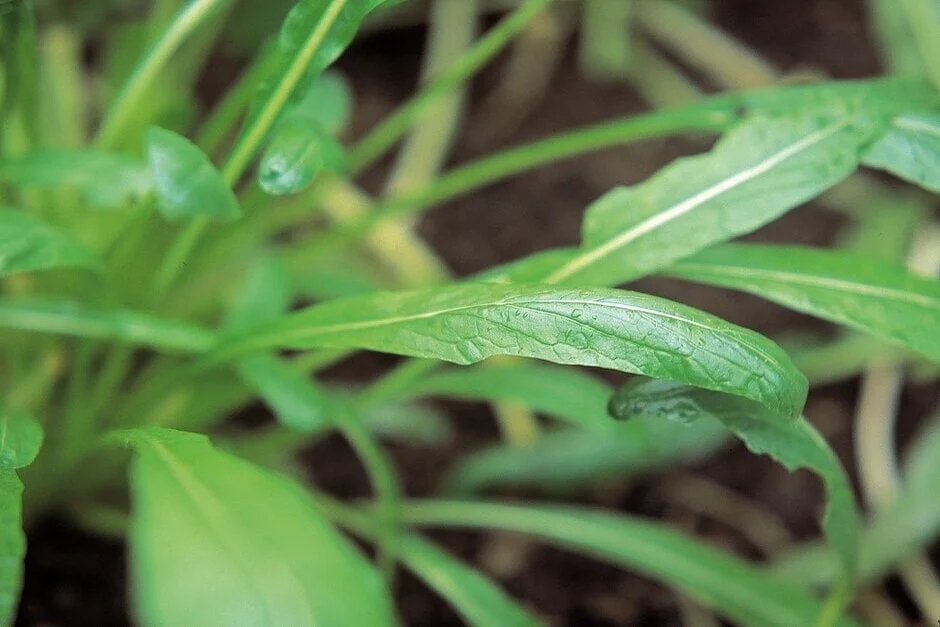
Also known as oriental or Japanese greens, mizuna and mibuna are in the cabbage or brassica family. They are quick and easy to grow from seed in sun or semi-shade, forming leafy about 20cm (8in) tall. They grow best in the cool, damp weather of spring and autumn, and late sowings will often continue cropping into winter, especially if given some protection. Both are ideal for harvesting as cut-and-come-again salads, providing repeated harvests of young leaves over several months. You can also let leaves grow to maturity for cooking.
Many other oriental greens, including pak choi, choy sum, komatsuna, Chinese cabbage and Chinese broccoli, can be grown in a similar way. For more veg-growing inspiration, visit the RHS gardens, which all grow a wide range of vegetables, including oriental greens and other brassicas.
Jobs to do now
Harvest
Month by Month
Sow
Plant Out
Harvest


Choosing What To Grow
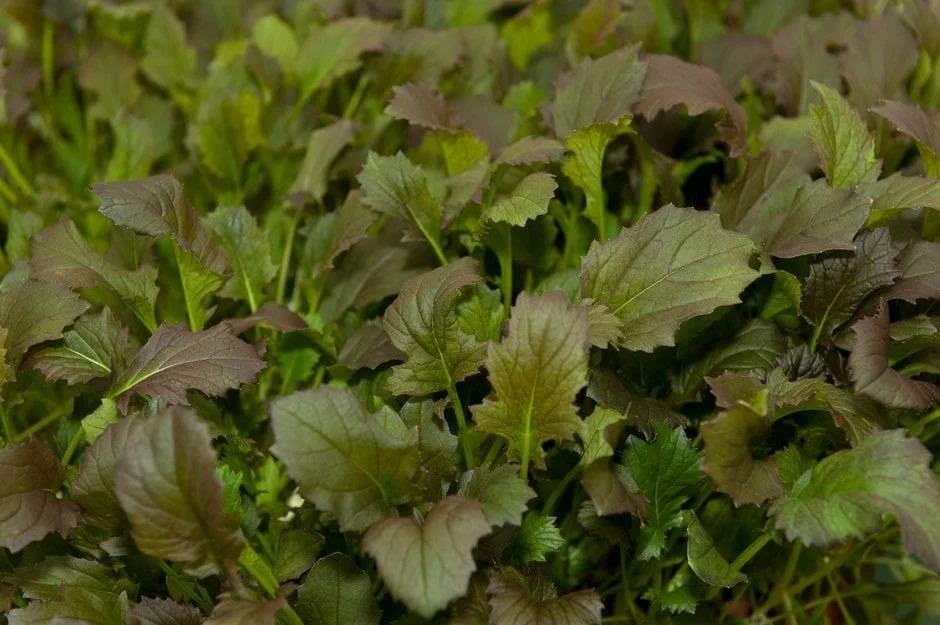
Mizuna and mibuna both form compact leafy plants, and while their similar names can be confusing, their leaves look very different, so they are easy to tell apart:
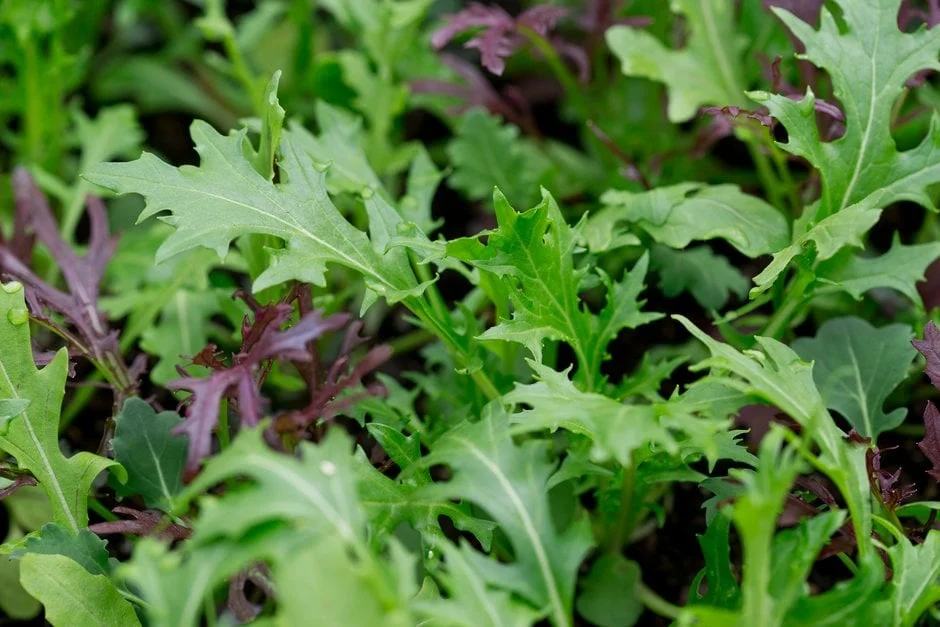
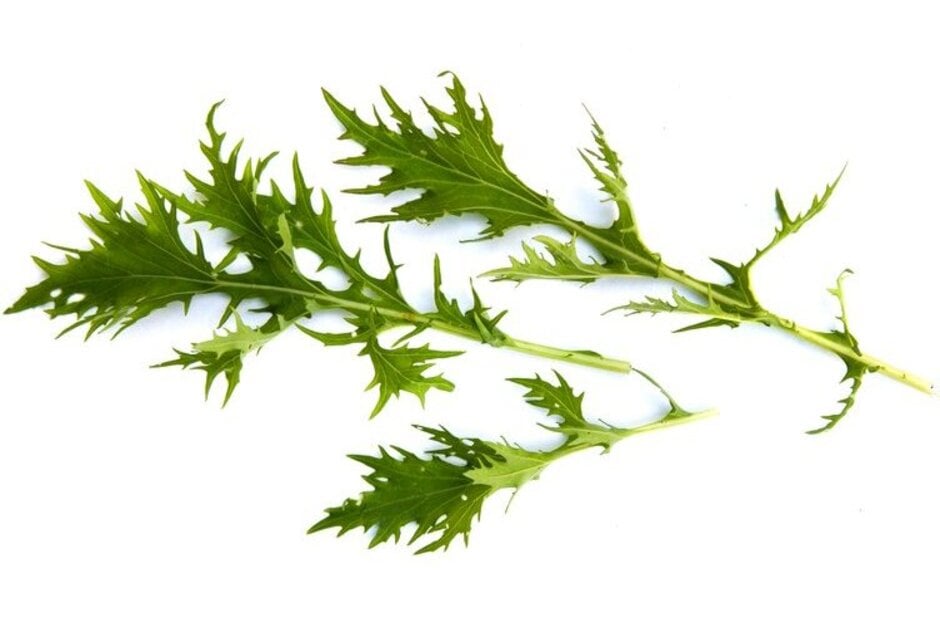
- Mizuna forms loose of attractive serrated leaves up to 20cm (8in) long. These have a mild peppery flavour and can be used raw in salads when small or cooked in stir-fries when larger. If sown repeatedly, mizuna can be harvested almost all year round and makes an attractive crop with a feathery appearance. There are several varieties too, offering differences in leaf shape and colour – some more finely divided, others reddish-purple or lime green, for an even more decorative addition to both your garden and your plate.
- Mibuna forms larger, denser clumps of narrower, dark green, smooth-edged leaves that have a light mustard flavour. Use in salads or lightly cooked.
What and where to buy
Seeds are widely available from most gardening retailers all year round, although specific varieties of mizuna may be harder to track down or only available online. Mizuna and mibuna are also often included in winter salad seed mixes. Mizuna are sometimes available in spring.
Recommended Varieties

Preparing The Ground
Both mizuna and mibuna grow best in slightly damp soil, so after weeding thoroughly, fork in lots of garden compost or well-rotted manure to help retain moisture. Lightly tread the soil, then rake it to a fine texture ahead of sowing or planting. Alternatively, if you're practising no-dig, the soil ahead of sowing or planting directly into the mulch.
Sowing
Mizuna and mibuna are easy to grow from seed, indoors or outside, in the ground and in containers. They can be sown almost all year round, but need protection in winter, ideally in a greenhouse or in mild regions under cloches. They are cool-season crops, growing best in the mild, damp weather of spring and autumn. For continuous harvests, sow small batches a few weeks apart.
These compact plants are ideal when space is tight – use them to fill short-term gaps in your veg plot or borders, or sow in between slower-growing crops, such as parsnips and potatoes, for harvesting before the main crop needs the room.
Sowing indoors
You can sow mizuna and mibuna seeds indoors from February onwards, when it’s still too cold to sow outdoors, and in late summer or early autumn for cropping in a greenhouse through autumn and winter. Choose a peat-free and ideally sow in a modular tray for easy transplanting with minimal root disturbance.
The seeds should germinate in about a week – keep the in a warm, bright place and water regularly, then transplant into their final growing position after a few weeks – see Planting, below.
Sowing outdoors
The main outdoor sowing season runs from March to August. Take care not to sow too early, as cold temperatures and increasing day lengths can cause plants to flower prematurely (bolt). Hot, dry conditions can cause this too, so in summer choose a cooler site in light shade.
Make a shallow , about 1cm (½in) deep in prepared soil and water along the base. Sow the seeds thinly along the row and cover lightly with soil. Sow small batches regularly, spacing rows 23cm (9in) apart. Seeds should germinate in about a week. Protect from slugs and snails, especially in damp weather. For more outdoor sowing tips, see our guides below.
Thinning out seedlings
Thin out the seedlings along the row to prevent overcrowding. Spacing between plants depends on which stage you want to harvest them: 10–15cm (4–6in) apart for regular pickings of small leaves, 20cm (8in) apart for larger leaves, and 30–40cm (12–16in) apart for full-sized mature plants.
Sowing in containers
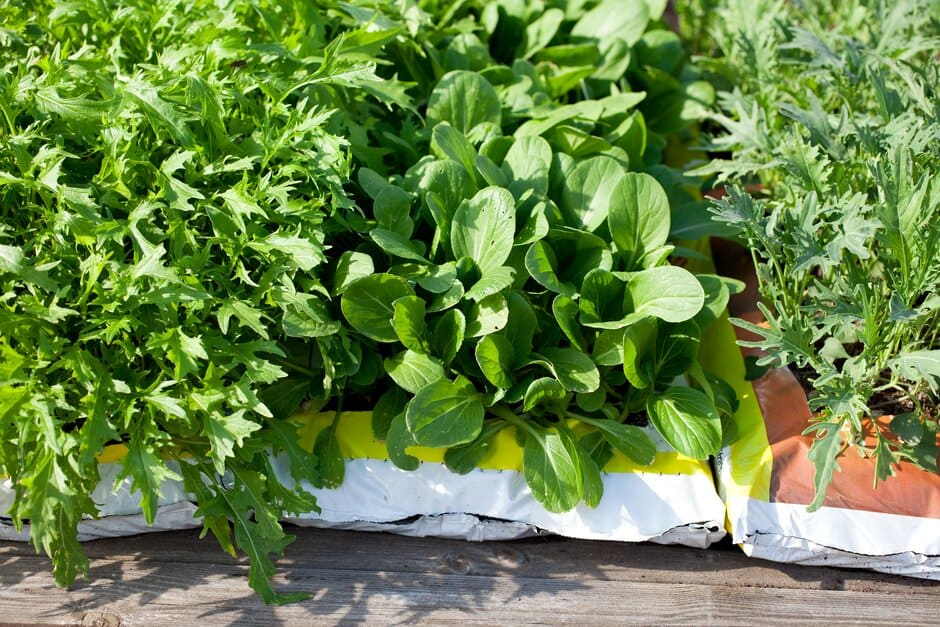
Both mizuna and mibuna grow well as salad crops in containers, for handy pickings. Choose a container that’s at least 30cm (1ft) wide, as smaller containers dry out too rapidly. Fill it with peat-free multi-purpose and position in a sunny spot – or in light shade during warm weather. These oriental greens can also be sown in growing bags. See our guides below for more sowing tips.
Planting
Young mizuna and mibuna plants grown from seed indoors should be planted out once well rooted, from March onwards. Mizuna may also be available to buy in spring, ready for planting out.
First harden off the young plants to acclimatise them to outdoor conditions. Then plant into prepared ground (see above) or into a large container, at least 30cm (12in) wide, filled with peat-free multi-purpose . Space your plants 10–15cm (4–6in) apart for salad leaves and up to 40cm (16in) apart for full-sized plants. Autumn sowings can be planted in a greenhouse, either in the ground or in large containers, to crop over winter.
Plant Care
Mizuna and mibuna are easy to look after, especially during the cool damp weather of spring and autumn. Hot, dry weather can cause poor growth or bolting (premature flowering), so summer cropping may not last long unless plants are watered regularly.
Watering
Mizuna and mibuna both grow best in moist soil, so for good crops you will likely need to water in dry weather, especially when plants are young. When growing in containers, these plants require regular watering, as the dries out more quickly.
The best time to water is in the morning, so the plants can grow steadily through the day. Avoid watering in the middle of the day in warm weather, as the moisture will evaporate quickly. Watering in the evening may not be ideal either, as damp soil overnight can attract slugs and snails. For more water-wise tips, see our guides below.
Mulching
If you are growing mizuna or mibuna for mature leaves, the soil around the plants to hold in moisture and deter weeds. Use a thick layer of organic matter, such as garden compost, and apply to damp ground. Mulching is not usually necessary or practical around cut-and-come-again crops.
Weeding
Weed regularly, so young plants don’t get overwhelmed by vigorous weeds or have to compete for moisture or light. Weeds can also provide hiding places for slugs and snails, which may damage the crop.
Flowering
Sooner or later, mizuna and mibuna will naturally try to flower and produce seeds. This puts an end to harvests, but can be delayed for a while by picking leaves regularly, keeping the soil moist and providing shade in hot spells – plants flower sooner if stressed by heat and/or drought.
Remove any flower stems that start to form too. The buds and flowers are edible and can be added to salads and stir-fries. Once flowering becomes unstoppable, harvest the entire plant if the leaves still taste good, as they will only deteriorate.
Harvesting
Mizuna and mibuna can be harvested nearly all year round from repeated sowings, either as cut-and-come-again salad leaves or whole . You can start harvesting a few baby leaves in as little as a month or so, once the plants are growing well and are 8–10cm (3–4in) tall.
With cut-and-come again harvesting, you pick just a few outer leaves from each plant, so it continues to grow, providing several small harvests. You may get up to five pickings from a plant before it starts flowering. Alternatively, you can harvest the whole rosette, using a sharp knife or scissors, after six to eight weeks. If you cut about 5cm (2in) above ground level, the plants should re-sprout.
The young leaves have a mild, slightly mustardy flavour and are best eaten raw, adding diversity and texture to salads. Mizuna leaves, with their feathery or lacy appearance, are particularly decorative. Larger leaves have a stronger flavour and more robust texture, so are best lightly cooked – either steamed or stir-fried. The buds and flowers are edible too, either raw in salads or cooked in a similar way to the leaves.
Problem Solving
Oriental greens are tough and vigorous plants that are relatively trouble free. Plants are, however, prone to flowering prematurely ( ) in hot, dry weather. To help them crop for longer, keep the soil or moist, apply and sow in light shade in summer. Or, simply sow small batches regularly and remove plants once they begin to flower. Protect and young plants from slugs and snails. Flea beetles may make tiny holes in the leaves, but this is only cosmetic damage and a covering of insect proof mesh should prevent it if you wish. For more tips on tackling these and other issues, see Common problems, below.
Common Problems

Bolting in vegetables
Bolting is the term applied to vegetable crops when they prematurely run to seed, usually making them unusable. A cold spell or changes in day length...

Cabbage caterpillars
Cabbages and other brassicas are a food source for the caterpillars of several species of moth and butterfly.

Flea beetles on brassicas and allied plants
Some species of flea beetle feed on the leaves of all brassicas and related plants, including rocket, radish, swede, turnip and wallflowers. The resul...


