Sowing and planting
Plant out summer bedding and seed-raised plants. Make sure they are well watered in, ideally with stored rain water, and keep them moist during dry weather.
Plant out cannas and dahlias. Wait until the last frost has passed in northern areas of the UK.
Take advantage of gaps in herbaceous borders by planting out annuals and tender perennials.
Containers can be planted up with summer bedding if not done already.
Plant Anemone coronaria now. Start by soaking the rhizomes overnight. Plant them 5cm (2in) deep in soil or compost improved with garden compost or leafmould. Anemone coronaria will take about three months to flower after planting and do best in areas with naturally moist soil.
There’s still time to direct sow fast-growing, late-flowering hardy annuals such as Calendula, Godetia, Clarkia and Cerinthe.
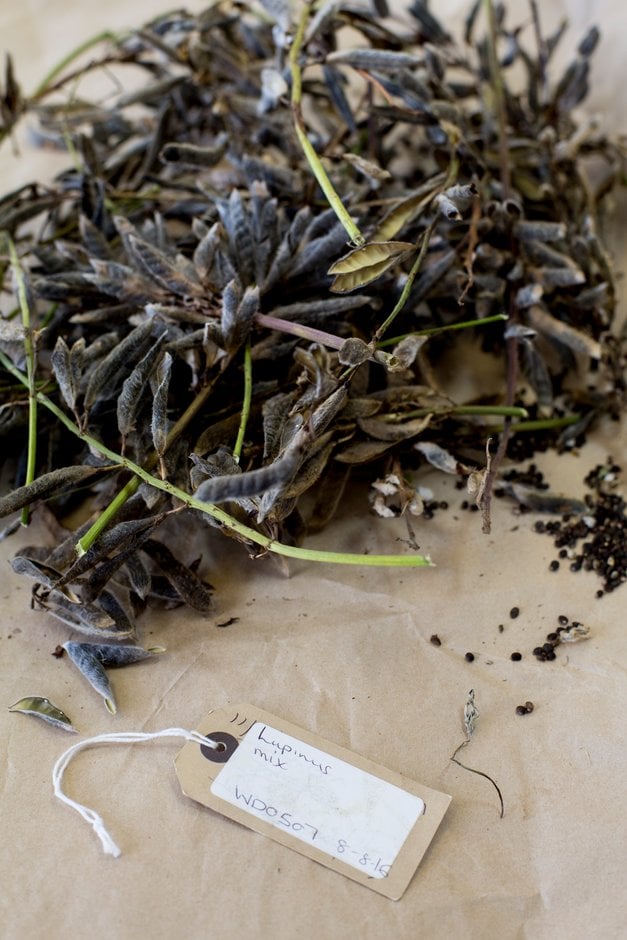 Collect the seed of early-flowering perennials such as lupins, aquilegias and sweet rocket (Hesperis matronalis) once the seedheads have ripened and start to split naturally. The seed can be sown directly into drills outside, or if garden space is limited, sow into pots in a cold frame or by the base of a shady wall.
Hellebore seed can be harvested once the seedheads are ripe (i.e. squeezing the pod causes it to split and release seeds). Sow seed as soon as you can, while it’s still fresh, and it will germinate next spring once the winter cold breaks dormancy. Remember that seed-grown plants will differ from the parent plant.
Thin out earlier direct sowings of hardy annuals. This is best done in two or three stages at fortnightly intervals. Final spacings should be 10-20cm (4-8in), using the wider spacing for tall or spreading plants, and the narrower spacing for smaller plants.
Prick out indoor sowings when they are large enough to handle without damage, potting them on and then planting them out once they are well developed.
Winter bedding plants for the following winter can be sown until July. Attractive choices include ornamental cabbages, kales and winter pansies.
If you want to grow your own spring bedding for next year, many of these also need sowing by July in order to flower next spring. These include wallflowers, pansies, forget-me-nots and daisies, Bellis perennis.
Polyanthus and primulas are best sown only when temperatures are reliably warm, as they need a constant temperature of around 15°C (60°F). A sheltered cold frame in June or July provides the right environment for sowing.
Cutting back and pruning
Spreading and trailing plants, such as hardy geraniums and Alchemilla can become tatty. Trimming them back after flowering encourages fresh growth and new flowers.
Cutting back clumps of spring-flowering perennials such as Pulmonaria and Brunnera can encourage a fresh flush of foliage.
Cut back dead bulb foliage if not done already. Wait until the foliage dies down naturally, as cutting back too early can lead to blindness next year.
 Cut back and deadhead perennial Oriental poppies after flowering. Cutting them right back to ground level will stimulate growth of fresh new foliage, and perhaps even some new blooms.
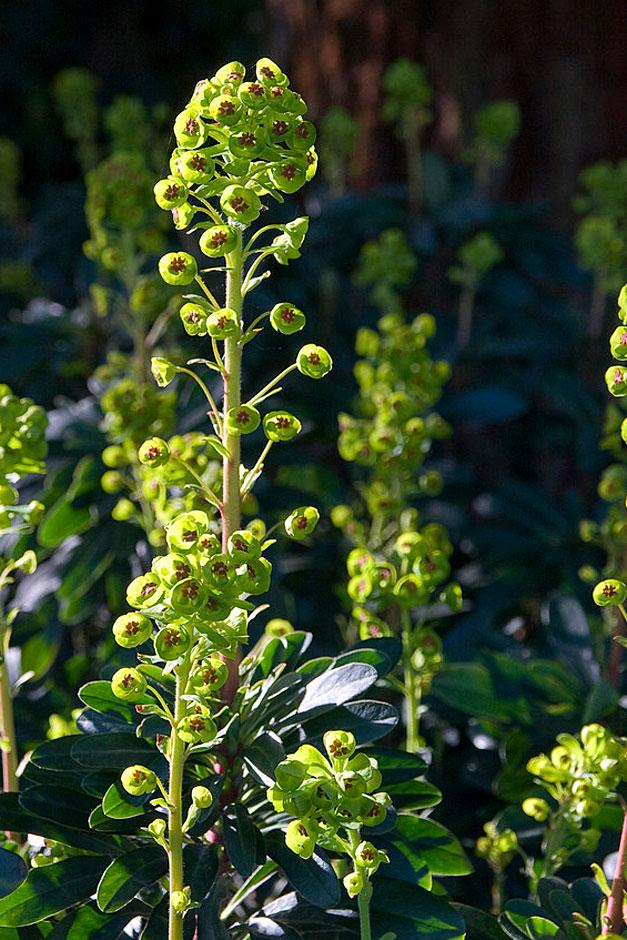
Euphorbias such as Euphorbia characias subsp. wulfenii and Euphorbia amygdaloides var. robbiae (pictured) look a lot better if spent flowers are removed, cutting the flowered stem back to the base. Protect eyes and skin from sap while pruning.
Pinch out the leading shoots on plants such as Chrysanthemum and Helianthus to encourage bushy plants. However, if tall thin sprays of flowers are preferred, they can be left un-pinched, perhaps removing a few buds (known as ‘disbudding’) to encourage larger blooms.
Propagation
Perennials that are showing new shoots from the crown can still be propagated by cuttings.
Take cuttings from garden pinks (Dianthus). Gently pull non-flowering shoots off the parent plant and prepare these as softwood cuttings.
It’s an ideal time to take softwood cuttings, because many plants have new non-flowering growth. Remember to take cuttings from short-lived shrubs such as lavender, rosemary and sage so that woody plants can be replaced.
General maintenance
 Hoe borders to prevent annual and perennial weeds from spreading and self-seeding.
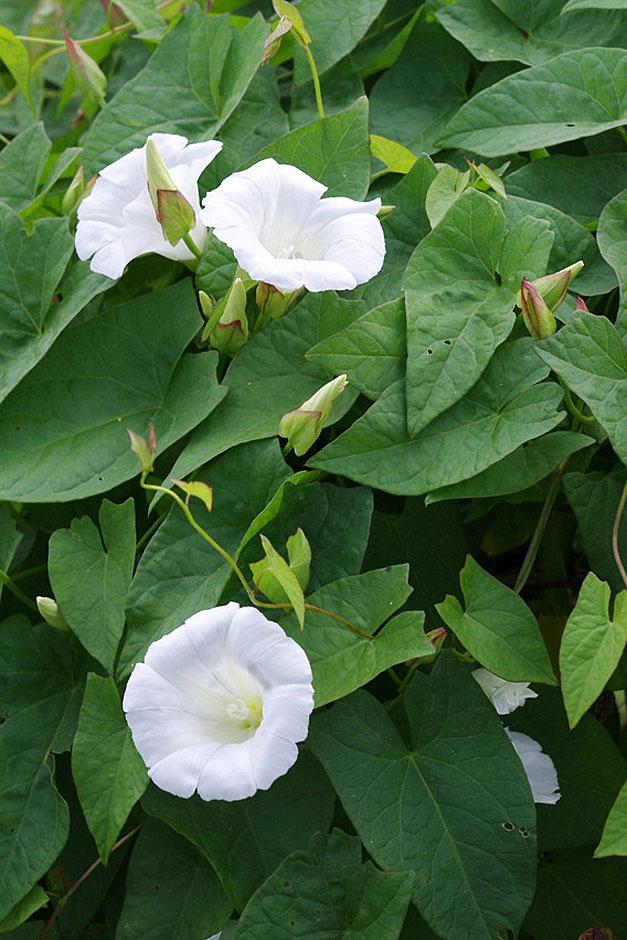
Pull off shoots of bindweed (pictured) when it appears in a border.
Stake tall perennials to prevent wind damage to flower spikes.
Sweet peas need tying in to their supports to encourage them to climb and make a good display.
Liquid feed containerised plants every two to four weeks with liquid seaweed or homemade fertilisers such as comfrey feed.
Keep tubs, hanging baskets and alpine troughs well watered. Use collected rainwater, or recycled grey water wherever possible.
Pot on plants showing signs of being rootbound.
Problems
Inspect lilies for the scarlet lily beetle, whose larvae can strip plants in days. Pick off any larvae you see. You can report sightings of lily beetles here (opens in new tab) to help our research.
Vine weevil larvae often affect plants in containers, and become active this month. There are biological controls available.
Aphids can multiply rapidly in summer. Where needed, remove by hand to prevent the problem increasing. Protect sweet pea plants in particular, as they can get sweet pea viruses. Aphids are essential food for young birds so only remove where necessary and don’t use any sprays.
Continue to protect lilies, delphiniums, hostas and other susceptible plants from slugs and snails.