General maintenance
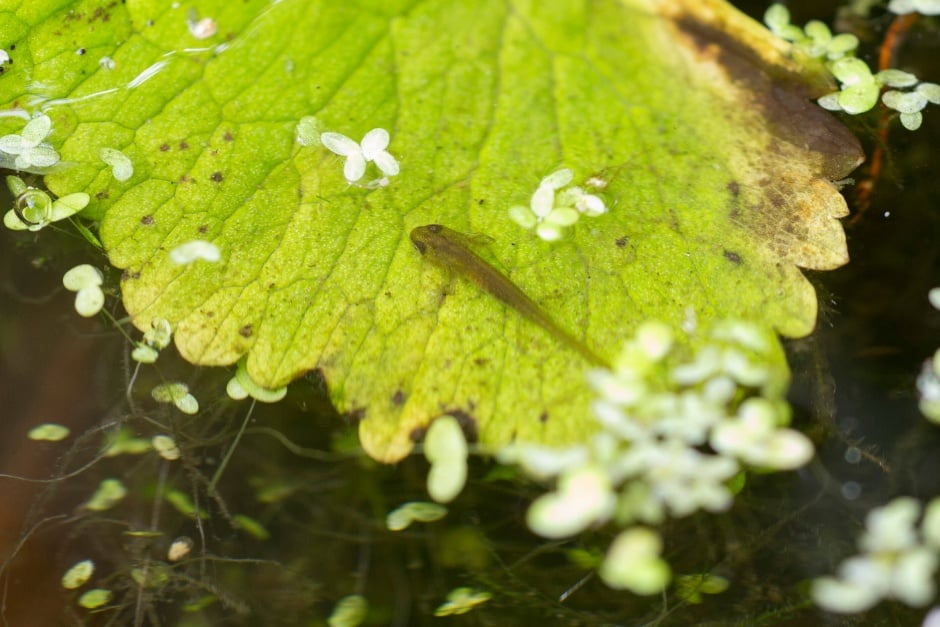 From June, tadpoles change into young newts, froglets and toadlets, and start to emerge from ponds. Provide some cover from predators at the water’s edge, such as allowing grass to grow long or adding pondside planting on at least one side. This provides covered access into the pond for other wildlife too.
Leave a pile of logs and stones next to the pond edge, ideally in a shady spot, for frogs and newts. It’s worth putting some logs or stones on a sunny side too, for dragonflies to perch on and reptiles to bask.
Include floating pond plants such as waterlilies for dragonflies and damselflies to lay their eggs on, as well as some emergent plants such as water iris for climbing out and perching.
Create a beach or ramp so thirsty hedgehogs and other wildlife can drink without falling in, and to allow anything that falls in to climb out again.
Keep your pond topped up with
rain water from a water butt, which saves tap water and doesn’t contain chlorine and nutrients that promote algae growth.
Troubleshooting
Remove blanket weed by twirling it around a rough stick. Skim off floating weeds such as duckweed with a net. Untangle and release creatures from the weed and then leave the weed on the pond side for 48 hours for any remaining creatures to return to the water, before adding it to the compost heap.
To reduce algal problems, aim to shade a third to a half of the pond’s surface by growing waterlilies.
Avoid introducing goldfish into a wildlife pond, as they will upset the pond’s natural balance and promote algae, turning the water green. In most ponds, there’ll be plenty of native wildlife to watch instead.