Learning in the jungle: how a primary school created a thriving garden
From seed sowing to harvesting celebrations, Trawden Forest Primary School shows how outdoor learning can build pupils’ skills, confidence and curiosity
Trawden Forest Primary School started its growing journey in January 2024. School Gardening Leads Joanne Nelson and Graeme Lomax supported pupils to transform a small space into a vibrant living classroom where learning comes to life.
“It all began with a few decking boards sold as seconds, which we turned into our very first raised beds,” explained Joanne. “With determination, fundraising and a lot of hard work, the garden has grown into something really special. Along the way, the school and wider community have blossomed too.”
From plot to plate
Within a year, the team added a potting shed, Composting is the process by which plant material is heaped together to rot (decompose) to produce compost. Garden or kitchen waste can be broken down over time in a compost bin or heap to produce crumbly organic matter that can be used as a mulch, soil conditioner and a constituent of potting compost.
“The children are involved at every stage, from planning and design to growing and harvesting,” said Joanne. To introduce them to new and unusual varieties, the school grows a wide range of edibles, such as pea ‘Purple Podded’, carrot ‘Rainbow’ and radish and a colourful selection of tomatoes. All of these are grown from seed to keep costs down.
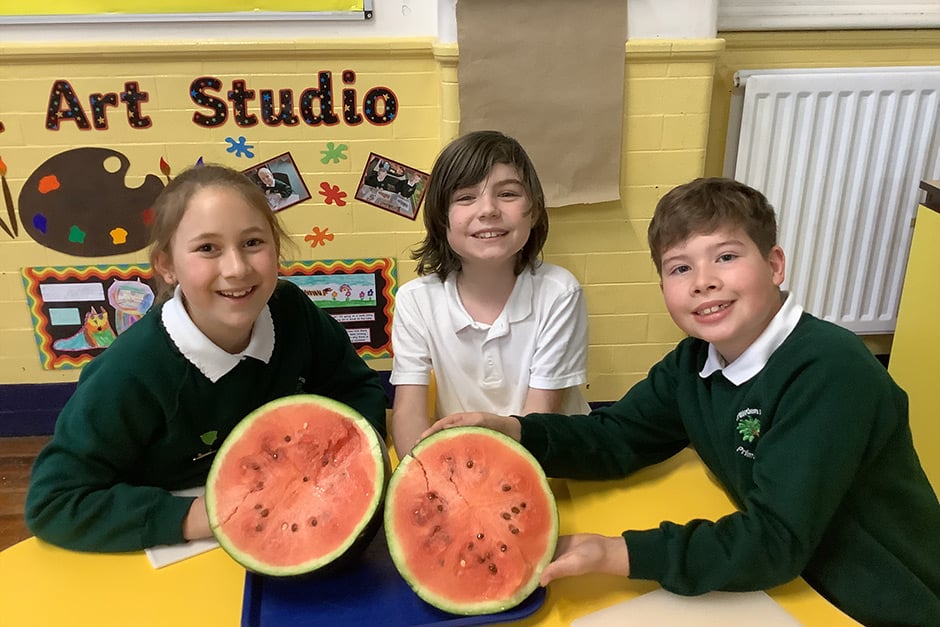
The produce is enjoyed by all. Fresh snacks from the garden are shared at break times, with watermelon being a particular favourite. Other fruits and vegetables are sent to the school kitchen and served at lunch.
The gardening club also enjoys cooking outdoors. Using what they’ve grown, they have served up pizzas, bean burgers, peach ice cream and baked beetroot and chocolate muffins. Across the school, pupils take part in year-group gardening sessions as part of the Garden Gang, and some have also enjoyed the chance to cook with the produce they’ve grown serving up hearty soups and apple crumble. Surplus produce is sold through their pop-up shop to raise funds for the garden.
Bringing the curriculum to life
Learning is at the heart of everything at Trawden Forest Primary School, and the garden is fully embedded in the curriculum. Pupils have learned how to:
- Make their own compost from garden and breaktime waste, building an understanding of decomposition and recycling
- Manage a worm farm to create vermicompost (a nutrient-rich
Can refer to either home-made garden compost or seed/potting compost: • Garden compost is a soil improver made from decomposed plant waste, usually in a compost bin or heap. It is added to soil to improve its fertility, structure and water-holding capacity. Seed or potting composts are used for growing seedlings or plants in containers - a wide range of commercially produced peat-free composts are available, made from a mix of various ingredients, such as loam, composted bark, coir and sand, although you can mix your own.
- Keep beds productive through succession planting, deepening knowledge of plant growth, life cycles and seasons
- Use companion planting to deter pests naturally and explore interdependence within ecosystems
- Turn comfrey into their own ‘Pongy Potion’ organic fertiliser, introducing plant nutrition and simple chemical processes.
Their skills and knowledge are shared throughout the school and the wider community, from inspiring younger pupils to supporting local planting projects, spreading the joy of gardening far and wide.
Beyond the school garden
The pupils’ love of gardening extends into their local community and beyond. Thanks to their efforts, residents and visitors to the village are greeted by a beautiful welcome planter, brimming with violas, polyanthus, cosmos and marigolds. The group also supports the local A term generally applied to non-woody, flowering plants that are natural to a particular area and grow there without human assistance. More accurately, British wildflowers normally applies to UK natives including plants introduced into the wild before 1500.
In 2025, the school won an RHS Community Award for their efforts engaging with, supporting and inspiring younger members of the community to participate in gardening.
Supporting local wildlife
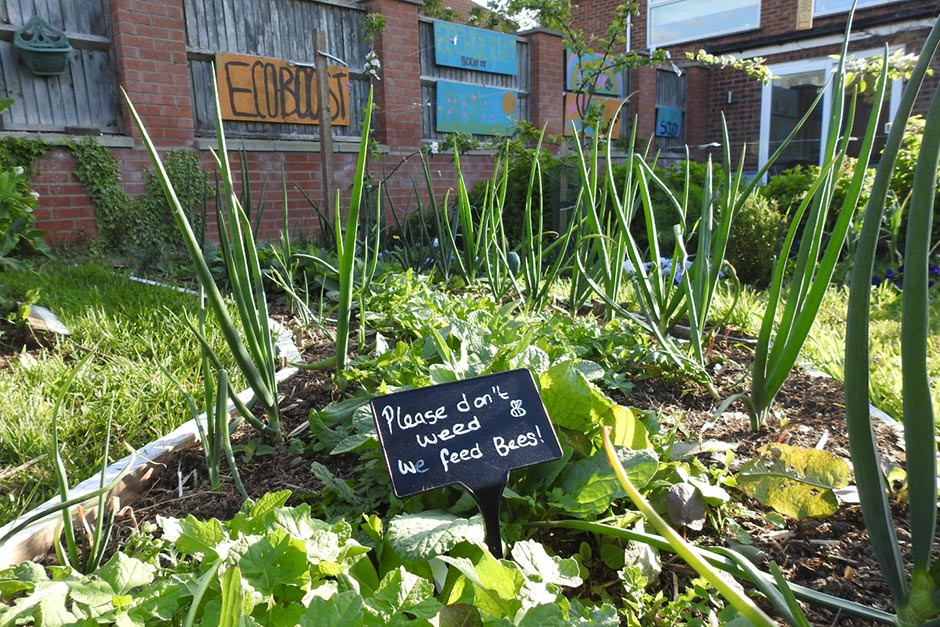
It’s not just the school and the local community who are benefitting from the garden. The pupils’ work is very much appreciated by the local wildlife too. With plenty of spring These are fleshy, rounded, underground storage organs, usually sold and planted while dormant. Examples include daffodils, tulips, hyacinths, lilies, onions and garlic. The term is often used to cover other underground storage organs, including corms, tubers and rhizomes.
“The garden has given our children a hands-on way to connect with nature, learn valuable life skills and grow in confidence,” said Joanne. “It’s truly transformed our outdoor space – and our school – for the better.”Next on the agenda is installing a bat box, alongisde increasing the growing space and raising funds for a wildlife pond. There are also plans to grow pink banana, manupukuji carrots, a kiwi vine and supplying the school kitchen with microgreens.
Nurturing gardening ambassadors
Every academic year, the school appoints a new pupil Head Gardener to represent the student voice and encourages them to take the lead, while inspiring and supporting fellow gardeners. In 2025, this role was given to pupil Sophia from Year 6.
Sophia played a key role in promoting school gardening and designed the winning school garden entry at Southport Flower Show. Her garden, which featured colourful borders, a bug hotel, mud kitchen and sand pit, was awarded a Large Gold, a Certificate of Excellence and The People’s Choice awards.
“Gardening means a lot to me because I like planting things,” said Sophia. “Sometimes you get the thrill of seeing plants grow, and if you get fruit, you can enjoy harvesting and cooking them as well.”
Throughout the four-day show, Sophia shared her passion for gardening with young people and inspired many teachers. After the event, the garden was relocated to Farnborough Road Primary School, where it’s currently being enjoyed by over 900 pupils.
Get involved
The RHS is the UK’s gardening charity, helping people and plants to grow - nurturing a healthier, happier world, one person and one plant at a time.