Students turn inaccessible site into a wildlife haven
At Caister Academy, an overgrown site has been regenerated by students, staff and volunteers and is now used for a wide range of activities, from studying insects to exchanging plants and seeds
Caister Academy’s garden at a glance:
- Type of garden: school garden
- Location: Norfolk, England
- Budget: £10,000
- Dimension: 500 square metres
- Implementation phase: September 2023-July 2025
- Key features: sensory planting, meadow orchard, wildlife garden, allotment, flower beds, edibles
How the wellbeing garden began

The creation of a wellbeing garden at Caister Academy started in September 2023
Originally, the wellbeing garden at Caister Academy was the school caretaker’s house garden and was therefore inaccessible to students. Following his retirement, the site was left fallow for around five years, becoming heavily overgrown, with thistles and nettles reaching up to six feet in height.
In September 2023, the area was fully regenerated through an initiative led by Charlie Emmet, Leader of Behaviour at Caister Academy. The site now provides a safe outdoor space for students aged 11 to 16, staff and wildlife. A polyculture approach has been adopted to create a growing space that is as biodiverse as possible, while also incorporating cultural elements. Among these is a planter representing the historic fishing trawler Lydia Eva.
Budget and process

A planter representing the historic fishing trawler Lydia Eva in Caister Academy’s garden
The garden was designed drawing inspiration from books such as RHS Your Wellbeing Garden and The Well Gardened Mind, as well as through liasing with The Papillon Project.
The local charity has provided fundamental support in keeping the garden running during its first year and a half, donating time and resources to the school. The local council also supported the construction of a polytunnel at a cost of around £1,000. Between March and July 2025, the planting of a meadow and wildlife garden, the purchase of a larger pond and several tools were made possible thanks to a £8,000 grant from the RHS programme National Education Nature Park, awarded in March 2025. A further £1,500 donation was provided by Persimmon Homes.
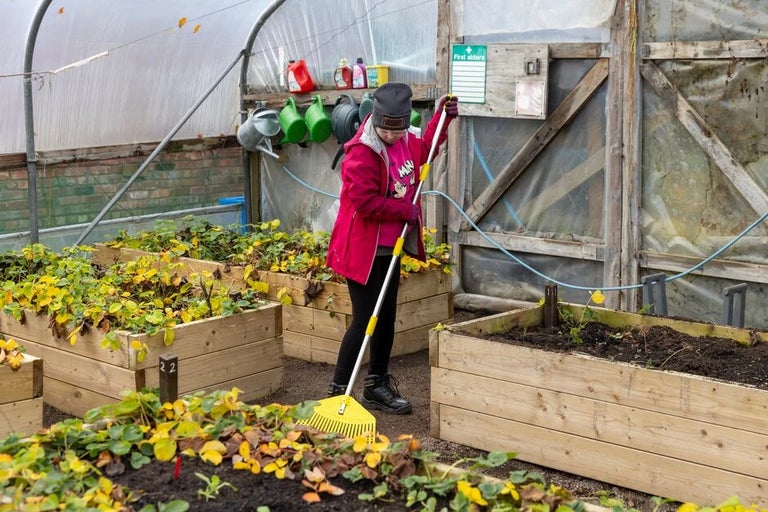
Today, Caister Academy’s Raising Achievement Mentor of Science, Charlie Mijatovic, runs a free after-school elective in the garden, attended by between five to 20 students depending on the season. Here, a multitude of interests are catered for. “While mostly focusing on gardening, students have specialised roles,” said Charlie. “We have a ‘school bug collector’ who studies the insects found on the plot using a net and pooter, two ‘archaeologists’ who collect any finds and place them in finds trays labelled by year and ‘engineers’ focusing on building work from design to creation.”
Many other activities also take place in the garden. The school runs tri-weekly intervention sessions, with support from The Papillon Project, designed to use gardening to improve children’s mental health and resilience. The space is also used for therapy dog sessions.
"While mostly focusing on gardening, our after-school elective sees students taking on specialised roles. We have a school bug collector, two archaeologists and engineers."
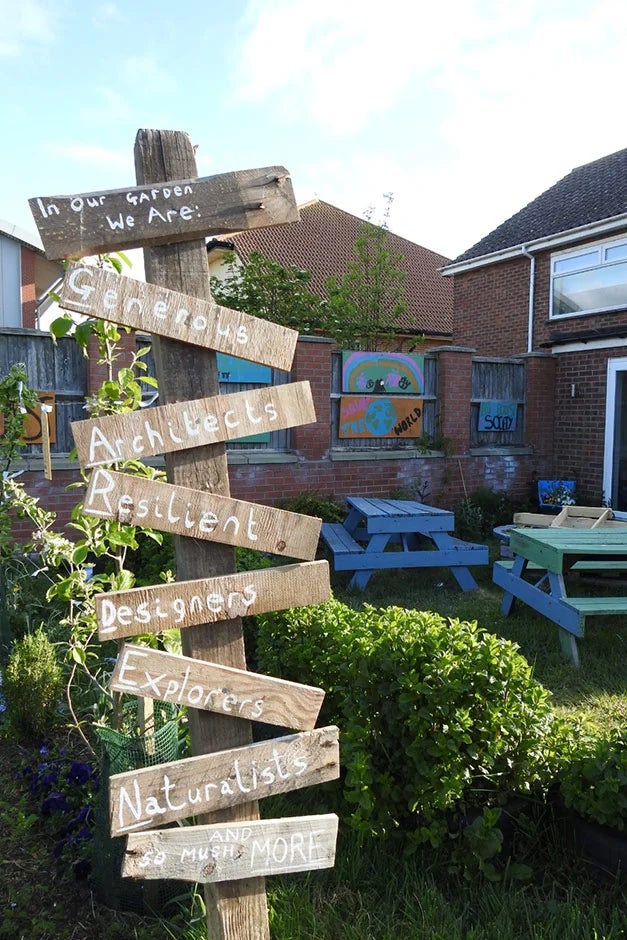
The garden was designed to be welcoming and enclosed. This has been achieved through the inclusion of different zones:
Sensory planting area
Two former pub benches and a large pallet table sit at the centre of a herb garden planted with culinary herbs, a “mint hedge” and Rosa x alba ‘Alba maxima’. This rose was chosen for its scent, wildlife-attracting rose hips and historical value, as it’s one of the oldest rose cultivars which often appears in Elizabethan herb gardens.
Meadow orchard
This area is planted with a row of apple and pear trees, surrounded by a wide variety of and annual meadow flowers. Sweetcorn is also grown here, alongside a raised bed wired for beans and peas. The school's aim is to use the meadow to improve .
Wildlife garden
This space, specifically requested by students when the wellbeing garden was established in 2023, includes a pond, benches, perennial wild and cottage-garden flowers, wild roses, an elder tree and brambles trained along the fence. Bird boxes made by students have been installed and the school is also equipped with wildlife cameras. Science experiments are run in this area, including a study on how rhubarb grows under different conditions and a project with peas.
Allotment
The wellbeing garden was originally intended as an allotment, but was later adapted to reflect the students’ varied interests and needs. Today, around half of the garden is cultivated and there are beds, a polytunnel, soft fruit and four espaliered fruit trees and a small fruit cage for brassicas.
Flower bed
A small formal flower bed runs parallel to the main entrance path. There are plans to use a large space outside the garden gate as an additional formal bed.
Historical area
In 2024, students began digging an area to build a replica ‘Dig for Victory’ Anderson shelter opposite the ‘Lydia Eva’ planter. The shelter was intended to be planted as it would have been during wartime, with the interior space used to grow mushrooms. Unfortunately, these plans fell through over the summer, but proposals to create replica ‘blue plaques’ along the fence behind the shelter remain in place.
Lessons learnt: what challenges did you encounter?

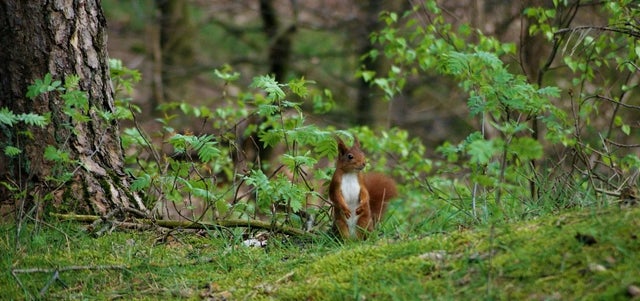
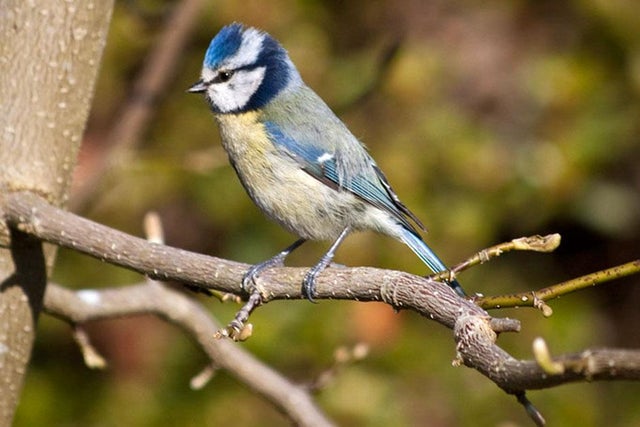
At Caister Academy there’s a commitment to gardening for wildlife
Maintaining a large garden is a big challenge for Caister Academy. The school is supported by The Papillon Project three times a week, but is also seeking community volunteers.
Because the ground was left fallow for five years, weeds are a persistent issue. “As we work organically and have limited time and physical capacity, the solution we have found is to cut the weeds back to ground level rather than dig out the roots. Although they come back quickly, students can see the positive impact they can make in a short space of time, and we are also able to use the green material in the ,” said Charlie.
In terms of weather conditions, persistent driving winds, coastal storms from autumn to late spring and dry summers are addressed by planting , resistant plants. These include wood strawberries, root vegetables such as potatoes, onions, shallots, garlic, carrot ‘Resistafly’, beetroot ‘Boltardy’, as well as pulses and plants that are less likely to bolt. Mulching regularly also help reduce the need for constant watering.
“There are times when only one student attends, especially during extremely cold, dready days. However, at Caister we have observed that those who attend during the winter months become the most dedicated and resilient,” said Charlie.
Lessons learnt: what went well?
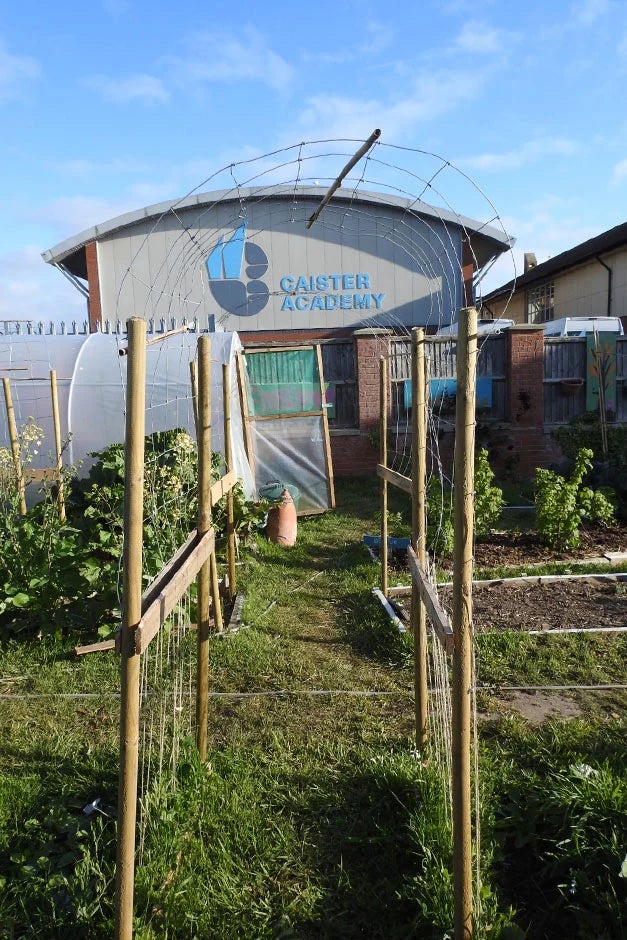
The integration of the meadow has been faster and better than expected. “During winter and early spring 2025, the students cleared the area and many couldn’t picture what it would eventually look like. However, thanks to the RHS National Education Nature Park grant, we were able to use in addition to seeds. This allowed a meadow to flourish within months, enabling students to see a positive transformation in a very short period of time and introducing a wealth of insect activity that they have monitored ever since.”
The academy also runs a successful plant and seed exchange programme, where anyone can donate and, in turn, receive. Tomatoes are exchanged with cabbage and strawberries with hollyhocks, for example, and this creates a strong link between the school garden and the wider community.
“You do not need a huge budget to create an amazing space. The vast majority of what has been achieved at Caister has been made possible through community donations. You would be surprised at what people are willing to donate to their community,” said Charlie.

Impact of the wellbeing garden so far

Caister Academy’s mantra is the Spanish proverb, “More grows in a garden than is sown”
One of the main mantras at Caister Academy is the Spanish proverb, “More grows in a garden than is sown”. So far, the wellbeing garden has helped many reserved students become more outgoing and gain confidence through gardening, while staff can eat lunch in an inviting, quiet outdoor area.
The local community also benefits from the garden, as Caister donates the vast majority of its produce to the village larder, while the remaining part is kept for school catering lessons. “By far the most rewarding donations are the vegetables given to the children who have grown them. This forms a connection and encourages children to try fruits and vegetables they may never have tasted before. There is a unique joy in seeing the faces of students who get to try something they have grown from seed.”