Getting Started
Home-grown, freshly picked peas are sweet and delicious – better than any you can buy in the supermarkets. They’re an easy crop to grow, with climbing and dwarf varieties taking up relatively little ground space, and if you sow several batches you can have harvests throughout the summer.
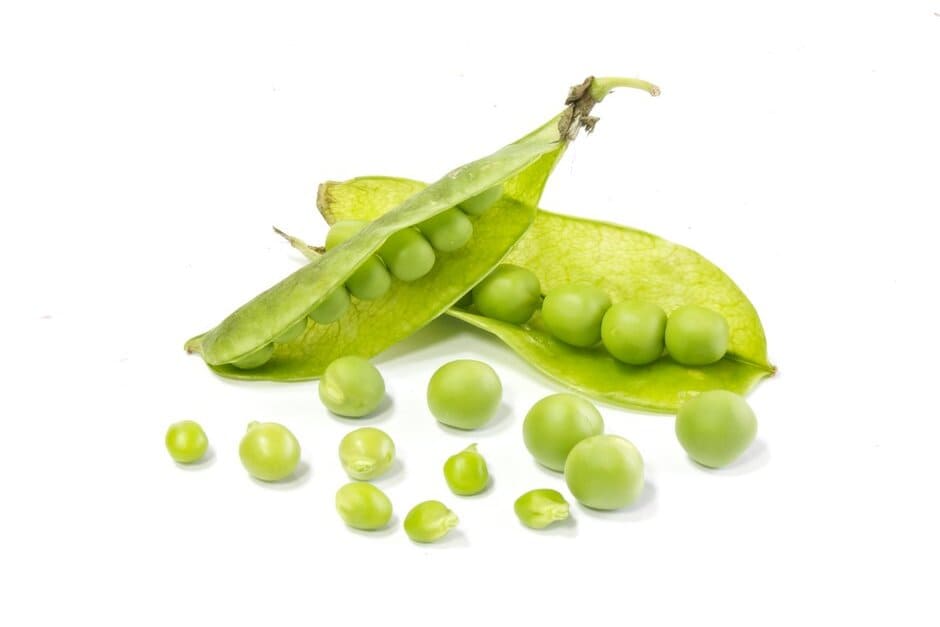
There are several types of peas (Pisum sativum) – peas for shelling (known as garden peas), as well as mangetouts and sugarsnaps – all grown in a similar way. The plants come in various sizes, from tall varieties that reach 1.8m (6ft), down to dwarf varieties of just 45cm (18in), so there are choices to suit all plots.
Sow small batches every few weeks from early spring, for harvests through summer and into autumn, and pick the pods regularly to encourage more to form. You can also harvest young pea shoots (which taste like peas) to add to salads.
Jobs to do now
Water in dry spells
Harvest
Month by Month
Sow
Plant Out
Harvest


Choosing What To Grow
Peas are more varied than you might expect – there are peas for shelling (garden peas), mangetouts and sugarsnaps; green, yellow or purple pods; tall, medium or dwarf plants, early varieties and maincrops. So take your pick – or, better still, why not grow several?
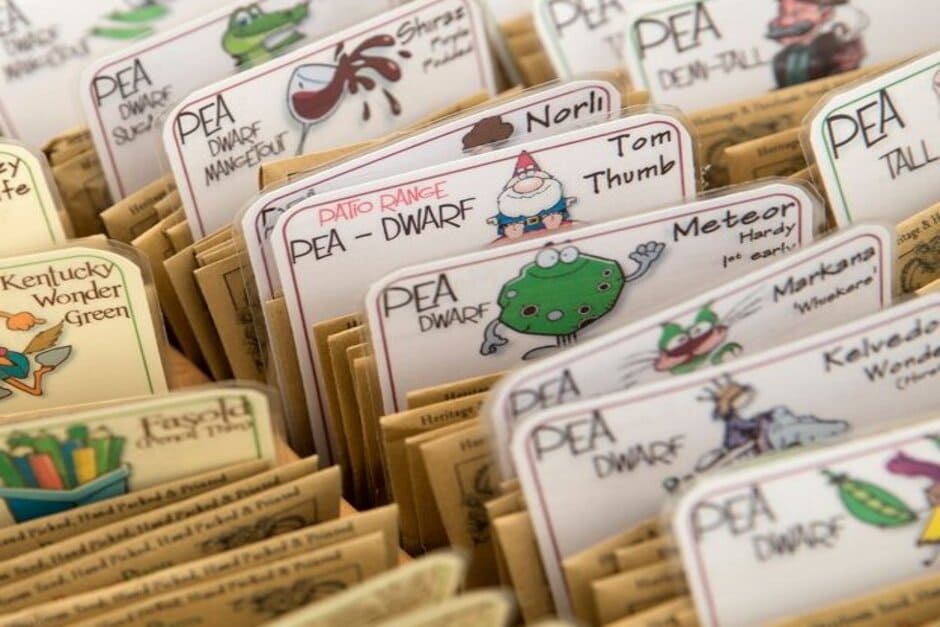
Garden peas, for shelling, produce either smooth or wrinkled peas. Smooth varieties are hardier, so are better for early sowings. Wrinkled varieties are for late spring or summer sowing, and have a sweeter flavour. Some varieties produce particularly long pods, containing up to ten peas, others a bigger overall crop. They can also vary in height from just 45cm (18in) right up to 1.8m (6ft).
Varieties are classed as either earlies or maincrops, growing progressively taller and taking longer to crop:
- First earlies – sow March to early June, start harvesting in about 12 weeks
- Second earlies – sow March to June, start harvesting in 13–14 weeks
- Maincrops – sow March to June, start harvesting in 14–16 weeks
Marrowfat varieties are grown to full maturity and dried, for use in stews and casseroles, or for making mushy peas. Petit pois varieties have very small, sweet-flavoured peas.
Mangetout and sugarsnap varieties, which are picked before the peas mature, are the easiest to grow and tend to produce larger crops. Mangetouts have flat, stringless pods, while sugarsnap peas have fleshy, rounded pods, and both types are eaten pod and all. There are several particularly decorative varieties with purple or yellow pods and mauve or blue flowers.
Some varieties are even sold purely for harvesting pea shoots, rather than pods, and can be grown on a sunny indoor windowsill.
When choosing varieties, look in particular for those with an RHS Recommended: Award of Garden Merit (AGM), as these performed well in our trials – see our list of AGM fruit and veg (135kB pdf) and our Recommended Varieties below. You’ll also find an array of different peas growing in the veg areas of the RHS gardens, so do visit to compare varieties and pick up growing tips.
What and where to buy
You can buy a wide choice of pea seeds in garden centres and from online gardening retailers. Many also sell young pea plants in spring and early summer, ready for planting out.
Recommended Varieties


Preparing The Ground
Choose a warm, sunny, sheltered growing site with well-drained soil. Weed the area thoroughly, then fork in plenty of garden or well-rotted manure – at least two bucketfuls per square metre/yard. Ideally do this a few weeks before sowing or planting, to allow time for the soil to settle. Alternatively, if you're practising no-dig, the ground ahead of sowing or planting directly into the mulch.
Sowing
Peas are easy to grow from seed sown in spring and early summer, either outdoors where they are to grow, or indoors to get them off to an early, reliable start. You can also sow seeds indoors at any time of year for a quick crop of tasty young pea shoots.
Sowing indoors
Sowing indoors in February or March allows you to get an early start, particularly if your soil is cold and wet, which could hinder or cause seeds to rot. Indoor sowing keeps them safe from mice too. You can also sow in autumn and keep plants in a greenhouse or coldframe over winter, for planting out in early spring.
Fill deep modular trays, small pots or cardboard toilet-roll tubes with peat-free multi-purpose . Sow up to three seeds per pot, or one per tube or module, inserting them about 5cm (2in) deep. Alternatively, sow peas along a length of guttering filled with peat-free multi-purpose compost, spacing seeds about 7.5cm (3in) apart in a double row. This makes transplanting outside easy, as you have ready-made rows that can simply be slid into a trench. For more sowing tips, see our guides below.
Keep pea in good light and water regularly. They can be planted out in March and April, once they’re about 20cm (8in) tall – see Planting, below.
Sowing outdoors
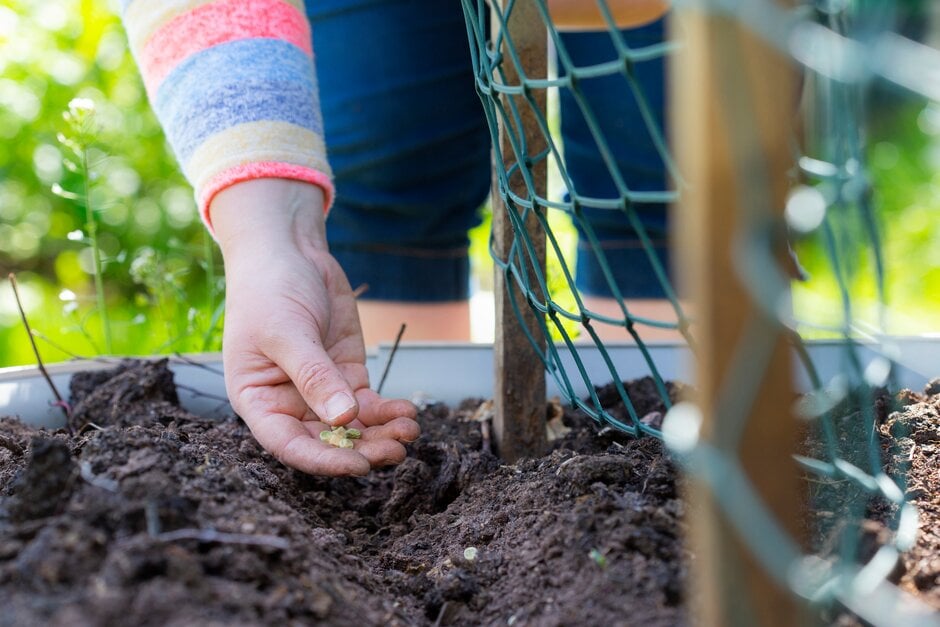
The main outdoor sowing season is from March to June. Pea seeds won’t germinate in very cold conditions, so wait until the soil reaches about 10°C (50°F). If spring is slow to arrive, warm the soil with cloches before sowing, then protect the with cloches or plastic-free fleece. However, peas do generally prefer cooler weather and grow well in a cool spring. Avoid sowing in very damp soil though, as the seeds may rot. Prepare your soil a few weeks ahead of sowing (See Preparing the ground above).
For taller varieties, sow seeds 7.5cm (3in) apart in either a single row, or a double row with 30cm (1ft) between them. Generous spacing between the rows makes these large plants easier to support and improves air circulation, which deters powdery mildew. Put supports in place either now or once seedlings appear – ideally netting or chicken wire attached to posts or bamboo canes.
Shorter varieties need less space between rows and a few twiggy sticks should suffice for support. They are usually sown in a triple row in a flat-bottomed trench 5cm (2in) deep and 15cm (6in) wide. Sow three rows using the full width, staggering the seeds so they’re about 7.5cm (3in) apart. Cover with soil, then lightly firm and water well. If sowing additional sets of rows, space them at a distance equal to the height of the variety you are growing. After sowing, add twiggy sticks between the rows to support the plants.
To get harvests throughout the summer, either sow several batches of an early variety every few weeks, or make one sowing of both early and maincrop varieties, as they will mature at different times.
Protect seedlings from slugs and snails, especially in damp conditions, and from pigeons – see Common problems, below.
Sowing outdoors in containers
Peas grow best in the ground, but smaller and dwarf varieties, especially faster-cropping mangetouts, could be grown in large containers as long as they’re kept well-watered. The limited number of plants in a container means you’ll probably only get a fairly small harvest. Use peat-free multi-purpose and a container that’s at least 45cm (18in) wide, and sow the seeds 7.5cm (3in) apart and 5cm (2in) deep. Add twiggy sticks, bamboo canes or chicken wire for support.
Sowing for pea shoots
You can also sow pea seeds for harvesting the tender shoot tips, or pea shoots, to enjoy raw in salads. Any pea variety is suitable, although a few varieties are sold specifically as pea-shoot crops. Sow seeds indoors at any time, into seed trays filled with peat-free multi-purpose , inserting seeds 2.5cm (1in) deep and spacing them 2.5cm (1in) apart. Keep the well-watered and in bright light, and harvest in three to four weeks, when 10–15cm (4–6in) tall. If you cut the stems about 2.5cm (1in) from the base, they may re-sprout to provide a second harvest.
Planting
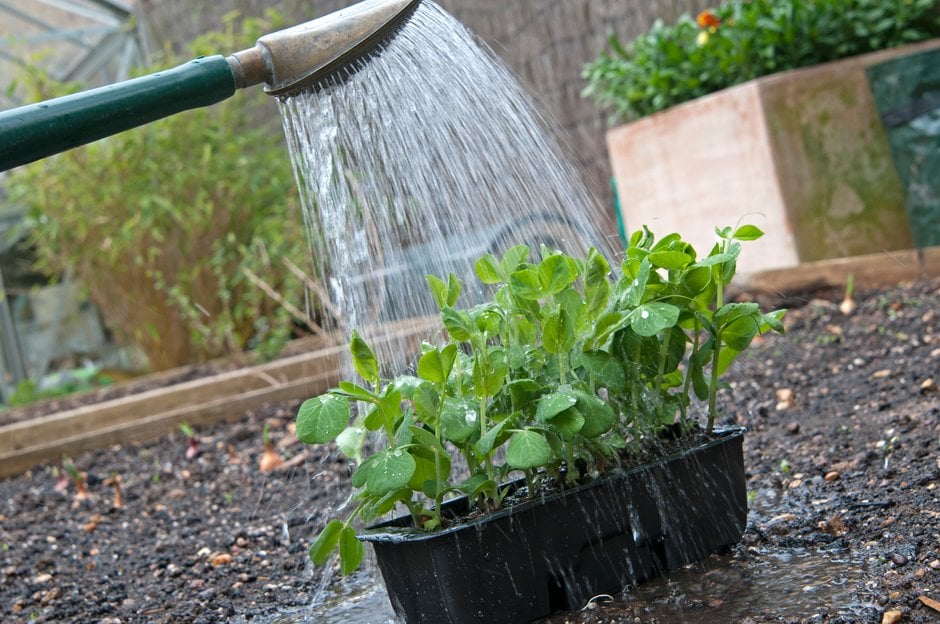
You can plant indoor-raised or bought plants outside from March onwards, once they’re about 20cm (8in) tall. Harden them off to acclimatise them to outdoor conditions and make sure your planting site is prepared in advance (see Preparing the ground above)
Water your young pea plants thoroughly, then plant about 7.5cm (3in) apart, taking care not to disturb the roots. Firm in gently and water well. Arrange in rows as described in Sowing outdoors above – planting shorter varieties in a triple row, and taller varieties in either a single row or in a double row with 30cm (1ft) between them to allow space for supports. If planting another set of rows, allow plenty of space between, for good air circulation – ideally equal to the expected height of the plants (check the seed packet for details). Then put supports in place, as described below.
If the plants were grown in a length of guttering (see Sowing indoors above), simply dig out a shallow trench of similar dimensions to the guttering, then carefully slide the and plants into it, with minimal disturbance to the roots. Firm in gently, then water well.
Planting in containers
Although peas grow and crop best in the ground, you could plant smaller or dwarf varieties, especially faster-cropping mangetouts, in a large container. With only a limited number of plants, harvests will probably be quite small, but still delicious. You’ll also need to water regularly, to keep powdery mildew at bay. Choose a container that's at least 45cm (18in) wide and use peat-free multi-purpose . Space the plants 7.5cm (3in) apart and add twiggy sticks for support.
Putting in supports
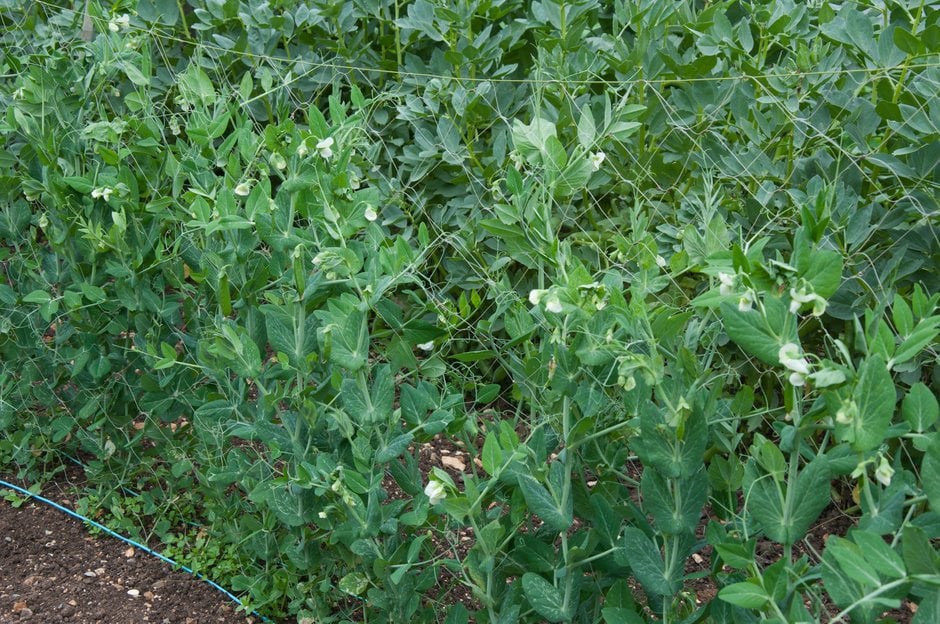
Most peas, apart from dwarf varieties, need supports to scramble up. Put these in place at planting time:
- For taller varieties, use netting or chicken wire attached to posts or bamboo canes. Some pea varieties can grow up to 1.8m (6ft) tall and become top heavy, so make sure the supports are suitably tall and sturdy, especially in windy locations
- For smaller varieties, use pea sticks (twiggy prunings) inserted between the plants
Plant Care
Watering
Once young pea plants are settled in and growing strongly, they shouldn’t need much watering, except in particularly dry spells. They generally benefit from a good watering once they start to flower, and again two weeks later, to help the pods swell.
While cropping, check the soil moisture at root level regularly and water if necessary. Try not to wet the leaves as this can encourage fungal diseases – water directly onto the soil instead. If growing peas in a container, the can dry out rapidly, so regular watering is essential. For water-saving tips, see our guides below.
Mulching
Add a thick of garden compost around pea plants after planting to help stop the soil drying out in summer and to deter weeds.
Feeding
Peas usually grow well in most soils without any need for fertiliser. But if you’re growing peas in a container, start feeding when the first flowers appear, using a high potassium organic liquid fertiliser, such as , once a fortnight.
Harvesting
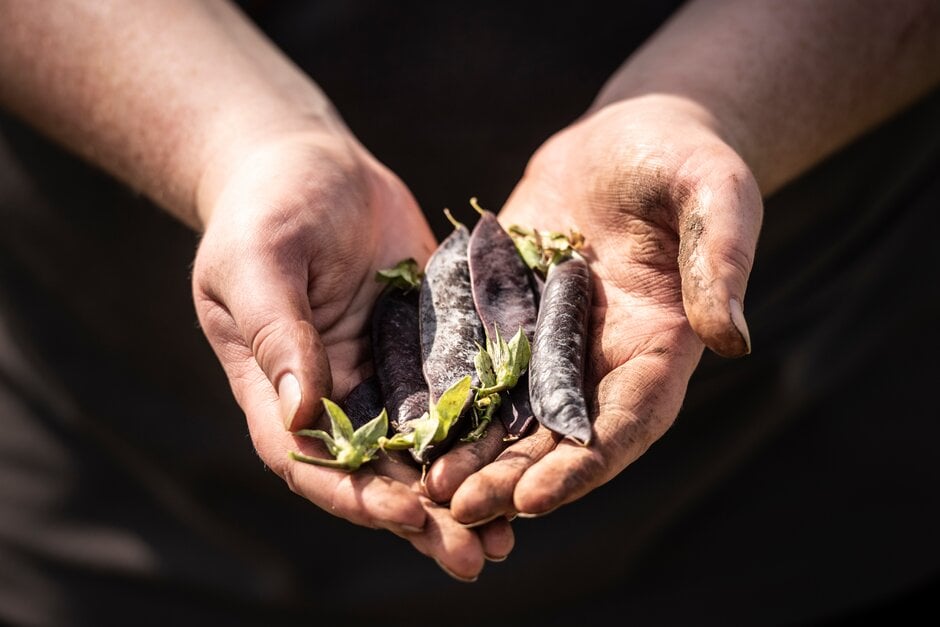
By choosing different types and varieties, you can harvest peas from June through to October. Pick regularly, otherwise the plants will stop producing flowers and pods. If you have a large crop, pick them all rather than leaving them on the plants, then freeze any excess.
The pods of shelling/garden peas are ready to harvest when they’re well filled. Mangetout and sugarsnap peas should be picked when the pods are about 7.5cm (3in) long, just as the peas are starting to develop. Plants will crop for several weeks. Pods develop lower down on the plants first, so work your way up when picking.
Pea shoots can be harvested from the tips of young plants. They taste like fresh peas and are a great addition to salads or stir-fries. But don’t take too many from each plant, as it can hinder cropping. Alternatively, grow plants specifically for their shoots (see Sowing for pea shoots, above), harvesting within a few weeks of sowing, when tender and delicious.
Once harvesting has finished, cut plants down to the base and them. However, as legumes (peas, beans and related plants) fix nitrogen from the air at their roots, leave these in the ground to boost soil nitrogen levels.
Problem Solving
Peas are generally healthy and robust plants, but they often need protection from garden wildlife that enjoy eating them. Mice will take newly sown pea seeds, so indoor sowing is often safer and also keeps away from slugs and snails. Pigeons like to eat pea plants too, so you may need to use a netting cage. For more on spotting and tackling these and other issues, see Common problems, below.
Common Problems

Plant viruses
Plant viruses affect many plants and cause a wide range of discolourations and distortions in leaves, shoots, stems and flowers, but rarely kill the p...

Powdery mildews
Powdery mildews are a group of related fungi which attack a wide range of plants, causing a white, dusty coating on leaves, stems and flowers.

Mice and voles
Mice and voles are small rodents that sometimes damage plants in gardens and greenhouses.


