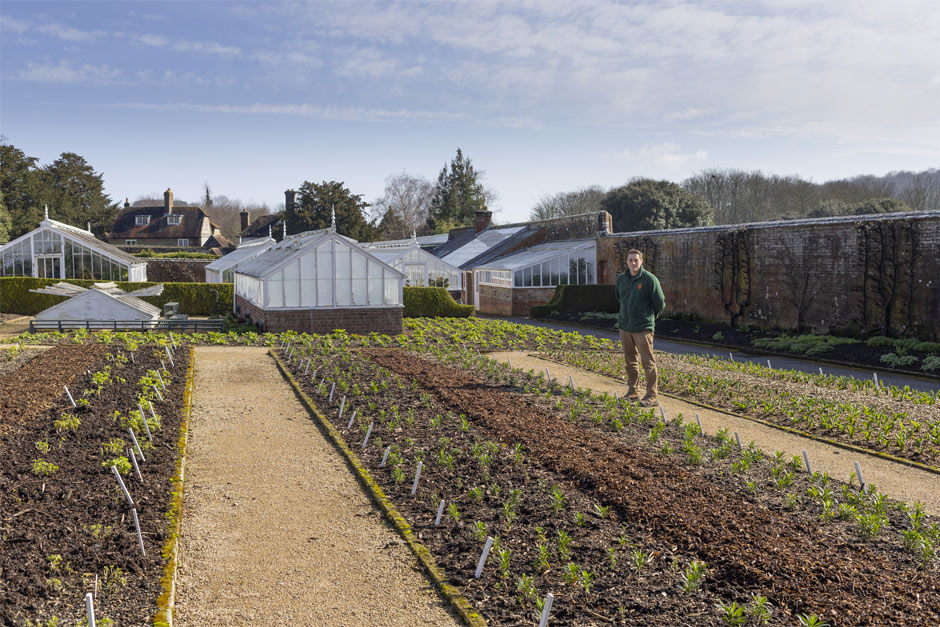
Biodiversity is top of the horticultural agenda now, and attitudes towards gardening with nature have come a long way since judges were shocked by slug-nibbled leaves at RHS Chelsea Flower Show’s first wildlife garden in 1985. Still, the glorious abundance on show at Humble-Bee Gardeners’ nursery in Shropshire is a reminder that there’s scope to do far more. Here, Frantisek Zika and Jenny Rafferty have turned what was an intensively farmed seven-acre field into a fertile Shangri-la of flora and fauna – and a burgeoning business to boot.
We need to see gardens as part of the wider landscape. Any plants are more beneficial than none, but why not choose those best-suited to supporting what’s living all around us
Native or Naturalised plants are those that have been introduced to a place outside of their native range and have become established in the wild there, surviving, reproducing and spreading without help. Sycamores, snowdrops and sweet chestnuts are naturalised plants in the UK.
The handsome spread of plants here has very much been chosen for their garden merit as well as value to wildlife. Now, in June, the nursery pots are awash with pink, from the intense cerise of Lythrum salicaria ‘Robert’ through the spectrum of Achillea millefolium ‘Tricolor’ to the tiny blush A bud is a small, undeveloped shoot that contains the potential for new growth. Buds are typically found on stems, where they can be apical (found at the tip) or axillary (found between leaf axils) and may develop into leaves, shoots or flowers.
“Biodiversity brings all-round resilience,” adds Frantisek. “Insects have evolved to live in specific ways, and that makes them vulnerable to change. Honeybees will fly three miles in search of food, but bumblebees only cover one mile, and for some solitary bees it’s just 50 metres – so your garden may be a core part of their lifecycle. If your plot is a monoculture, there’s no safety net. But if you create a mini ecosystem with a diverse range of plants – maybe swap a fence for a hedge, leave hollow-stemmed Perennials are plants that live for multiple years. They come in all shapes and sizes and fill our gardens with colourful flowers and ornamental foliage. Many are hardy and can survive outdoors all year round, while less hardy types need protection over winter. The term herbaceous perennial is used to describe long-lived plants without a permanent woody structure (they die back to ground level each autumn), distinguishing them from trees, shrubs and sub-shrubs.
Both Jenny and Frantisek, 37, were passionate about sustainable growing from an early age. “I was Mum’s second in command in the garden, and the first book I ever bought was Beth Chatto’s The Damp Garden,” Jenny says. After a degree in music, technology and innovation, a career in horticulture via training at RHS Garden Wisley beckoned. But it was while studying at the historic Cambo Gardens on the east coast of Fife that she met Frantisek, who arrived from Czechia on an internship in 2013. Raised on a self-sufficent smallholding, from the age of five he helped with the family’s fruit and veg production and began beekeeping aged seven. “I wanted to be a beekeeper but an allergy meant I had to do the next best thing – gardening,” he says. A degree in horticulture was followed by a masters, then rewilding projects in Nicaragua, Vietnam and Thailand.
“Frantisek was a breath of fresh air,” says Jenny. “He questioned everything, still does, and is never afraid to experiment.” The techniques used to breathe life back into this field during the last five years, on a shoestring budget and shunning any chemical shortcuts, are a case in point. The clay soil was in a sorry state after long-term arable cropping. Resuscitation began with Mangalitza pigs Ronnie and Arietty clearing thistles and bindweed as they spread manure, while a trio of pygmy goats dealt with the docks. More than 80 pumpkin cultivars were planted, their deep root systems breaking up the compacted soil to allow oxygen and water back in; clover came next (both Trifolium pratense and T. repens) to restore To grow well, plants need a wide range of nutrients in various amounts, depending on the individual plant and its stage of growth. The three key nutrients usually taken up from the soil are nitrogen, phosphorus and potassium. Plants also need carbon, oxygen and hydrogen to make carbohydrates — their main energy source. Carbon and oxygen come from the air as carbon dioxide, while hydrogen is drawn from water absorbed by the roots. Other important soil nutrients include magnesium, calcium and sulphur. Most garden soils contain enough of these nutrients to support healthy plant growth.
Incredible, then, that in between all the planting, propagating and pig-husbandry – and parenting three children under the age of 10 – this resourceful couple have also created several award-winning show gardens. “We want to inspire people to make their gardens more sustainable, and to influence the horticulture industry to become more ethical and ecological,” says Frantisek. One of their show gardens, Biosis: Mode of Life, which was crowned Best Show Garden at last year’s RHS Malvern Spring Festival, is now being reconstructed at the nursery, the first of many garden spaces planned to showcase sustainable design. “It’s joyful to choose plants from the nursery, seeing the wildlife loving it and bringing that to clients’ gardens,” says Jenny, casting her eyes over a Seseli gummiferum that’s hosting a veritable I-spy of insects. “I hope it can help re-establish that web of life that a garden should be humming with.”
Watching a buff-tailed bumblebee tumble from a Campanula ‘Sarastro’ bellflower, it seems absurd that gardening ever disconnected from the natural world “It’s surprising, isn’t it?” says Frantisek. “We have a way to go, though. There are around 250 solitary bee species in the UK, and many gardeners can’t ID one. That needs to change. Solitary bees are a crucial part of our ecosystem: rather than collecting pollen on their legs they roll in it, so are incredibly efficient pollinators. I hope people will come here and see what wonderful creatures they are.” Gesturing around, Jenny adds: “And find amazing plants to enhance their local The variety of living organisms (plants, animals, fungi and microorganisms) in a particular environment. Boosting the biodiversity of your garden has many benefits, including supporting wildlife, improving soil health and reducing the likelihood of pest and disease problems.
Perhaps now is the time for horticulture to evolve into a broader idea of sustainable, interconnected spaces – this insightful, hard-working pair hope so.
Green credentials
Fully off-grid and peat and pesticide-free, the nursery is establishing meadows, wetlands and hedgerows to support local biodiversity. A 60kW solar installation powers everything on site, including the irrigation system, which is regularly attuned to limit loss and wastage of the water drawn from a bore hole. Stock beds reduce plastic use, and plants for sale are increasingly housed in pots made of compressed rice husks, with corn-starch labels. Grey water is recycled and pot-less growing and wool Mulch is a layer of material, at least 5cm (2in) thick, applied to the soil surface in late autumn to late winter (Nov-Feb). It is used to provide frost protection, improve plant growth by adding nutrients or increasing organic matter content, reducing water loss from the soil, for decorative purposes and suppressing weeds. Examples include well-rotted garden compost and manure, chipped bark, gravel, grit and slate chippings.
Jenny’s top wildlife plants