How gardeners can help our declining bees and other pollinators
Gardens can support good numbers and a wide range of pollinators, but worryingly, bees and other pollinators are in decline. Gardeners can make a difference to help reverse this trend.

As the long summer days begin to shorten, your garden becomes a sanctuary for visiting insects. From rethinking your autumn tidy-up to knowing which seasonal wildlife to look out for, here are our late-season pollinator tips
Rather than keeping turf uniformly short, leave unmown sanctuaries to flower. Tap-rooted plants like clover, selfheal (Prunella vulgaris) and common daisies (Bellis perennis) bloom reliably into autumn. These humble lawn flowers provide essential high-energy for short-tongued bumblebees and hoverflies when border perennials begin to turn.

Late summer is a good time to inspect bee hotels and make sure they’re still in good condition. Clear away any growth obscuring entrances and check that the nesting tubes are secure. If birds have been raiding the hotel and pulling tubes free, replace them and consider fitting a protective mesh over the front.
Extend your garden's flowering display into October through selective deadheading. Removing fading flower heads on dahlias, cosmos, salvias, and repeat-blooming roses encourages plants to set new buds rather than seed.
Balance deadheading with wildlife retention. Leave structural seedheads such as teasels (Dipsacus fullonum), globe thistles and Rudbeckia intact. They offer seed forage for goldfinches and shelter for small invertebrates later in the autumn.
Resist the urge to cut everything back to bare soil. Hollow stems, spent seedheads and leaf litter are essential winter refuges for beneficial insects. Rather than bagging fallen leaves, rake them beneath shrubs or hedges to create a damp leaf-mould microhabitat for overwintering queen bumblebees and ground beetles.
Keep an eye out for these frequent visitors foraging and sheltering in your September garden.
The most common hoverfly in the UK, it’s quite small, with a yellowy-orange body showing thick and thin horizontal black stripes (like thick-cut and thin-cut marmalad, which its name is said to derive from).

This fluffy, ginger-brown bee is commonly found in gardens across the UK. It can be seen during much of the year, most often from March to November, feeding on all kinds of flowers.
Considered one of Britain’s favourite butterflies, the red admiral is easy to spot with distinctive red and white markings across the black velvety wings.

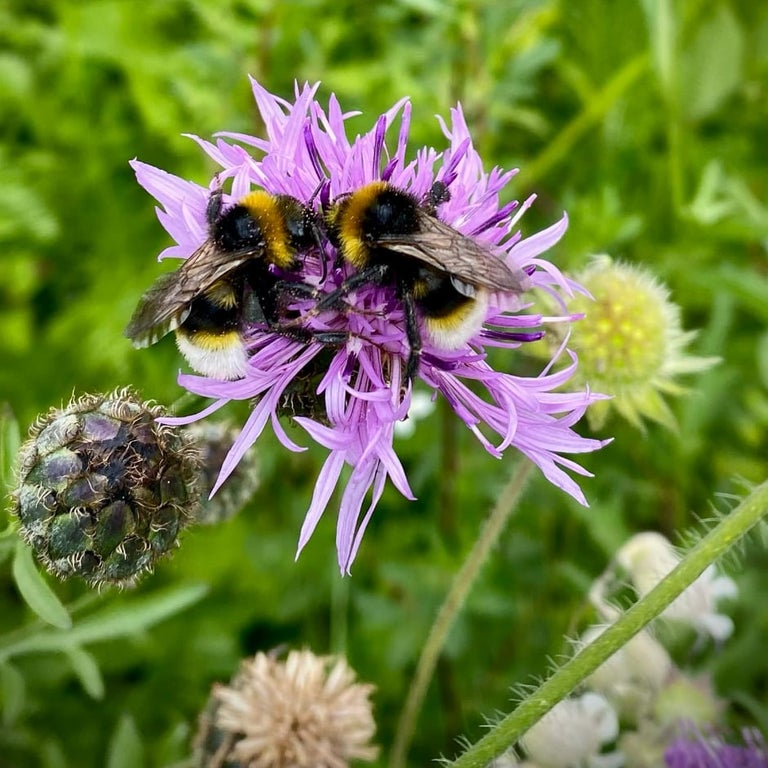
A common and widespread bumblebee, with two golden bands and a buff-coloured tail. These bees have short tongues and need plants with open, flat flower heads.
This distinctive species has a black body and red tail and can be seen buzzing around gardens from March all the way through to October.
Found in a large variety of habitats such as grassy lowlands, parks and gardens. They’re long and narrow with dark brown forewings. As they fly, you’ll catch a flash of colour from their underwings.
These long-tongued bumblebees have a black body, yellow bands and white tail. They’re widespread
across UK gardens and are seen between March and October.
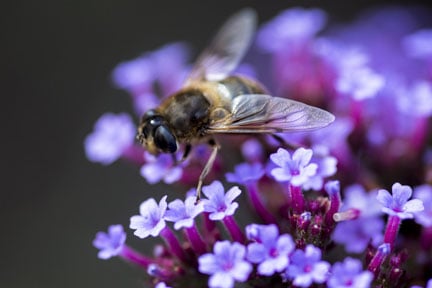
Considered to be the most widespread hoverfly in the world, the drone fly is found in all continents except Antarctica. It’s quite stocky, averages 1.2cm long and is a good mimic of male honeybees.

A large moth that’s an uncommon migrant, but if you do see it you’ll notice the distinctive pink stripes on its abdomen. Its long proboscis is great for sipping from tubular flowers such as Nicotiana.
Emerging in late August, this mining bee can be active into November, aligning perfectly with the flowering period of ivy, which it almost exclusively forages on. Although solitary, large numbers of these
bees will nest alongside each other in sparsely covered ground.
Growing to 2cm long, these black and yellow striped insects have a black marking on the front of their
faces that resembles an anchor.

An unusual yet unmistakable moth with distinctive pink-brown markings across its wings, mimicking the appearance of a withered autumn leaf.
Enjoyed this article?
This piece comes from The Garden, the monthly magazine sent to RHS members. Filled with expert advice, planting inspiration and seasonal ideas, it’s one of the many benefits of RHS membership. Become a member to receive your copy each month.