

Must-visit gardens of the South West
Our partner gardens across the South West offer everything from peaceful trails and historical statues, to family-friendly play areas

Tucked into Devon’s south coast, this RHS Partner Garden shows that the first step towards helping pollinators might simply be to start by listening. Head Gardener Martin Haxton explains how
In a quiet valley on Devon’s south coast, Mothecombe Gardens is learning to listen. Not just to the seasons or the soil, but to the creatures it was designed to support. Here, pollinators don’t simply visit. They guide the way.
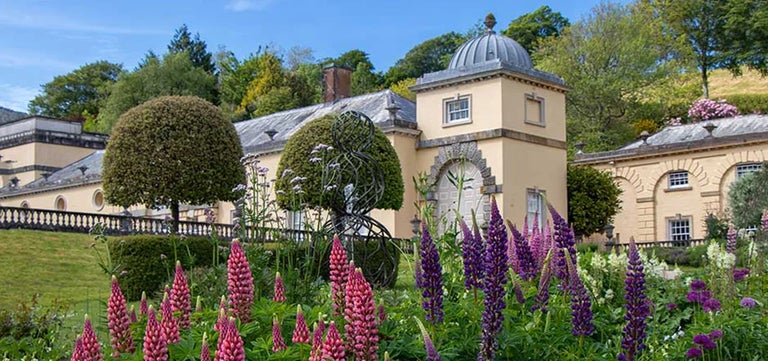
Set within the historic Flete Estate , Mothecombe is a place where naturalistic planting, ecological intent and quiet innovation converge. From early spring through to autumn, the garden unfolds into a -rich garden with plants chosen to offer continuous forage.
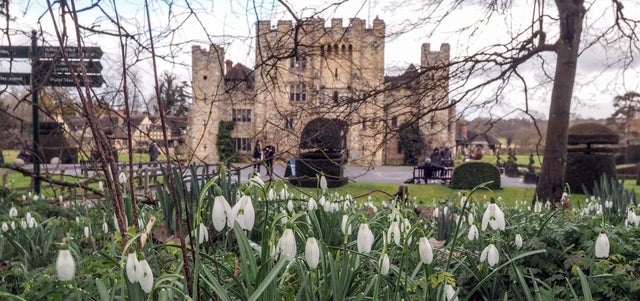
The first to flower are snowdrops and Pulmonaria , followed by clouds of Nepeta , Salvia and verbena as the days lengthen. By midsummer, the borders are in full tilt. Perovskia , foxgloves , Scabiosa and Knautia are layered with grasses. It’s a planting palette that feels soft and unforced, but behind it lies something quietly radical and unheard of.


In partnership with UK agri-tech firm Agrisound , our team at Mothecombe has installed discreet solar-powered sensors throughout the garden. These devices monitor bumblebee activity acoustically, detecting and recording the frequency of visits over time.
By tracking patterns in pollinator behaviour, we are building a picture of which areas of the garden are most effective, which planting combinations perform best and where gaps in forage may still exist.
The findings inform planting decisions the very next season. If one corner falls quiet in July, new mid-summer nectar sources are introduced. If a particular proves especially attractive, it is propagated and shared more widely. This approach to gardening is not instictive but responsive, shaped by the lives it’s intended to support.

The Bee Garden is a direct result of this approach. At its centre is a collection of over twenty lavender varieties, flowering in soft succession from early summer into September. Lavandula angustifolia and silver-toned hybrids grow side by side, bordered by perennials and herbs that hold scent. If you stand quietly among them, you’ll notice that the air hums with layered sound, a thousand small choices made visible and audible of the drift of bees.
Beyond the Bee Garden, the wider estate is also changing. Wildflower meadows are being reinstated using seed mixes tailored to the local soil. Historic hedgerows are being replanted, not just for structure but for pollinator movement and nesting. Woodland glades are opening up to sunlight, field margins are being left unmown and chemical inputs are being eradicated in favour of regenerative practices. Each action connects back to what the garden is hearing.
Mothecombe is not a garden chasing spectacle. By tuning into the industrious life of its pollinators, we have created a space that is not just beautiful but also necessary. For us, success isn’t measured in flower counts or peak colour. It’s measured in return visits, in the rising curve of bee activity, in the slow spread of seedheads, in the sense that something is shifting in the right direction.
In an age where loss feels both urgent and overwhelming, Mothecombe Gardens offers a different kind of hope. Not loud, not sentimental but rooted with possibility.
In 2025, Mothecombe House and Gardens was named the regional winner for South West and Wales in the RHS Partner Garden of the Year competition.
Discover why visitors voted for it and don’t miss the chance to take part in this year’s competition.
Join the RHS and enjoy free access to more than 240 gardens in the UK and around the world at selected times >
Martin Haxton has over 15 years’ experience in horticulture and is Head Gardener at Mothecombe Gardens, where he develops planting schemes and manages the gardens with a focus on biodiversity, pollinator-friendly planting for bumblebees and sustainable horticulture. He is also the co-founder of Bee Verdant , a specialist nursery dedicated to growing plants that support bees and other pollinators.