Rugby’s vision for a nature-friendly town
From a butterfly bank to tree-planting projects, Rugby in Bloom shows how even the simplest initiatives can attract nature and strengthen community cohesion
For over 25 years, RHS Britain in Bloom has had a positive impact on people and places in the market town of Rugby, Warwickshire, and now Rugby in Bloom is one of 44 finalists in the RHS Britain in Bloom 2026 UK Finals, competing in the Small City & City category.
The campaign is led by Rugby Borough Council’s Parks and Open Spaces and brings together a wide range of local partners such as Warwickshire Wildlife Trust, Warwickshire County Council’s Ecology and Tree teams, Rugby Borough Council’s Planning and Grounds departments as well as a network of community groups and volunteers. Working collaboratively on a number of projects, they help enhance the local environment, improve wellbeing, increase access to nature and strengthen community cohesion.
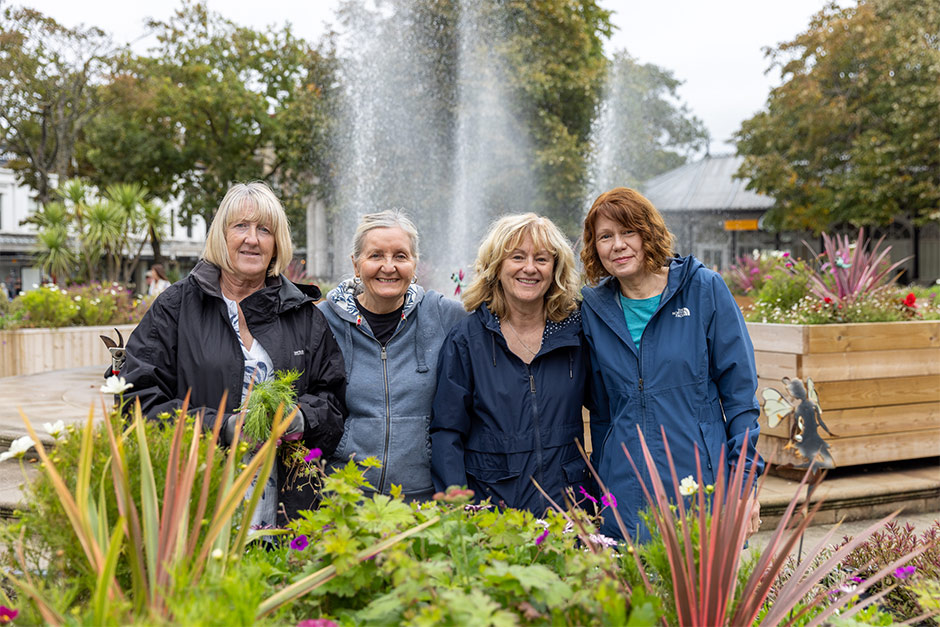
Members of Rugby Borough Council’s Parks and Open Spaces alongside regenerated community beds in Caldecott Park
Making more space for nature
A swift, house martin and bat tower was installed in spring 2026 at Diamond Wood Country Park
A diverse mix of habitats is key to the site’s success in supporting wildlife such as badgers and muntjac deer
Helping butterflies thrive
“People see the park differently now. There’s a real sense of excitement, with many looking forward to picking and enjoying the fruit,” said Dean Welburn, Chair of the Residents’ Association at Coton Park, where another community orchard was recently planted.
Specialist ground lights help park goers feel safe and significantly reduce upward light spillage
A common blue butterfly seen at Centenary Park, where a butterfly bank is a standout feature
Town Park Ranger Stephany Huggett also works with Butterfly Conservation to distribute garlic mustard seed to local schools and community groups, which can be scattered at home or on the journey to school or work. These food plants help orange-tip and green-veined white butterflies thrive, while the initiative engages people with nature and the community.
Mike Slater points to an interpretation board that helps spark conversations about biodiversity
The community orchard in Centenary Park
Volunteers’ essential work
Volunteers help manage grassland and keep paths clear at Ashlawn Cutting nature reserve
Volunteers’ work helps encourage an abundance of fauna and flora at local nature reserves. Species such as the wasp spider have been found at Ashlawn Cutting, a nature reserve on the former Great Central Railway line. Other finds include Anacamptis pyramidalis (pyramidal orchid) and stemless thistle.
Wasp spider found at Ashlawn Cutting
Common spotted orchid
A meaningful link with the community
Every year, a nature-focused networking event hosted by Rugby Borough Council and Warwickshire Wildlife Trust celebrates the community’s dedication to environmental preservation and helps forge new connections to support future initiatives.
With materials provided by the Council and donated by Rugby-based building companies, prisoners at HMP Onley built around 70 bat and bird boxes which have been distributed across the town. They have also been involved in a collaborative art project celebrating the architecture and heritage of Rugby’s landmarks, which resulted in a collection of 12 paintings displayed at Rugby Art Gallery and Museum.
Prisoners’ artwork inspired by street art brightens a railway bridge walkway
Looking ahead
Following consultation with residents, a derelict site next to Centenary Park will become a vibrant 30-plot community allotment site – a hub for growing food, boosting biodiversity and fostering social connection.
This focus on community-led green spaces is supported by a second-year partnership with Garden Organic, which provides a dedicated full-time staff member to support gardening projects. Heather Thomas, Project Co-ordinator, explained: “We are delivering training on using natural methods to promote healthy, productive and sustainable gardens and green spaces. Our aim is to connect people with green spaces across the borough and for them to gain the knowledge and skills to grow their own food, help biodiversity, prevent waste and become points of contact within their communities.”
Engineering students designed and created laser-cut steel letters for the community beds in Caldecott Park
Tree planting also continues to play a key role in Rugby in Bloom’s ambitions. Initiatives such as Free Trees for Farmers help to strengthen on-farm habitats and wildlife across the borough, while wider programmes like the Trees Outside Woodland Fund focus planting efforts on schools, golf courses and community centres.
Innovation is also on the horizon, with plans underway for a ‘living pillars’ project introducing vertical, self-sustaining habitats attached to urban structures. As well as enhancing biodiversity, these installations will help improve the look and feel of the landscape, while creating a new green corridor through the town centre, connecting two major parks.
“This is just a snapshot of the green initiatives Rugby in Bloom continues to champion,” said Green Spaces Officer Colin Horton. “Britain in Bloom shines a light on what we are achieving together and gives us a powerful platform to celebrate our work. It reminds us that when people care about the places they call home, it creates something special, somewhere people are proud to live, inspired to work and eager to visit.”