How a community garden in Bristol is becoming climate-proof
Want a resilient garden that thrives in arid conditions? Lou Matthews, Head Gardener at Redcatch Community Garden, offers her expert advice to help you beat the heatwave in your community space, or at home
Marica Flore
RHS Communities Editor
4-minute read
Perched on a hill in Knowle, South Bristol, Redcatch Community Garden is turning the challenges of climate change into an opportunity to explore new approaches to gardening.
The project began in April 2017, when a disused bowling green in Redcatch Park was given new life thanks to the initiative of two local residents, Kate Swain and Mike Cardwell. With limited resources but the support of a team of passionate volunteers, the site was gradually transformed into a thriving social hub open to all.
Today, Redcatch Community Garden organises a range of activities, including wellbeing gardening sessions, art therapy and educational projects. The groups that use the space, from local schoolchildren to people living with dementia, are helping to shape a garden at the forefront of climate-resilient horticulture. Their motto is: the planet is changing, are you?
Here, Head Gardener Lou Matthews offers exclusive tips to unlock the secrets of creating a climate-proof garden in your community or at home.
1. Choose drought-tolerant plants
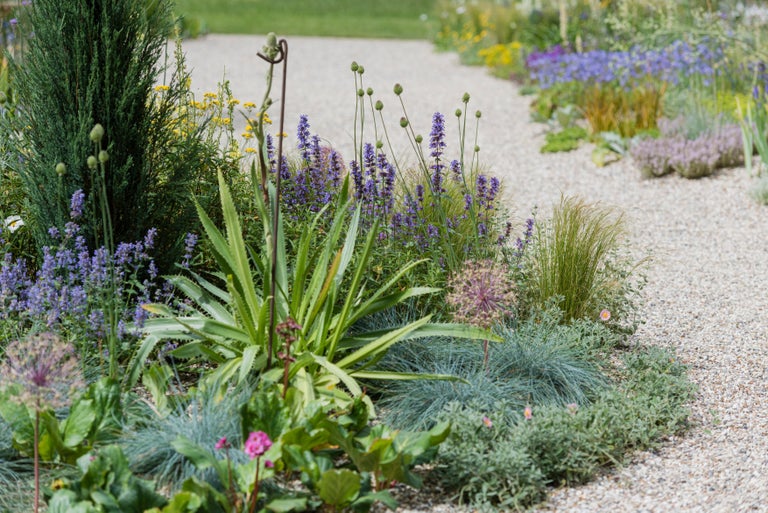
The climate-resilient bed at Redcatch Community Garden
The extreme heatwaves of recent summers are prompting the team at Redcatch Community Garden to rethink what they can grow.
“2026 has been a really bad year for runner beans and parsnips,” said Lou, who started at Redcatch in 2018 as a garden volunteer before taking a job in the café and, three years later, moving into her current role. “Even Mediterranean lovers, such as loofah, struggled in the heat.”
Fortunately, Lou has also been planting species that cope well with drought, helping the garden look spectacular throughout the summer.
Here are Lou’s top ten drought-tolerant plants grown at Redcatch:
Hylotelephium - “This -friendly succulent stores water in its thick leaves. I love it because it has purple and green varieties and, when it blooms, it often forms pom-pom shapes which are fun to look at in the garden. it provides long-lasting colour in late summer and autumn.”
Agapanthus - “Very common in Portugal and other Mediterranean countries, this South African can become very large. When it does, divide it to create more plants. Having plants for free is great and, if you have enough, you can sell them through your community group to help support your projects. Agapanthus is hardy once established and good for pollinators.”
Stachys byzantina - “Lamb’s ear is a great ground cover and pollinator-friendly plant. The silver hairs on its leaves trap moisture and reflect sunlight, reducing water loss through evaporation. Divide it to create more plants.”
Nepeta - “Catmint has fuzzy grey-green leaves which reflect harsh sunlight, reducing water loss through evaporation. Once established, its root system helps it survive long dry periods. Another great plant for pollinators.”
Verbena bonariensis - “Similarly to Achillea, Verbena bonariensis is drought-tolerant once established and makes a lovely cut flower. It self-seeds easily and its small, lilac-purple flowers are a good source.”
Lavandula angustifolia - “A compact, bushy shrub that loves being in the sun. It has some hardy varieties, such as ‘Hidcote’ and ‘Munstead’, that also do well in cold winters.”
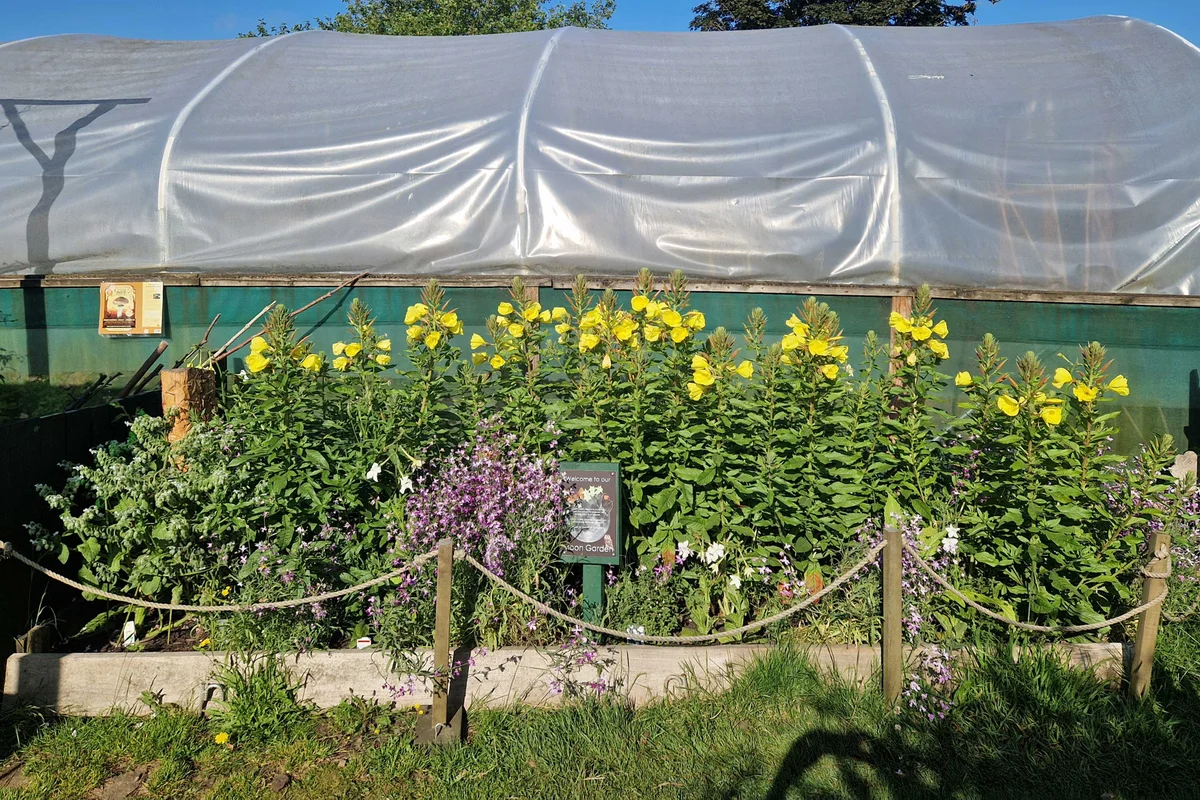
Oenothera - “If you go to coastal areas, you’ll often see evening primrose the beach, which proves its drought resilience. It self-seeds everywhere and, after the sun sets, its gorgeous fragrance becomes more pungent, attracting night-time pollinators. You can find it in our moon garden – an area we have developed to support night-loving wildlife such as moths and bats.”
Eryngium - “Sea holly becomes drought-tolerant once its deep tap root is established. Pollinators love it and it makes a striking cut flower. It also looks great when dried.”
Hardy geraniums - “Drought-tolerant once established, hardy geraniums have a long flowering season.”
Stipua tenuissima - “This grass is drought-tolerant once established, plus it’s very low-maintenance. It provides lovely colour in autumn.”
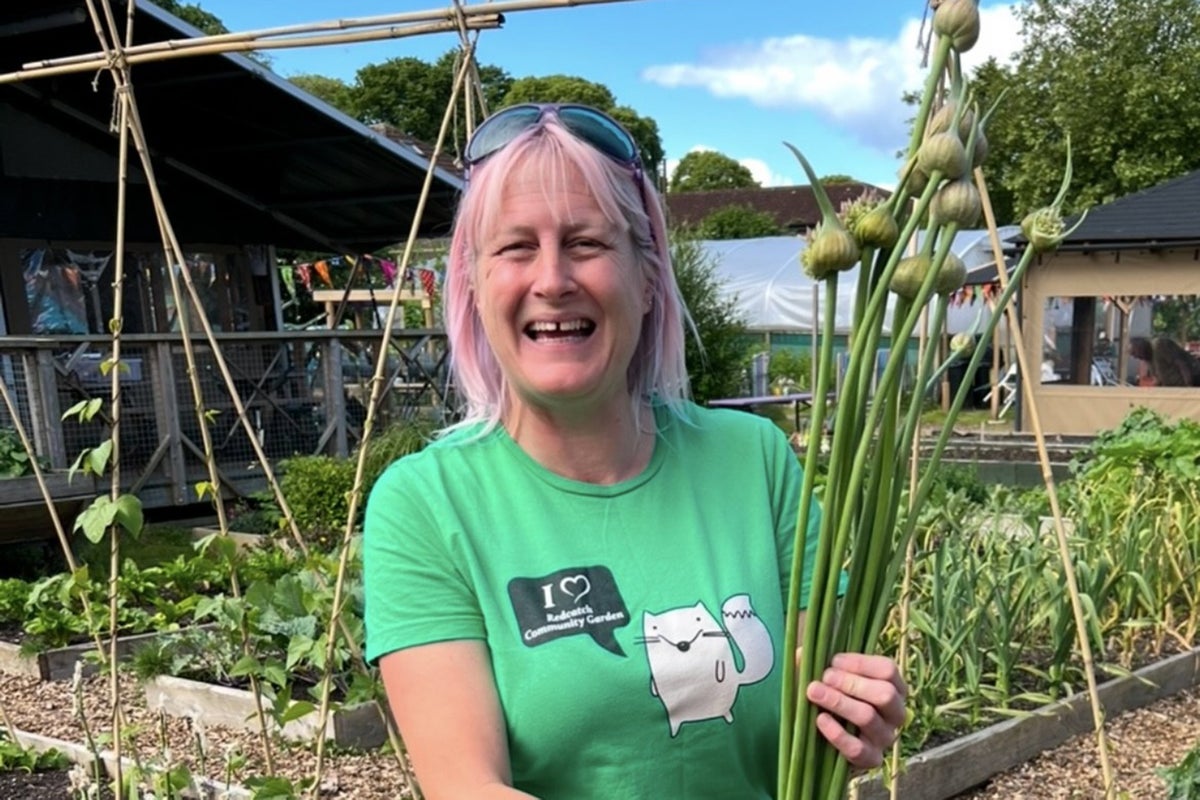
Lou Matthews, Head Gardener at Redcatch Community Garden
The Moon Garden, a border developed to support night-loving wildlife
2. Harvest rainwater
Redcatch Community Garden captures about 20,000 litres of rainwater each year.
“When the garden was born, we barely had any areas were we could keep dry in the rain,” said Lou. “However, as Redcatch grew, we started adding covered structures such as pergolas, rooftops and a polytunnel, and these buildings soon became vital points for collecting rainwater. Connect them to drainpipes and downpipes that lead straight into water butts and IBCs, and you’ll have a plentiful water supply.”
Another clever water management system developed at Redcatch can be found in the Wellbeing Rain Garden, a small border created for the 2026 RHS Badminton Flower Show in collaboration with Hawkmoth Garden Design. The garden, relocated in situ after the event, uses a Japanese water feature known as shishi odoshi to channel rainwater into a tank. Here, aquatic plants such as Iris pseudacorus and Caltha palustris thrive alongside moisture-loving and drought-tolerant species.
The Wellbeing Rain Garden created by Redcatch Community Garden and Hawkmoth Garden Design for the RHS Badminton Flower Show 2026
3. Mulch twice a year
“To avoid spending all summer watering the garden, it’s important to think about mulching,” recommends Lou. This helps to retain moisture, as well as preventing weeds from growing and protecting the soil from heavy rain.
“At Redcatch, we have a no-dig approach, so we give the garden a good twice a year, in autumn and spring, using homemade and good-quality woodchip or well-rotted . Adding well-rotted manure in autumn is particularly beneficial, as its support the soil after a long, hot summer.”
Heavy mulching also helps to reduce cracks. “Despite the drought, we hardly need to water our south-facing back border at all,” says Lou.
4. Overplant your borders
Most of the plants grown at Redcatch Community Garden are pollinator-friendly
Another great way to overcome a heatwave is to fill your border with as many plants as possible, “so the sun isn’t baking the soil,” explained Lou. “This works particularly well with , as they can sustain themselves more easily. If you want to introduce anything new, do so in autumn and give it plenty of water to help the roots establish.”
5. Grow in sand
Looking to the future, a completely new way of gardening could be on the horizon for Redcatch. “We all know that adding sand to soil improves drainage. That’s why we’re often encouraged to add a nice, thick layer to the surface. But what if we grew plants directly in sand?” said Lou.
Growing in sand can encourage plants to become more robust, as their roots need to push deeper in search of . Plus, it minimises their need for water. “It’s absolutely fascinating and something I’d like to try here at Redcatch Community Garden.”
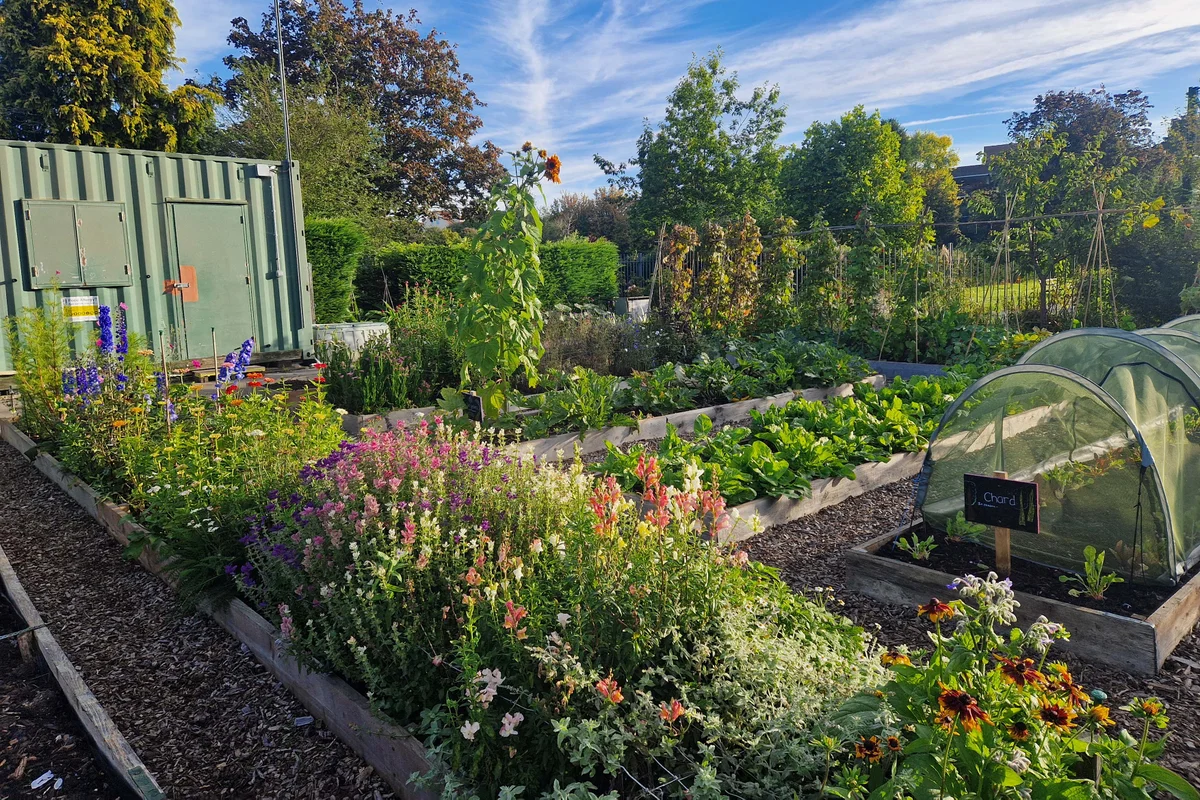
In the Market Garden, edible and ornamental plants thrive together
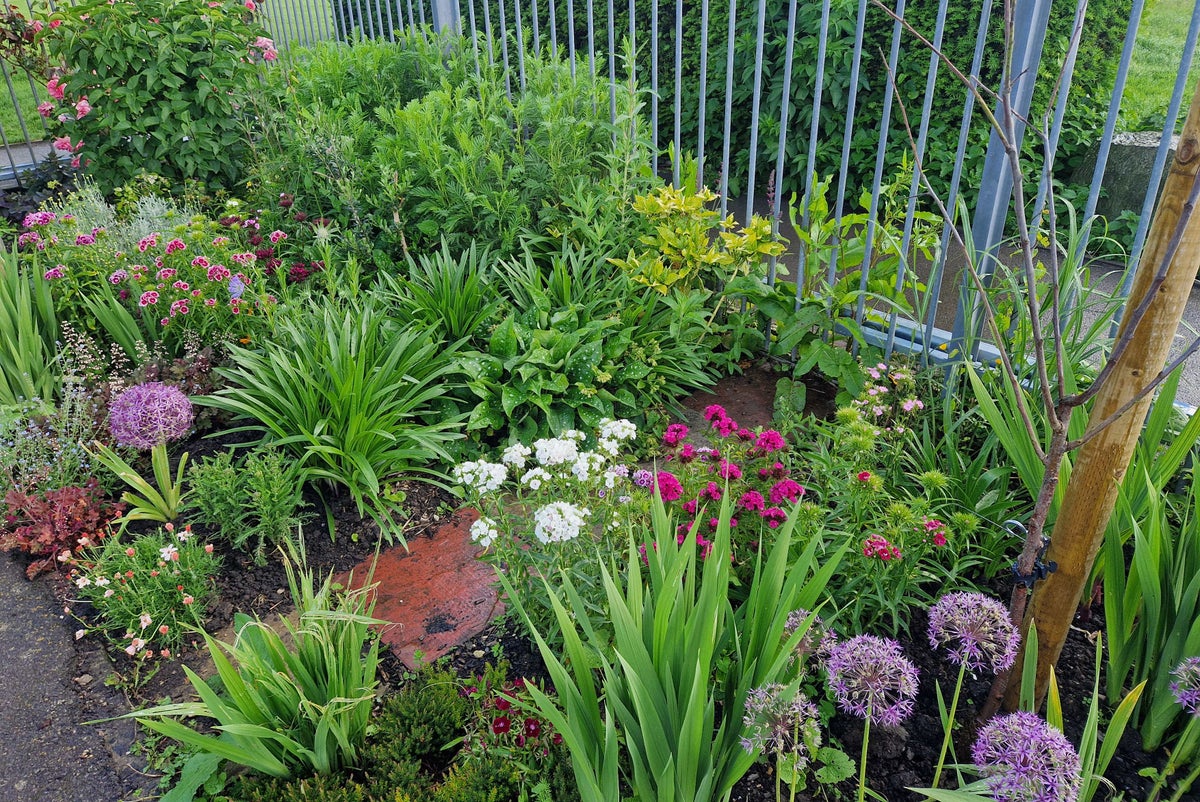
The polyculture back border at Redcatch Community Garden
New RHS Plant Festival in Bristol
We're bringing RHS Shows to Bristol in 2027, celebrating the power of plants, growing and nature in the heart of the city. Join us from 8 to 11 July. Discover more >