Lonicera ligustrina var. yunnanensis Edmée Gold ('Briloni')
honeysuckle [Edmée Gold]
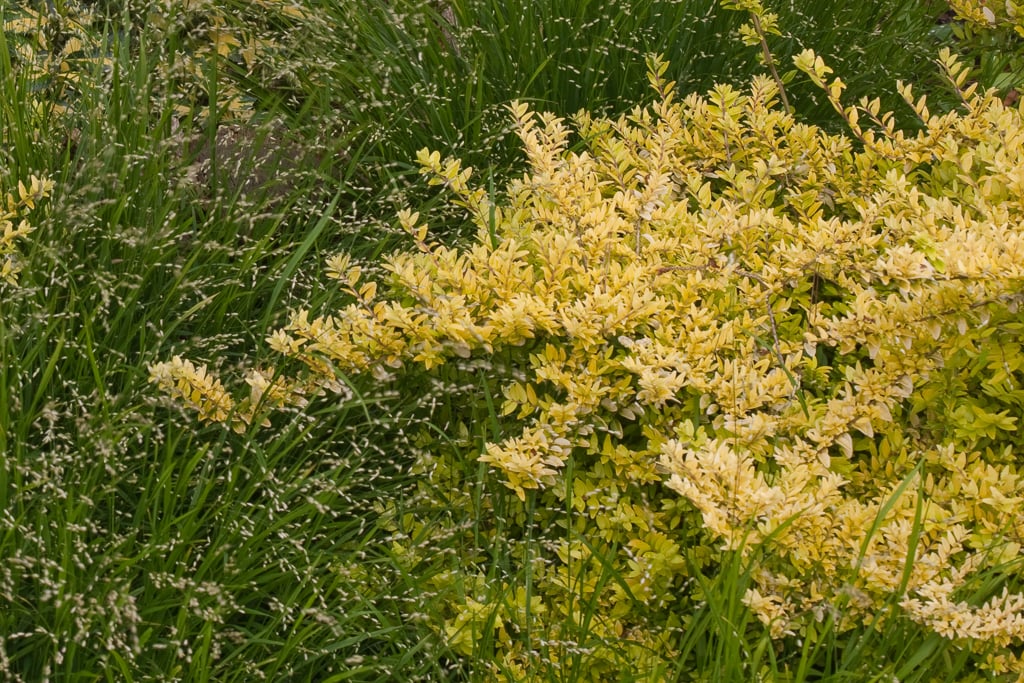
A small, compact, mound-forming evergreen shrub about 1-1.2m tall, with arching branches and glossy yellow-green leaves, 1cm long and yellow when young. Pairs of tubular white flowers 1cm long are produced from the leaf axils in spring and may be followed by glossy blue-purple berries
Size
Ultimate height
1–1.5 metresTime to ultimate height
5–10 yearsUltimate spread
1–1.5 metresGrowing conditions
Moisture
Moist but well–drained, Well–drainedpH
Acid, Alkaline, NeutralColour & scent
| Stem | Flower | Foliage | Fruit | |
| Spring | White | Yellow | ||
|---|---|---|---|---|
| Summer | Yellow Green | |||
| Autumn | Yellow Green | Blue Purple | ||
| Winter | Gold Green |
Position
- Full sun
- Partial shade
Aspect
East–facing or South–facing or West–facing
Exposure
Exposed or Sheltered Hardiness
H6Botanical details
- Family
- Caprifoliaceae
- Native to GB / Ireland
- No
- Foliage
- Evergreen
- Habit
- Spreading branched
- Potentially harmful
- Fruit are ornamental - not to be eaten. Wear gloves and other protective equipment when handling. Pets: Fruit are ornamental - not to be eaten - see the HTA guide to potentially harmful plants for further information and useful contact numbers
- Genus
Lonicera can be deciduous and evergreen shrubs, or climbers with twining stems. The tubular or two-lipped flowers, often very fragrant, are followed by red or black berries
- Name status
Trade
How to grow
Cultivation
Grow shrubby honeysuckle in any well drained soil in full sun or partial shade. Best leaf colour in full sun. Good for container planting, hedges and screening. See honeysuckle (shrubby) cultivation
Propagation
Propagate by semi-ripe cuttings in summer or hardwood cuttings in autumn
Suggested planting locations and garden types
- Architectural
- City and courtyard gardens
- Coastal
- Cottage and informal garden
- Patio and container plants
- Low Maintenance
- Flower borders and beds
- Garden edging
- Hedging and screens
Pruning
Pruning group 2 or pruning group 8. Ideal for clipping into topiary shapes, see topiary care
Pests
May be susceptible to honeysuckle aphids, Thrips and glasshouse whitefly
Diseases
May be susceptible to powdery mildews, fungal leaf spot, silver leaf and honey fungus (rarely)
Get involved
The RHS is the UK’s gardening charity, helping people and plants to grow - nurturing a healthier, happier world, one person and one plant at a time.