RHS/Tim Sandall
 Appearance
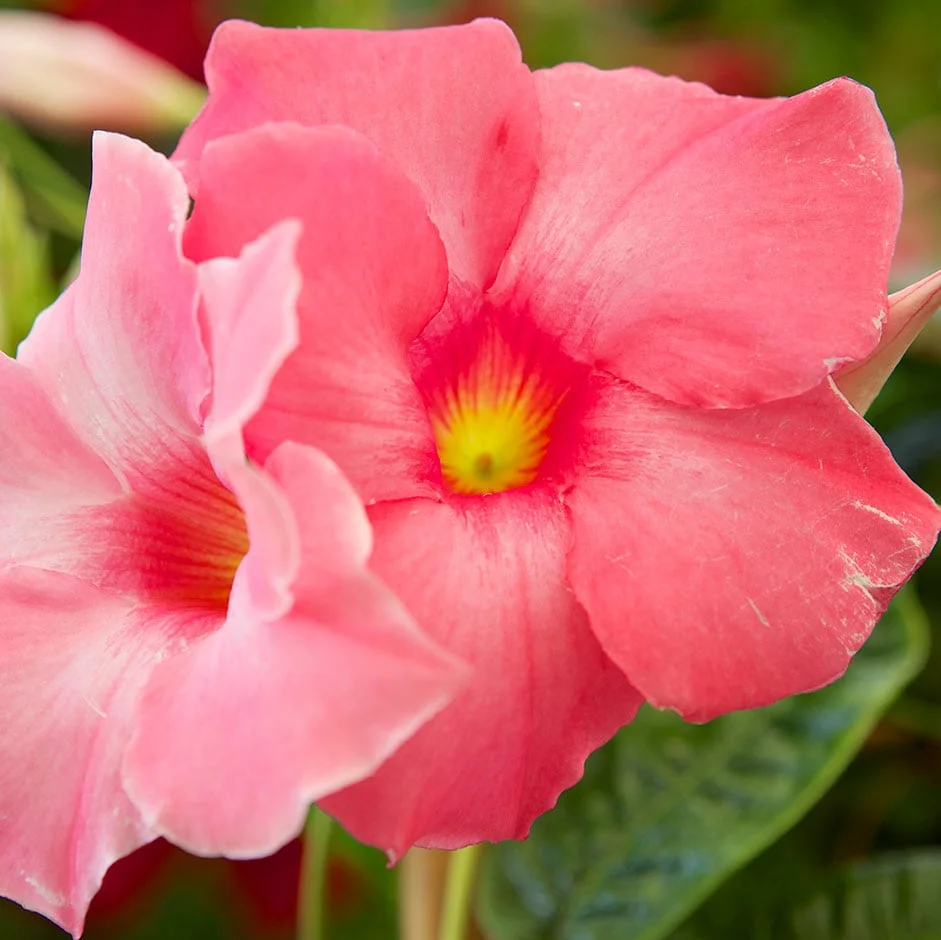
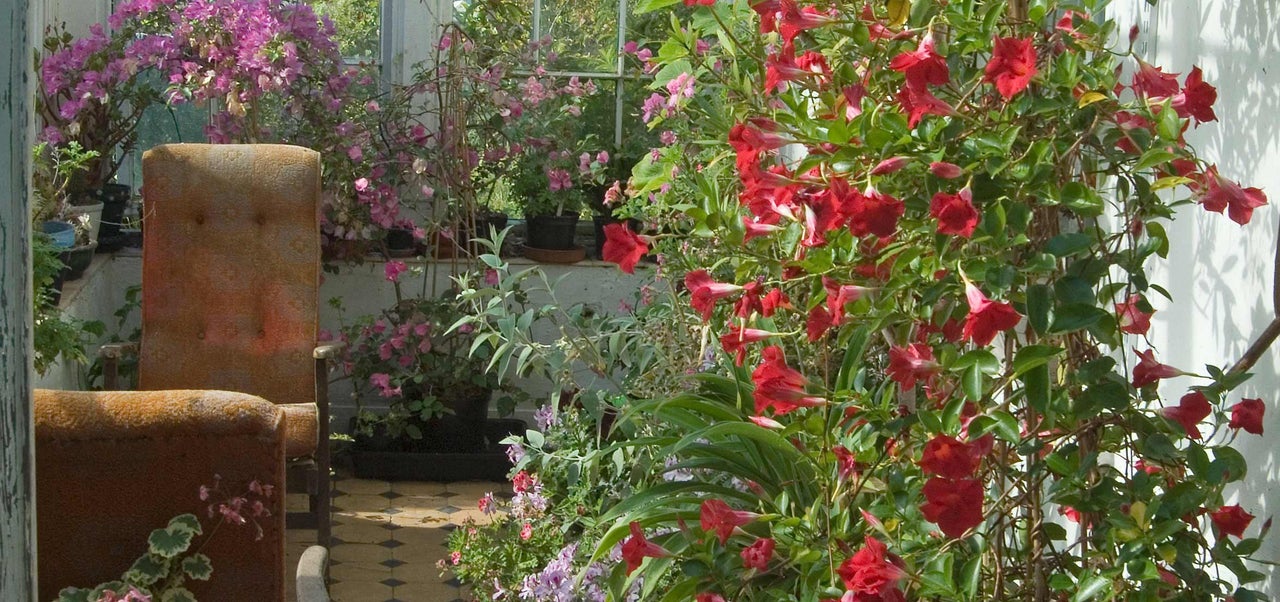
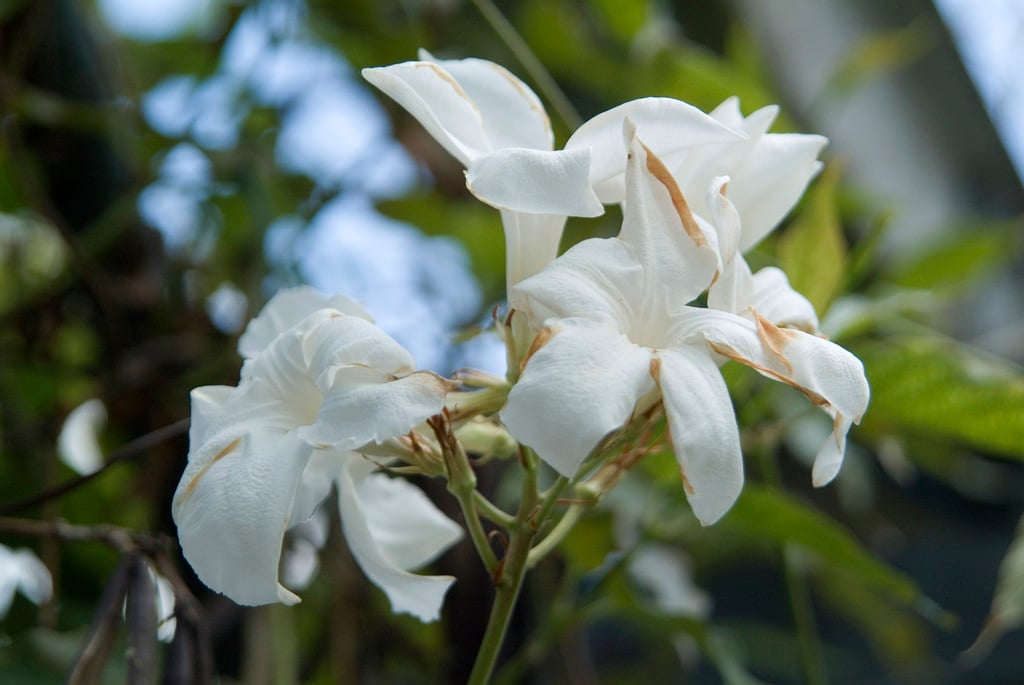
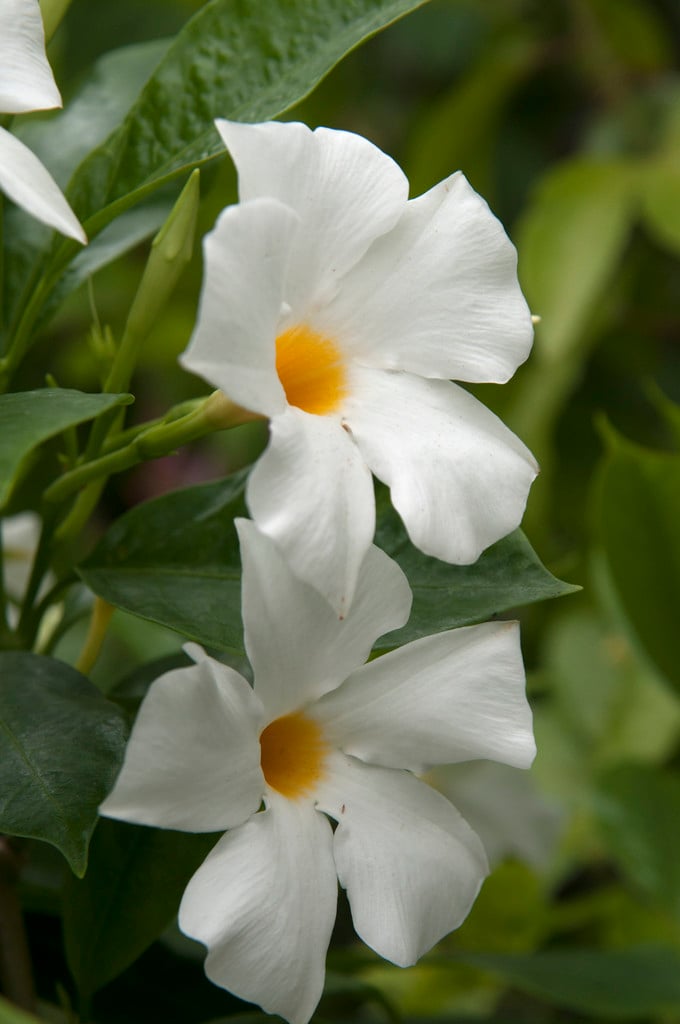
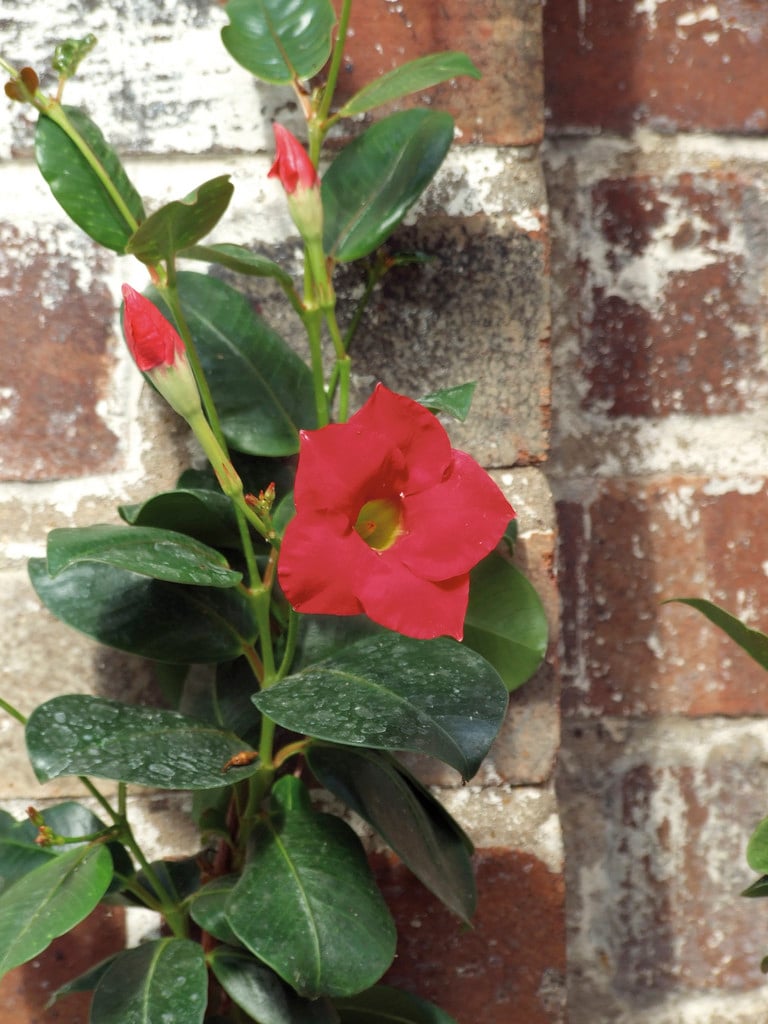
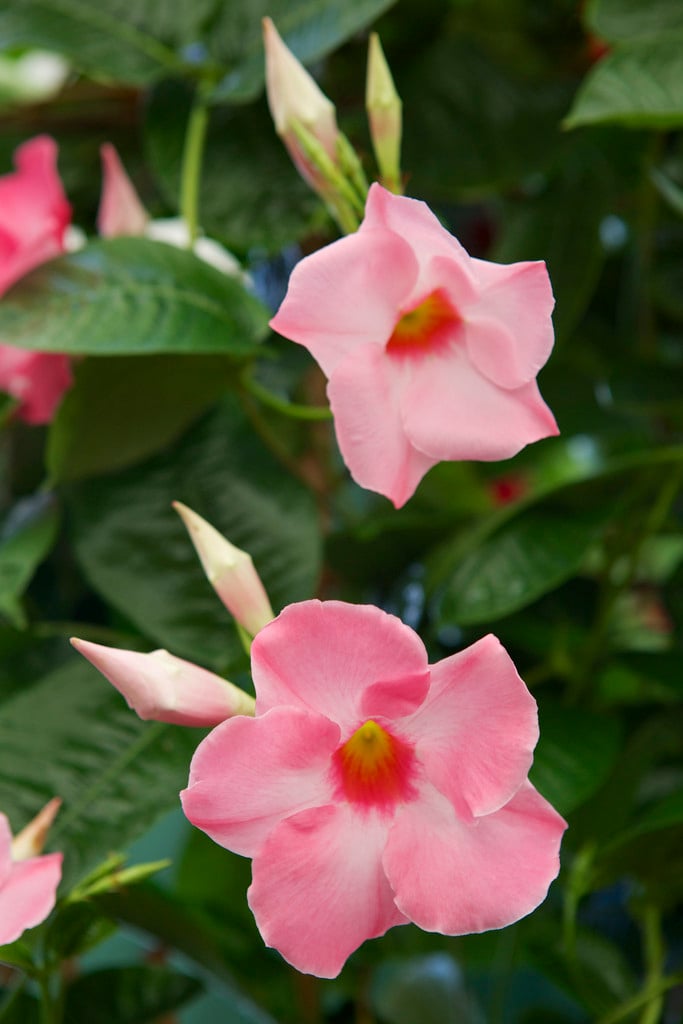
This vigorous climber can reach 3m (10ft) tall or more, with twining stems clad in glossy evergreen leaves. In summer, it produces an exotic display of large trumpet flowers. Depending on the species, these may be red, pink, white, cream or yellow. Newer cultivars have been bred to be more compact.
Preferences
Originating in tropical climes, this tender climber needs plenty of warmth (at least 21°C/70°F), humidity and bright light. During winter, it likes drier conditions and slightly cooler temperatures of 10–15ºC (50–60ºF).
Dislikes
Avoid low temperatures – if kept below 21ºC (70ºF) in spring and summer, mandevillas may fail to flower, while winter temperatures below 10ºC (50ºF) may cause their demise. They dislike shade, dry conditions in summer, and overwatering in winter.
Did you know?
Four mandevillas have an RHS Award of Garden Merit, which means our experts recommend them as excellent performers. They are: white-flowered Mandevilla boliviensis, pink M. splendens and M. × amabilis ‘Alice du Pont’, and fragrant M. laxa.
RHS Growing Guide
FREE
Read our comprehensive free RHS Growing Guide:
How to grow mandevillas

Introducing Mandevilla
![mandevilla [Sundaville Cream Pink]](/_image?href=https%3A%2F%2Fapps.rhs.org.uk%2Fplantselectorimages%2Fdetail%2Fvaem12128.jpg&w=300&h=192)
Mandevilla [Sundaville Cream Pink] ('Sunparapibra') (Sundaville Series)
mandevilla [Sundaville Cream Pink]
- Height
- 4–8 metres
- Width
- 0.1–0.5 metres
x of x
Showing
x to x
of x