Dorling Kindersley Ltd

Appearance
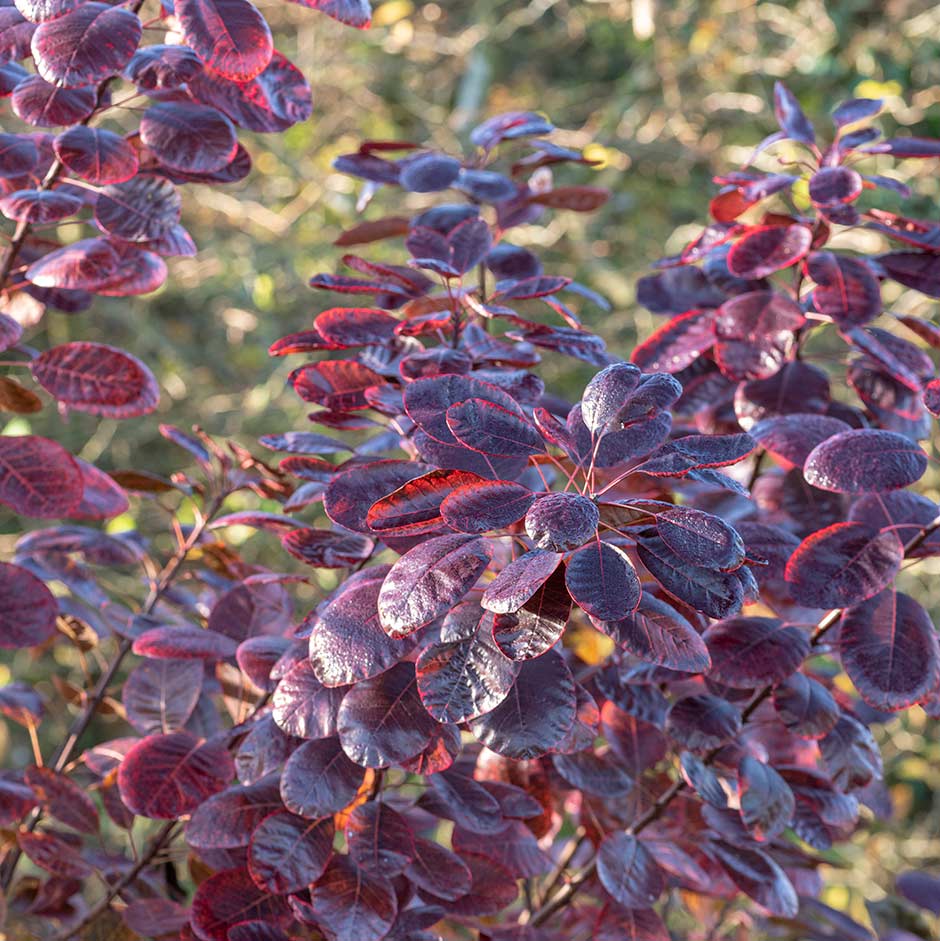
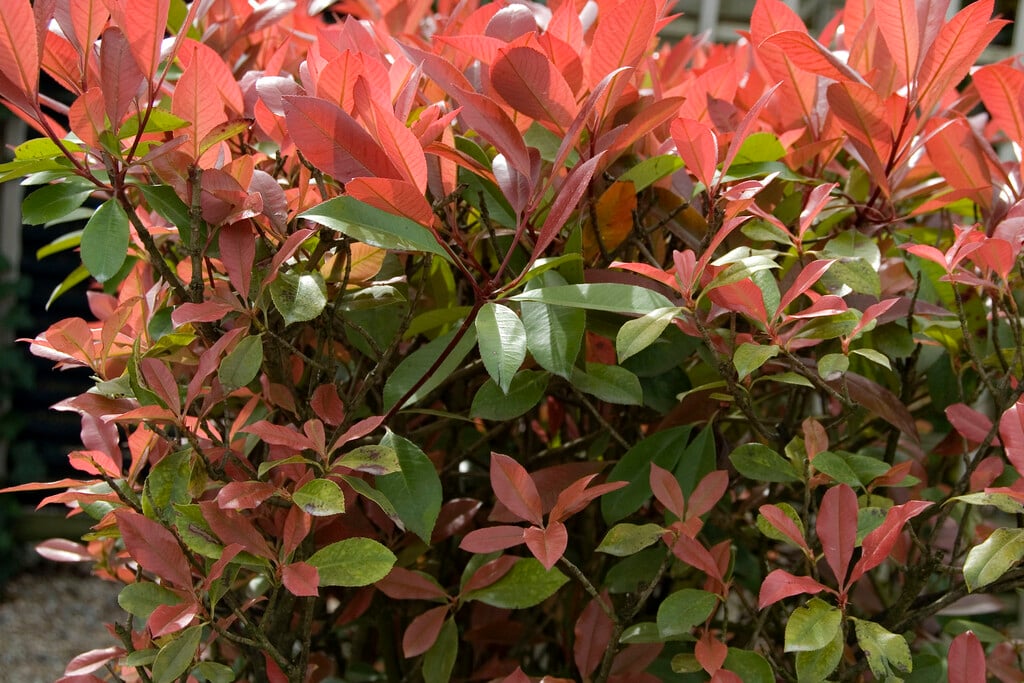
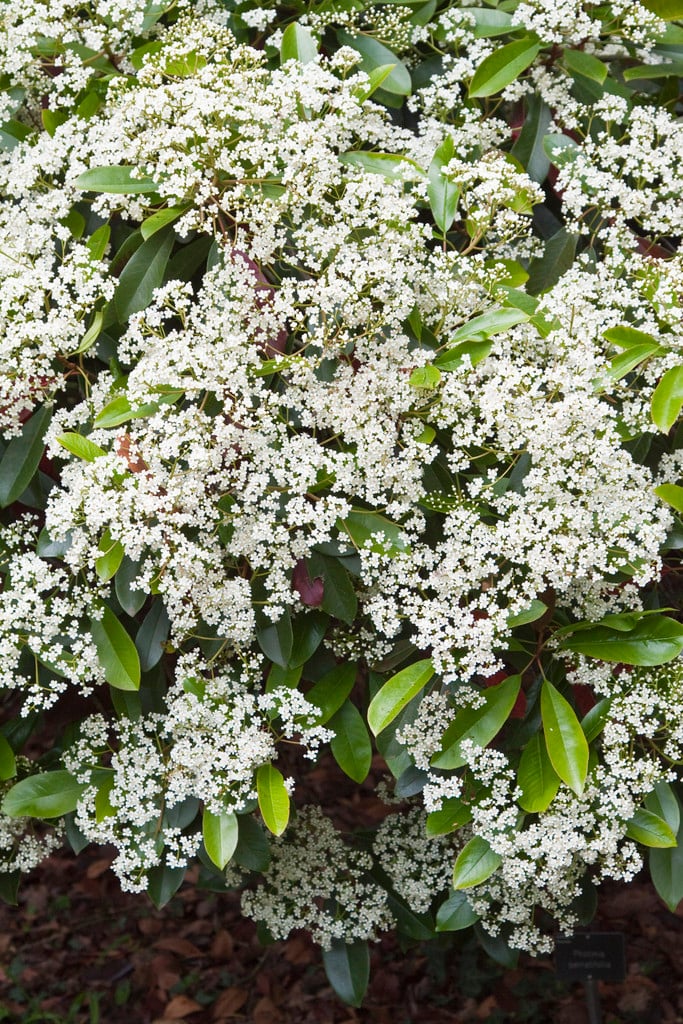
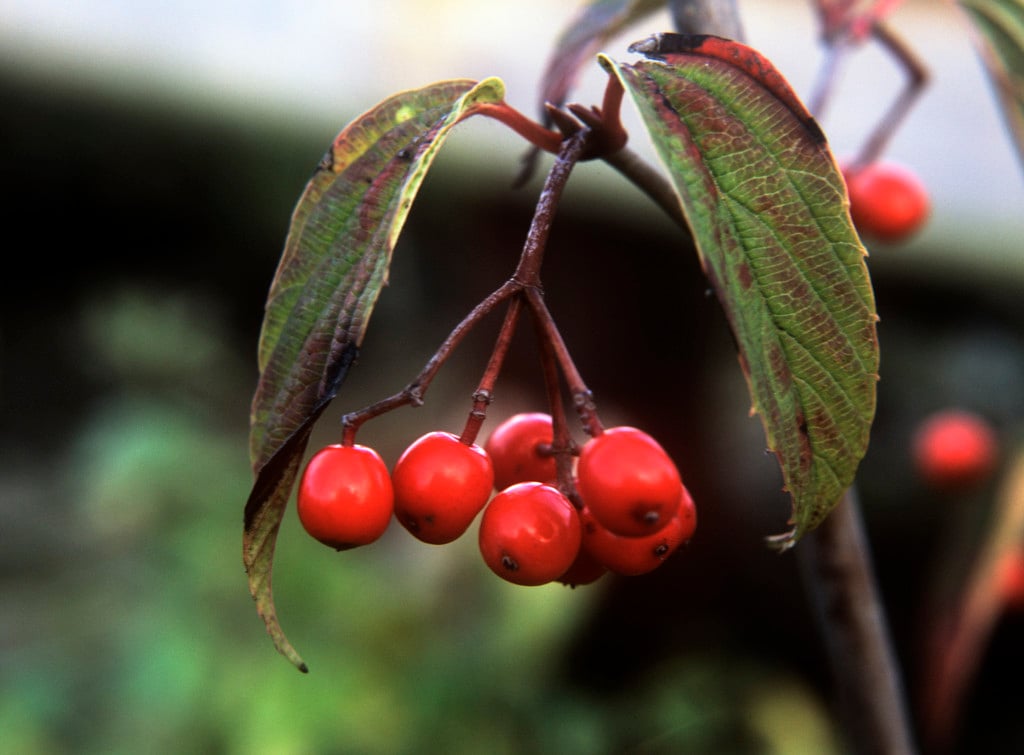
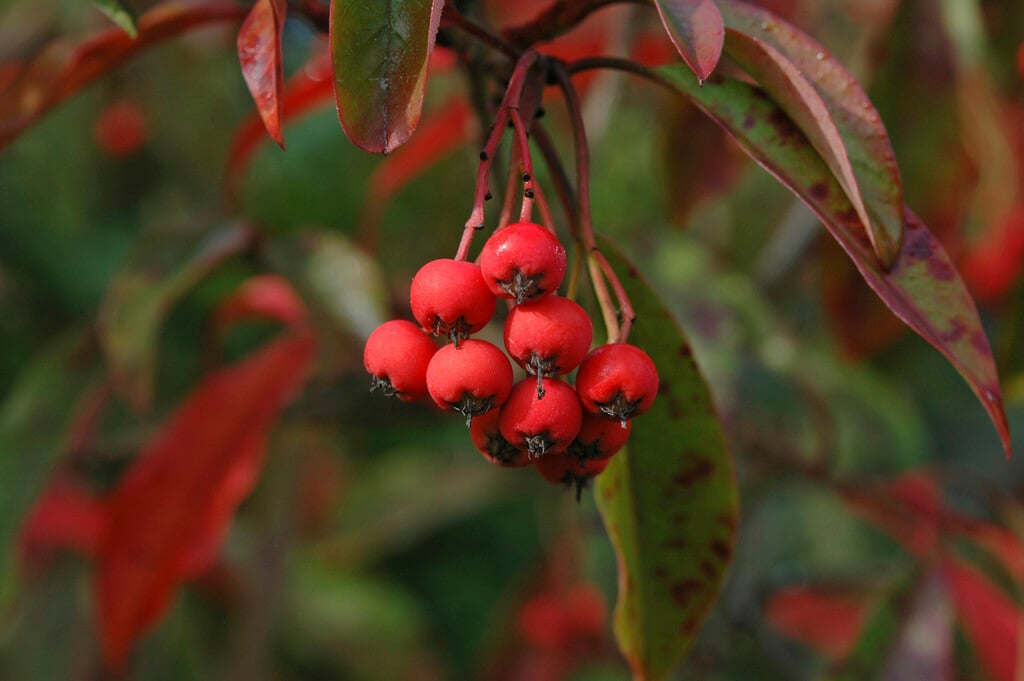
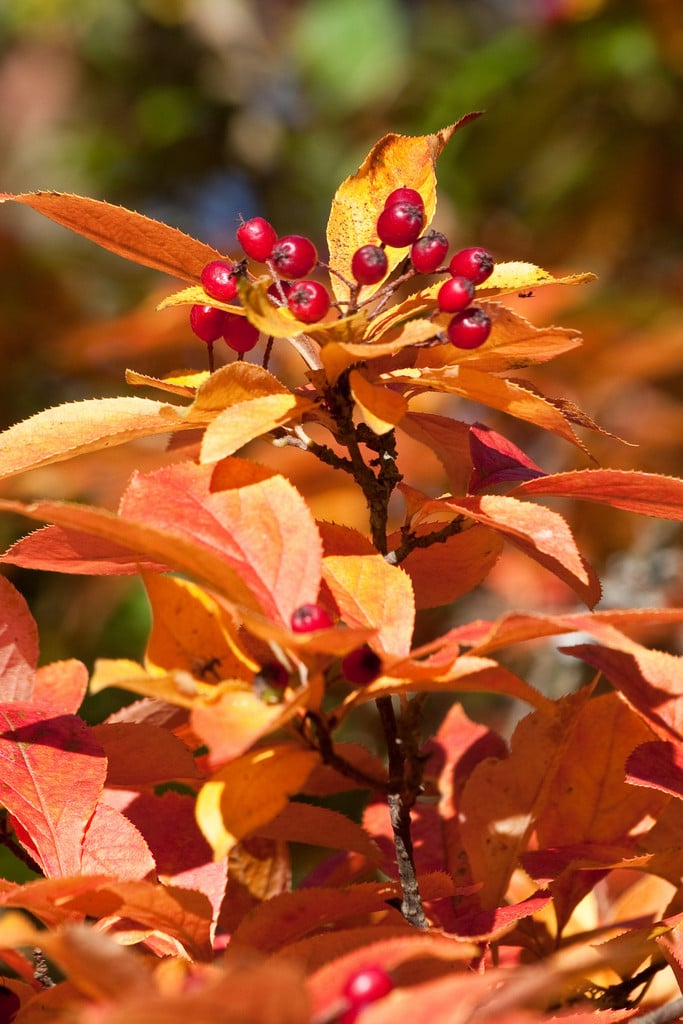
Photinias are shrubs or small trees. Evergreen types may have vibrant red young foliage, while the leaves of deciduous types may turn red in autumn before falling. They produce clusters of small white flowers, followed by red berries.
Preferences
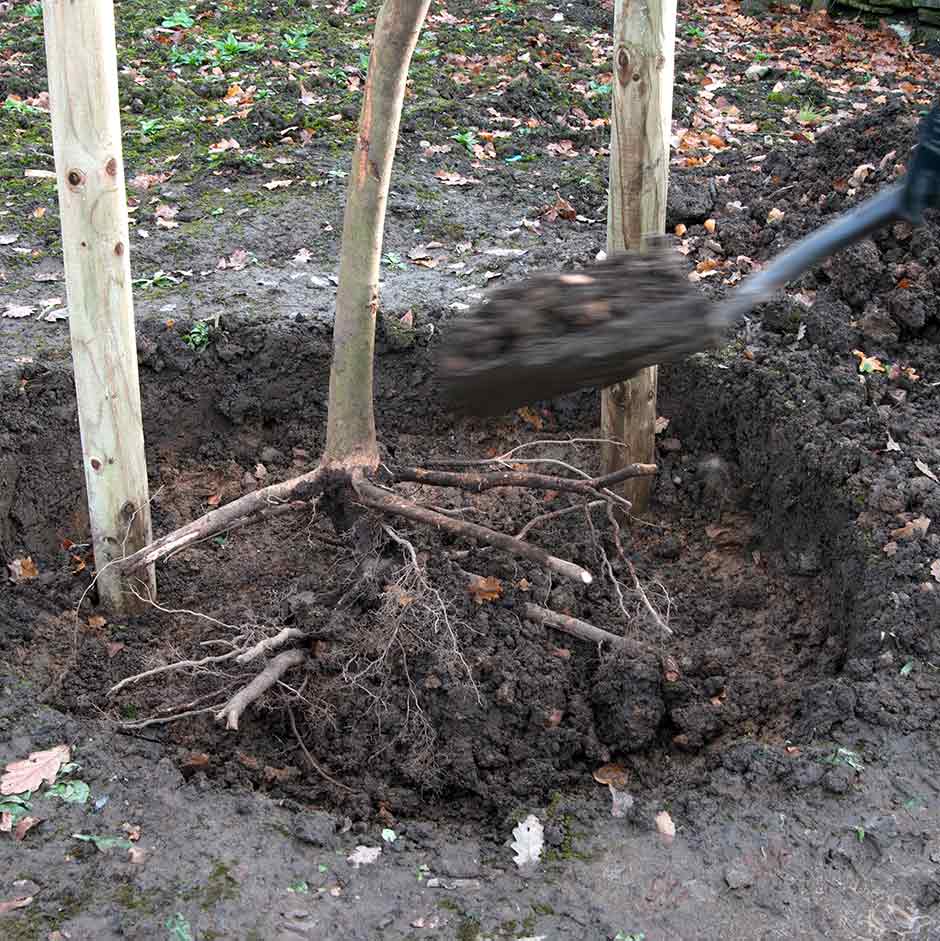
Give photinias a warm, sheltered spot, in sun or partial shade. They like fertile, well-drained soil that doesn’t get waterlogged or become very dry. Some species need neutral or acid soil.
Dislikes
Most photinias dislike windy, cold and damp conditions during winter, and late frosts can damage young spring foliage. Some species can’t tolerate chalky/alkaline soil. Avoid planting in very shady locations.
Did you know?
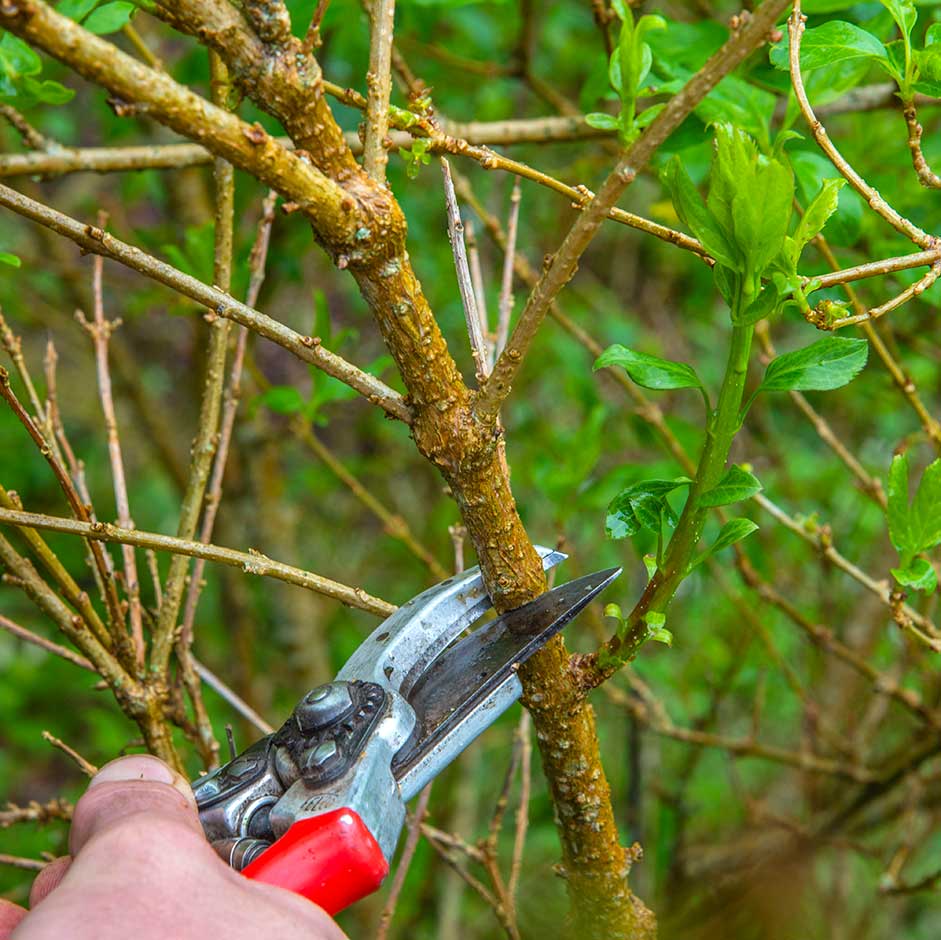
Photinia × fraseri ‘Red Robin’ is the most popular cultivar and has ruby-red young foliage in spring and early summer. You can prolong this display by lightly pruning established shrubs when the initial colour starts to fade, which encourages a new flush of red shoots that can keep their vibrancy all summer.
RHS Growing Guide
FREE
Read our comprehensive free RHS Growing Guide:
How to grow photinia

Introducing Photinia
![Christmas berry [Pink Marble]](/_image?href=https%3A%2F%2Fapps.rhs.org.uk%2Fplantselectorimages%2Fdetail%2Fmoja06408.jpg&w=300&h=192)
Photinia × fraseri [Pink Marble] ('Cassini') (v)
Christmas berry [Pink Marble]
- Height
- 2.5–4 metres
- Width
- 2.5–4 metres
![Chinese hawthorn [Pink Crispy]](/_image?href=https%3A%2F%2Fapps.rhs.org.uk%2Fplantselectorimages%2Fdetail%2FRHS_MAR0044338_10357.JPG&w=300&h=192)
Photinia serratifolia [Pink Crispy] ('Oploo5')
Chinese hawthorn [Pink Crispy]
- Height
- 1.5–2.5 metres
- Width
- 1–1.5 metres
x of x
Showing
x to x
of x