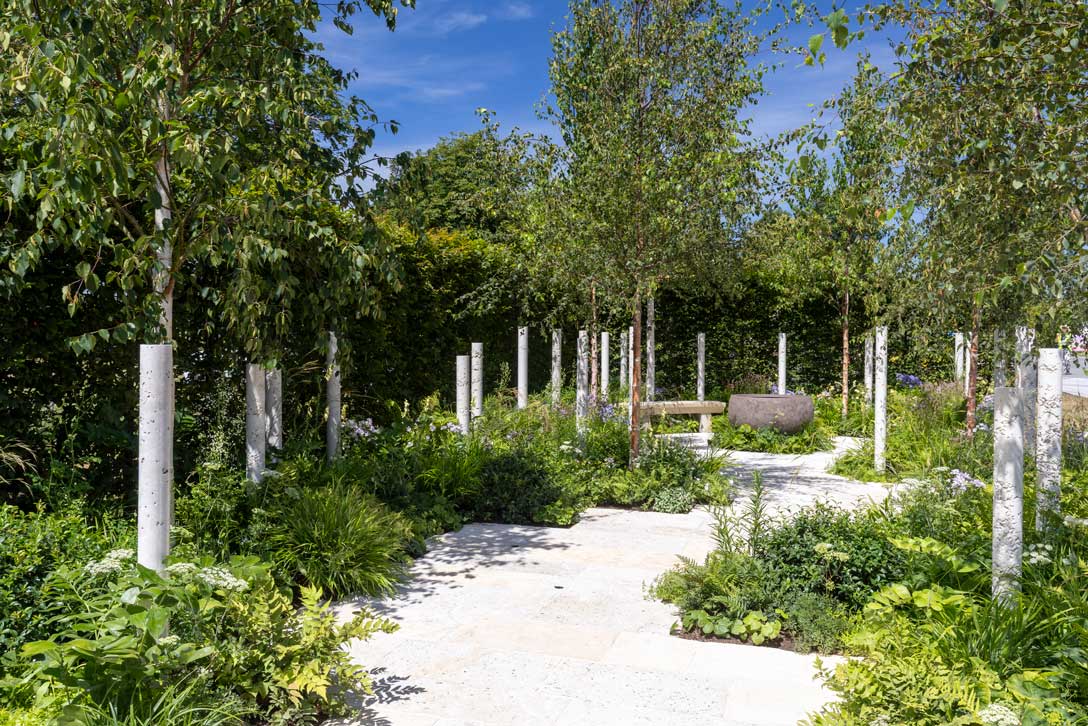
8 star plants of RHS Badminton 2026
Discover plants that stood out at the brand new RHS Badminton Flower Show, designer blooms to beat the heat, and inspiring garden ideas to take home
The plants at a glance:
- Silphium mohrii – shaggy rosinweed
- Rosa The Lark Ascending – rose The Lark Ascending
- Daucus carota – wild carrot
- Lathyrus chloranthus – green sweet pea
- Digitalis × valinii ‘Firecracker’ and friends – foxgloves with Canary Island heritage
- Malva moschata f. alba – white musk mallow
- Oryzopsis miliacea – smilo grass
- Elaeagnus multiflora – cherry silverberry
1. Silphium mohrii – shaggy rosinweed
“It’s Silphium mohrii. This is a bestselling plant for some of the large nurseries in the Netherlands, and very drought-tolerant, but it’s still relatively unknown in the UK.”
Providing for pollinators and later for birds, this robust and hardworking
On The Julia Rausing Garden, Tom has peppered his Silphium through a tapestry of Stipa tenuissima grasses, flowering oregano and Allium sphaerocephalon, and elsewhere, paired it with the striking grey leaves of cardoon (Cynara cardunculus).
- Position: full sun or partial shade
- Soil: well-drained
- Flowering period: July–November
- Hardiness: fully hardy
2. Rosa The Lark Ascending
Melissa Mabbitt, Executive Editor of RHS The Garden magazine, has found this robust repeat-bloomer to be a winner in her own garden. “I’ve had to abandon growing roses in my very stony garden because the soil is just not deep or rich enough – all apart from the last stalwart, The Lark Ascending,” she says. “It seems to shrug off heat and drought, and still looks super healthy, despite never being fed.”
The blooms mature through luscious shades of apricot and peach, making for a stunning combination with electric blue or blue-mauve flowers, such as the Salvia ‘Blue Spire’ (formerly Perovskia) it nestles beside on The Archers 75th Anniversary Garden.
- Position: full sun or partial shade
- Soil: well-drained or moist but well-drained
- Flowering period: June–October
- Hardiness: fully hardy
Find out more
3. Daucus carota – wild carrot
The carrot showcases how easily a beautiful meadow effect can be created simply by adding one wildflower to an area of long grass. Try this at home and months of pollinator-friendly flowers will be followed by architectural seedheads that, in uncut areas, will persist to create interest throughout autumn and winter.
Alternatively, being perennial, low-maintenance and more drought-tolerant than other white umbels such as Ammi, wild carrot is perfect for dotting through a dry border. Best grown from seed sprinkled where you’d like the plants to appear, it’s fabulous for cut flowers too.
- Position: full sun
- Soil: well-drained
- Flowering period: June–September
- Hardiness: fully hardy
4. Lathyrus chloranthus – green sweet pea
Enter Lathyrus chloranthus, a little known and even more rarely grown annual sweet pea. The perfect balance of understated yet zingy, this wild species pea is resplendent in chartreuse. If you aren’t a fan of the large, bright blooms of Spencer types, or you just want to try something a bit different, this is the sweet pea for you. Native to the Middle East and with slightly hairy leaves, this lime-green number is likely to cope better with heatand drought than traditional English Lathyrus odoratus cultivars, too.
“We treat Lathyrus chloranthus completely differently to Lathyrus odoratus varieties,” says Alison Shreeve of English Sweet Peas. “Instead of growing it as a
“Though it doesn’t have a scent, it’s such an unusual colour, and we’ve found it to be quite tough.”
- Position: full sun
- Soil: moist but well-drained
- Flowering period: May–September
- Hardiness: hardy annual
5. Digitalis × valinii ‘Firecracker’ and friends
Unlike the more traditional May or June-blooming
“I chose Digitalis ‘Firecracker’ and the raspberry-toned ‘Falcon Fire’ over Digitalis purpurea because they flower later and are more resilient,” says Simon Deeves, designer of the Pocket Planting ‘A Celebration of
“They are perennial, but aren’t fully hardy, so need a mild climate, a sheltered spot or perhaps, in colder areas, to be grown in containers that can be brought in over winter. If you can get it through winter, it’ll keep coming back year after year with those gorgeous blooms whose tones so readily pick up tones in, or contrast with, other plants.”
In the Honing Heritage garden, Nick Leitch has created an electrifying complementary colour contrast by pairing Digitalis ‘Firecracker’ with deep cobalt-blue agapanthus and bright blue Eryngium.
- Position: full sun or part shade
- Soil: well-drained or moist but well-drained
- Flowering period: June–September
- Hardiness: borderline to half-hardy (to around –5°C)
6. Malva moschata f. alba – white musk mallow
After pumping out silky flowers all summer and laying on an abundance of easily accessible pollen for bees, this hardy perennial will happily self-seed to create a larger colony for you to enjoy in years to come.
- Position: full sun
- Soil: well-drained or moist but well-drained
- Flowering period: June–September
- Hardiness: fully hardy
7. Oryzopsis miliacea – smilo grass
Native to the Mediterranean, North Africa and the Middle East, this drought-resistant grass has delicate, feathery flower panicles that add lightness and airiness to perennial planting, gleam a beautiful bronze in the sun, and persist all winter for sustained structure and interest.
- Position: full sun
- Soil: well-drained or moist but well-drained
- Flowering period: June–February
- Hardiness: fully hardy
8. Elaeagnus multiflora – cherry silverberry
“I like the slightly grey foliage in contrast with the glossy dark green of Osmanthus × fortunei, another tree I’ve used behind it,” says Tom. “It’s also a very elegant shape and very drought-tolerant.”
With a height and spread of 2–3m, cherry silverberry was also one of the top resilient trees used earlier this year at RHS Chelsea. Discover the others here.
- Position: full sun or partial shade
- Soil: moist but well-drained
- Flowering period: April–May
- Hardiness: fully hardy