Getting Started
Forming clumps of mild, onion-flavoured leaves, chives are tasty, versatile and low maintenance, ideal for even the smallest gardens. These herbaceous perennials grow well in sun or partial shade, in containers or in the ground, where they make an attractive edging plant for herb and veg beds. Their -friendly flowers are also edible.
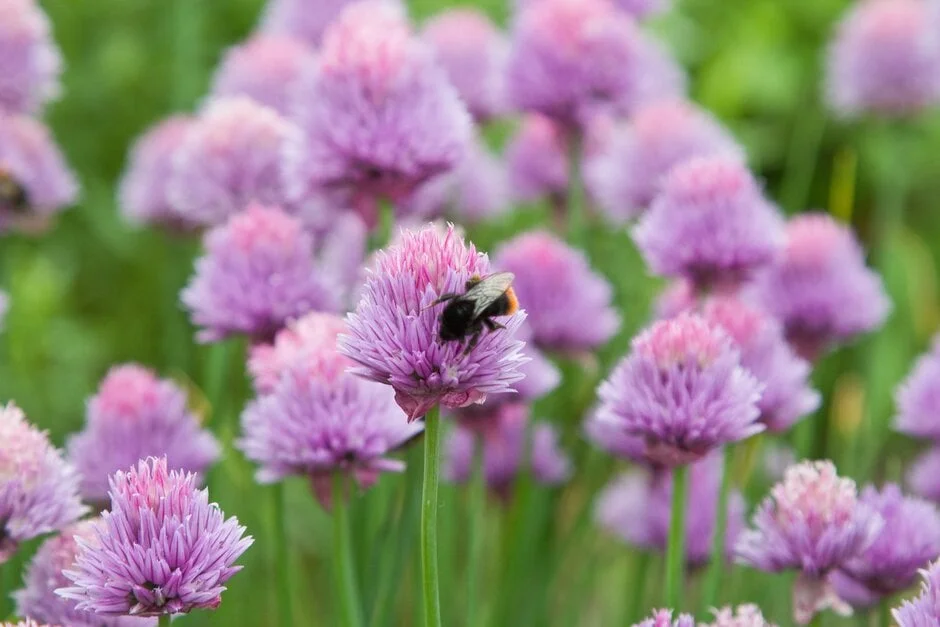
A popular and easy-to-grow herb, chives (Allium schoenoprasum) are in the onion family. Small , up to 1cm (½in) across, sprout narrow, cylindrical leaves about 30cm (12in) tall. These can be harvested from spring to autumn, providing tasty pickings for many years. Snip them regularly to keep fresh leaves coming. Chives are best used raw – finely chopped and sprinkled over salads and hot dishes for a fresh, oniony flavour.
Jobs to do now
Harvest
Remove old leaves
Divide established clumps
Month by Month
Sow
Plant Out
Harvest


Choosing What To Grow
Most chive seeds and plants offered for sale are Allium schoenoprasum. There are some varieties available, as well as several related species:
- A. schoenoprasum 'Forescate' – grows larger than the species and has pink flowers
- A. schoenoprasum f. albiflorum – white flowered form
- A. tuberosum (garlic chives or Chinese chives) – these form larger clumps of taller leaves, 40-50cm (16-20in) long, that are flat rather than cylindrical and have a mild garlic flavour. The clusters of starry white flowers are also edible
- A. nutans (Siberian garlic chives, blue chives or flat-stalked garlic) – these have broad, flat, grey-green leaves up to 60cm (2ft) tall, with a mild garlic flavour and edible, bluish-mauve or pale pink flowers
A wide range of herbs, including chives, are grown in all the RHS gardens, so do visit them for inspiration and growing tips.
What and where to buy
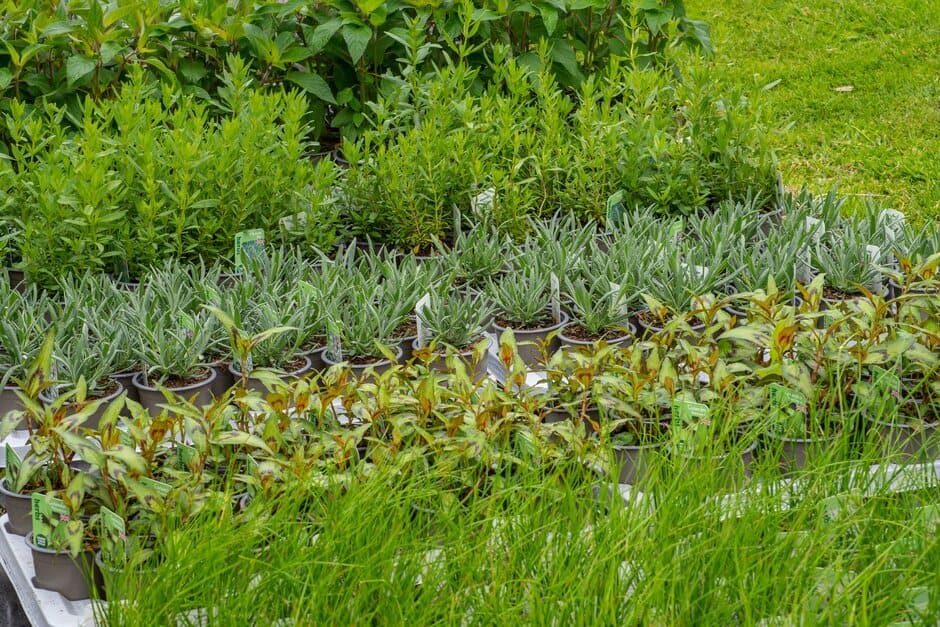
You can buy chive seeds from most gardening retailers, and potted plants are cheap and widely available too, from garden centres and online retailers. To track down particular varieties and other species, try herb nurseries and online suppliers.
Recommended Varieties


Sowing
Although plants in small pots are readily available and usually reasonably priced, you can also grow chives from seed.
Sowing indoors
Early spring is an ideal time to sow chives indoors to produce young plants ready for planting out in late spring or early summer, once they’re about 10cm (4in) tall. Later sowings through spring and summer can be made, especially if you want to keep a regular supply of young plants indoors on a sunny kitchen windowsill.
Fill modular trays or small pots with peat-free and sow a few seeds at a depth of 0.5-1cm (¼–½in) into each module or pot and place in a warm, bright space. Keep the slightly moist.
Sowing outdoors
In spring, sow chives outdoors directly into the ground or a container in a sunny or partially shaded area. Before sowing, weed the ground thoroughly then fork it over to break up any hard lumps. Remove any stones and rake to a fine texture. Alternatively, if you’re practising no-dig, the surface with a layer of well-rotted, fine organic matter and sow directly into the mulch. If sowing into containers, use a good quality peat-free, loam-based . Sow thinly at a depth of 0.5-1cm (¼–½in) and thin to 15–20cm (6–8in) apart.
Planting
The quickest and easiest way to get chives started in your garden is to buy young potted plants. These can be planted outside at any time of year, although spring is an ideal time. Large plants can often be pulled apart into several smaller clumps for planting. You can also transplant young seed-raised plants outdoors once they’re about 10cm (4in) tall. If you're planting out indoor-grown chives before June, be sure to acclimatise them to outdoor conditions by hardening them off.
Choose a planting site in sun or partial shade with fertile, moisture-retentive soil that doesn't become . No soil preparation is generally needed before planting. However, if your soil is poor, mix some organic matter, such as garden compost, into the soil you remove from your planting hole and use this to backfill after planting. This minimises soil disturbance and helps your plant get off to a strong start.
Chives grow well in containers, which can be placed in a handy spot, so you can pick them easily whenever needed. Use a peat-free to fill a container at least 20cm (8in) wide and deep.
When planting, space the clumps at least 15cm (6in) apart, and position them at the same level they were previously growing, then firm in and water well.
Plant Care
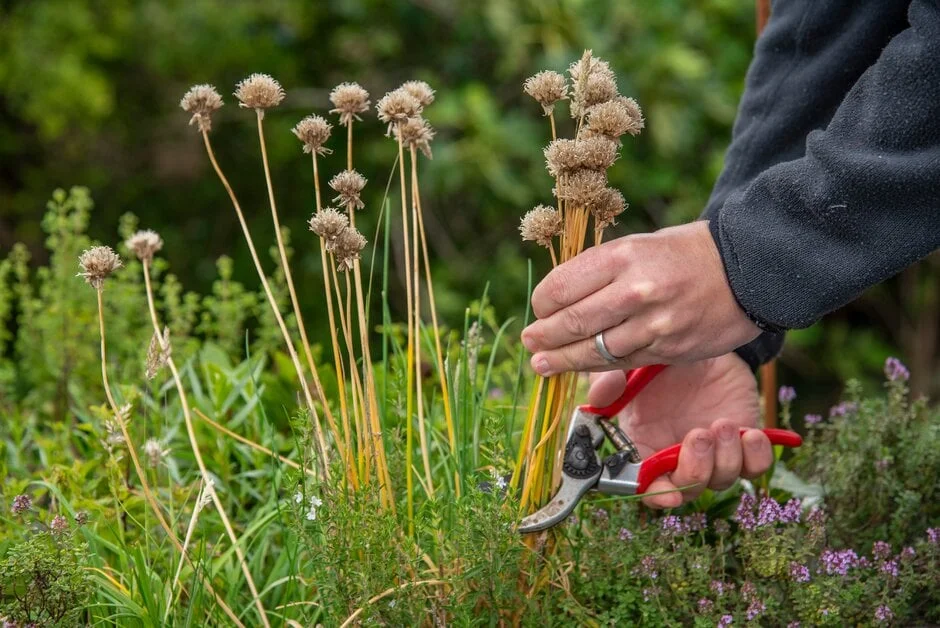
Established clumps of chives are easy to maintain – simply harvest leaves regularly to encourage more to grow. To keep plants looking tidy and growing well - cut back old leaves, deadhead, and lift and divide clumps every three or four years.
Watering
Water newly planted chives during dry spells in their first summer. Once established in the ground, they shouldn't need any additional watering – except during exceptionally prolonged dry spells. Plants in containers dry out more quickly, so water during the to keep the evenly moist.
Mulching
In late winter or early spring, apply a of well-rotted organic matter, such as garden , around clumps of chives growing in the ground. Mulching will improve your soil, help to retain moisture and suppress weeds.
Propagating
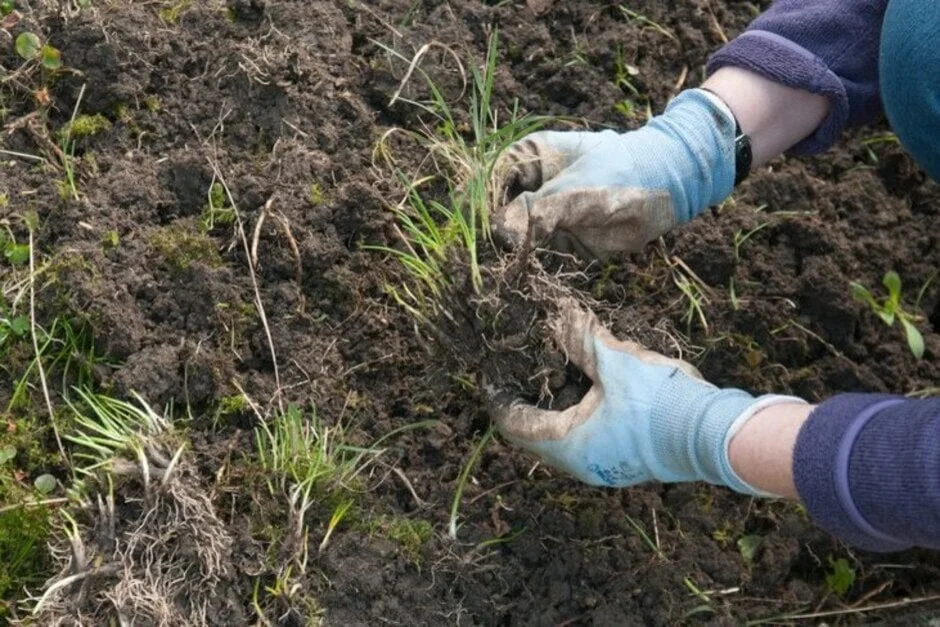
You can easily make new plants from an established clump of chives by lifting it in spring or autumn and dividing it into several smaller clumps. Replant these straight away (see Planting above), either into the ground or in containers. Do this every three or four years to stop clumps getting overcrowded and keep them healthy and growing strongly.
Chives will readily self-seed when given suitable growing conditions. If you leave some plants to flower and set seed, you can either collect the seeds to sow yourself or let them drop and grow where they like.
Flowering
Chives produce pompom flowerheads in late spring and summer, which look decorative and are edible too. The -rich flowers are also great for pollinating insects. After flowering, to keep the plants looking neat, snip out the tough flower stalks right at the base, unless you want the plants to self-seed (see Propagating above). Alternatively, cut the whole clump down to about 5cm (2in), to stimulate a flush of fresh foliage that you can start picking in a few weeks.
Harvesting
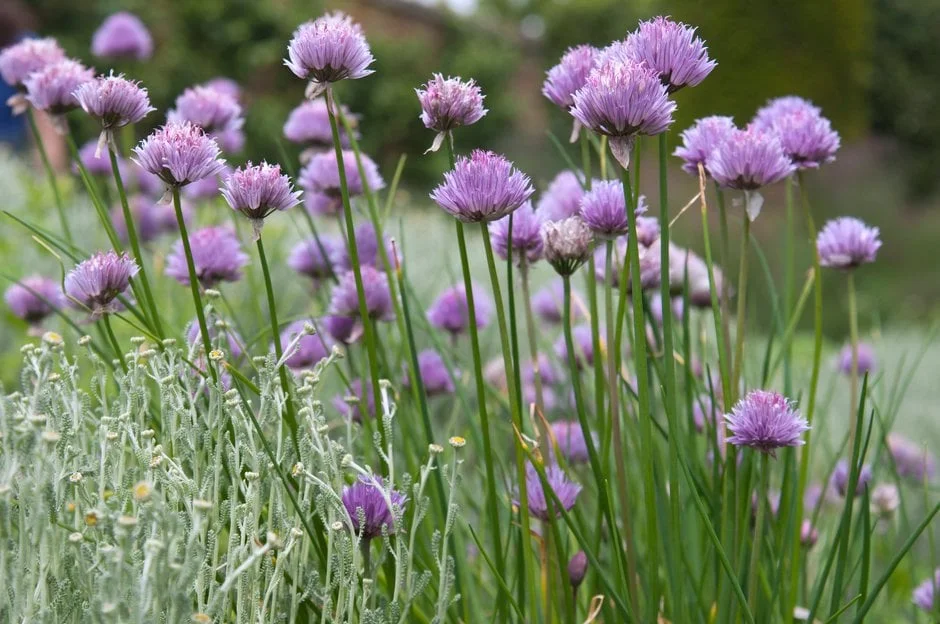
You can harvest chives growing outdoors from late spring until they start to die back in autumn. To extend the harvesting period, pot up a clump and bring it indoors over winter, keeping it on a sunny windowsill.
To harvest the mild, onion-flavoured leaves, simply snip with scissors just above the base whenever required. Remove any faded leaves at the same time. Harvest in the morning if possible, when the leaves are lush and juicy. In hot weather, put the leaves straight into water to keep them from wilting. The more often you harvest, the more new leaves they will produce. Use chives raw, as they lose their flavour if cooked. Simply chop the leaves finely and scatter over all kinds of cold or cooked dishes, from salads, potato salads and cream cheese to omelettes, soups and pastas.
You can also harvest the edible flowers, which appear in late spring and summer. Pick newly opened flower heads and scatter the tiny individual flowers into salads and other dishes, for extra colour and a mild onion flavour.
Problem Solving
Chives are usually healthy and robust plants that crop well for many years, although do look out for aphids and leek rust – see Common problems below.
Common Problems


