Getting Started
Gages are a type of plum, popular for their deliciously honey-sweet fruits, usually pale dusky green or golden. They produce crops in late summer, as well as pretty blossom in early spring, which attracts bees and other pollinators. There are lots of delicious varieties of gage to choose from, including traditional varieties local to several regions of the UK.
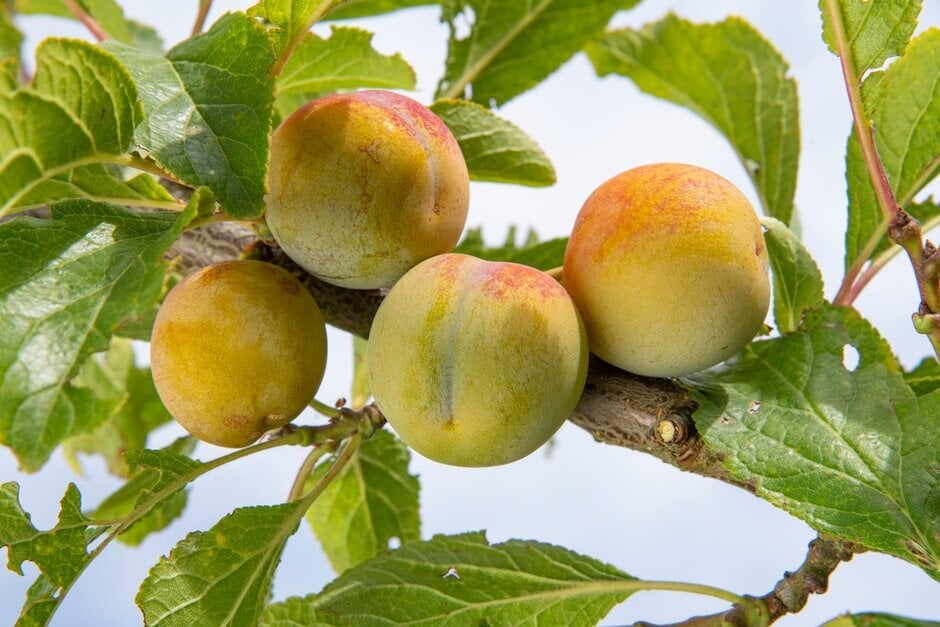
Gages (Prunus domestica) crop well in a sheltered, sunny spot with fertile soil that doesn’t get . If you don’t have space for a free-standing tree, you can grow a fan-trained tree flat against a wall or fence, or a tree grafted on a dwarfing rootstock in a large container. They need little maintenance apart from annual pruning to keep them in good shape, and will reward you with plentiful harvests for years to come.
Jobs to do now
Harvest
Month by Month
Plant
Harvest


Choosing What To Grow
Gages are usually either green (also known as greengages) or yellow, sometimes with reddish tints or speckling. Varieties with the sweetest fruits are known as dessert gages, while those that are best eaten after cooking are culinary gages. Some fall into a dual-purpose category – delicious fresh when fully ripe, but also excellent cooked. A dual purpose variety, such as ‘Brandy Gage’, is ideal if you only have room for one tree, so you can get maximum use from your crop.
There are many varieties to choose from, most providing bountiful harvests, ripening from July to September. It’s worth looking for traditional local varieties that would be particularly suited to your growing conditions, such as ‘Merton Gage’ (from London) or 'Cambridge Gage'. In colder or northern locations, consider a late-flowering variety such as ‘Guthrie’s Late Green’ (from Scotland), to reduce the risk of frost damage to the blossom, which can reduce the crop.
Varieties with an RHS Recommended: Award of Garden Merit (AGM) are recommended by our RHS fruit experts, as they performed well in trials – see our list of AGM fruit and veg (135kB pdf) (gages are listed under plums) and our Recommended Varieties below. If you visit any of the RHS gardens, you’ll find many fruit trees grown in various ways, so you can compare different varieties and pick up useful growing tips.
Many gage varieties are self-fertile, so you only need one tree, but do check before buying. Trees that aren’t self-fertile need a compatible ‘ partner’ (another gage or plum that flowers at a similar time) nearby to ensure a good crop. For more details, see our guide to fruit pollination.
Varieties of gages are grafted onto the roots (rootstock) of closely related trees, to limit their size and encourage earlier fruiting. So as well as choosing a variety, you also need to choose a suitable rootstock, which depends on the size and style of tree you want:
For smaller and trained trees:
- ‘Pixy’ is semi-dwarfing, suitable for bushes and fans. Less vigorous varieties can be grown on it to produce cordons. Height when trained as a bush is 3-4m (10-12ft)
- ‘VVA-1’ is a relatively new semi-dwarfing rootstock. Height when trained as a bush is about 3m (10ft)
For medium-sized trees:
- ‘St Julian A’ is semi-vigorous, suitable for half-standard, bush, pyramid and fan forms. Height when trained as a bush is 4.5–5m (15–16ft)
- ‘Wavit’ is semi-vigorous. Height when trained as a bush is 4–4.5m (13–15ft)
For large trees:
- ‘Brompton’ is vigorous, suitable for large free-standing trees over 4.5m (15ft) in height
Most fruit nurseries will be able to advise on suitable varieties and rootstocks for your needs, and if a pollination partner is required. See our guides below for more help choosing.
What and where to buy
Gage trees are sold either (without soil around the roots) or in containers. Bare-root trees are only available while dormant, from late autumn to early spring, for immediate planting. Container-grown trees are available all year round. Specialist fruit nurseries offer the widest choice of varieties, usually by mail order. Bare-root trees are mainly available from specialist suppliers. Gage trees in containers may also be available in garden centres and from larger online plant suppliers.
Choose a young tree with a well-balanced shape and three to five good shoots growing from the central stem (leader). You can then train and prune it into any of the popular tree forms if you wish – see Pruning and Training, below. Partially trained trees are also available from specialist nurseries.
Recommended Varieties


Planting
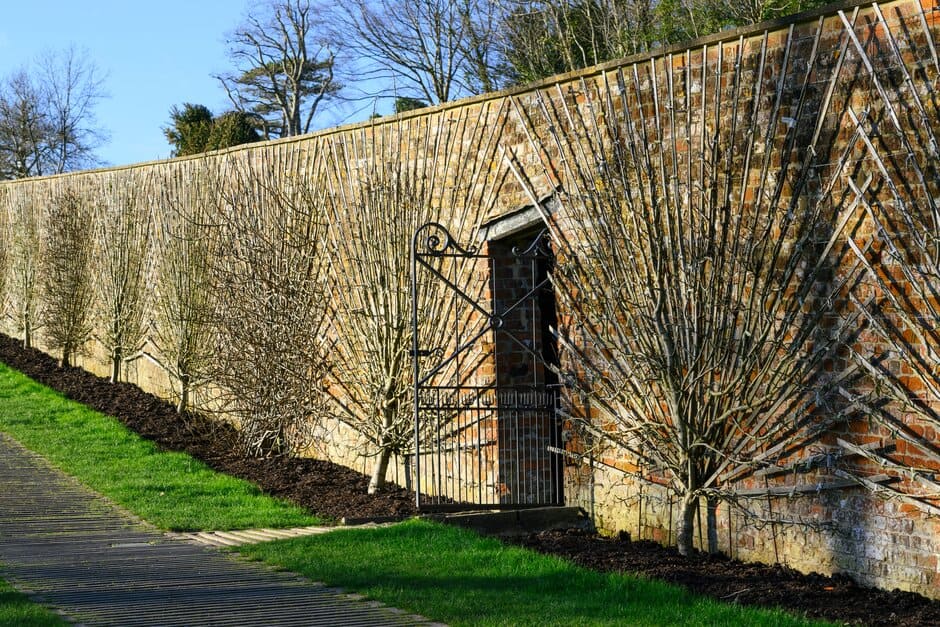
Gage trees crop best in a warm, sheltered site in full sun. They’re among the earliest fruit trees to flower and although they are hardy, the delicate blossom isn’t. So avoid planting in sites prone to heavy frosts or strong winds, which can damage the blossom and deter pollinators. In colder sites, it’s best to train gages against a south-, south-west or west-facing wall or fence – see our tips on positioning fruit.
Gages like fertile soil, ideally slightly acidic, with a pH of 6–6.5, although they can tolerate and crop well in a wider range of soils. They don’t like to dry out, especially when the fruit is forming, so generally prefer a loamy or clay soil, as long as it doesn’t get .
The best time to plant is during the dormant season, usually between November and early March. trees are only available while dormant, but container-grown trees are available all year round – they can potentially be planted at any time, but will settle in best when planted from late autumn to early spring, and planting in hot, dry conditions should be avoided.
Prepare your tree for planting by giving it a good watering if it’s in a pot or by standing it in a bucket of water for half an hour if it’s a bare-root tree. If planting in a lawn, remove a circle of grass at least 1m (3¼ft) in diameter, so the tree’s roots don’t have to compete with the grass for water and as they get established. If your tree is going to be trained against a wall, plant it at least 25–35cm (10–14in) away from the wall. You’ll also need to attach horizontal wires to the wall to support the branches, this is best done before planting – see Pruning and Training, below.
No soil preparation is generally needed before planting. However, if your soil is poor or you are planting near a wall, dig a bucketful of organic matter, such as garden compost, into the soil you remove from your planting hole and use this to backfill after planting. This minimises soil disturbance and helps your tree get off to a strong start. Gages are easy to plant, although they may take a few years to get fully established and start fruiting. See our guides below for more information on tree planting and staking.
Planting in a container
Gage trees crop best in the ground, but if you don’t have suitable soil or an available site, you can plant a compact variety on a dwarfing rootstock (either ‘Pixy’ or ‘VVA-1’) in a large container. Choose a container at least 50cm (20in) wide and deep – terracotta pots or half-barrels are suitable options. Use a good quality loam-based such as peat-free John Innes No 3.
Plant Care
Once established, gage trees in the ground need little maintenance to produce a reliable crop. Protect blossom from frosts if possible and thin out heavy crops to avoid branches breaking under the weight. Newly planted trees and those growing in containers need some regular attention.
Watering
Newly planted gage trees should be watered regularly during dry spells for at least their first . Once established, trees grown in suitable soil shouldn't need any additional watering. Although trees trained against walls or fences may require some additional watering if they’re in a rain-shadow – where the wall or fence reduces the amount of rainfall they receive.
To get a successful crop from trees in containers, water regularly during dry spells throughout the growing season (April to August). Aim to keep the evenly moist, but never leave them standing in water, especially in winter, as roots in saturated compost can rot.
Mulching
Apply a of well-rotted organic matter, such as garden , around gage trees in late winter or spring. Mulching will improve your soil, help to retain moisture and suppress weeds. Mulch can cause rotting if it’s piled up against a tree trunk, so leave a slight gap around the base of your tree.
Feeding
Gage trees growing in regularly mulched soil shouldn't need any additional feeding. However, if harvests are particularly poor, or your tree is showing signs of nutrient deficiency, apply a granular fertiliser to the soil in early spring. Use our page on nutrient deficiencies to work out what is lacking and apply the recommended feed, following instructions on the packet.
Gage trees in pots benefit from regular feeding. Either apply an organic, high potassium liquid fertiliser every fortnight during the (April to August), or sprinkle a granular, general-purpose fertiliser onto the each spring.
Protecting from frost
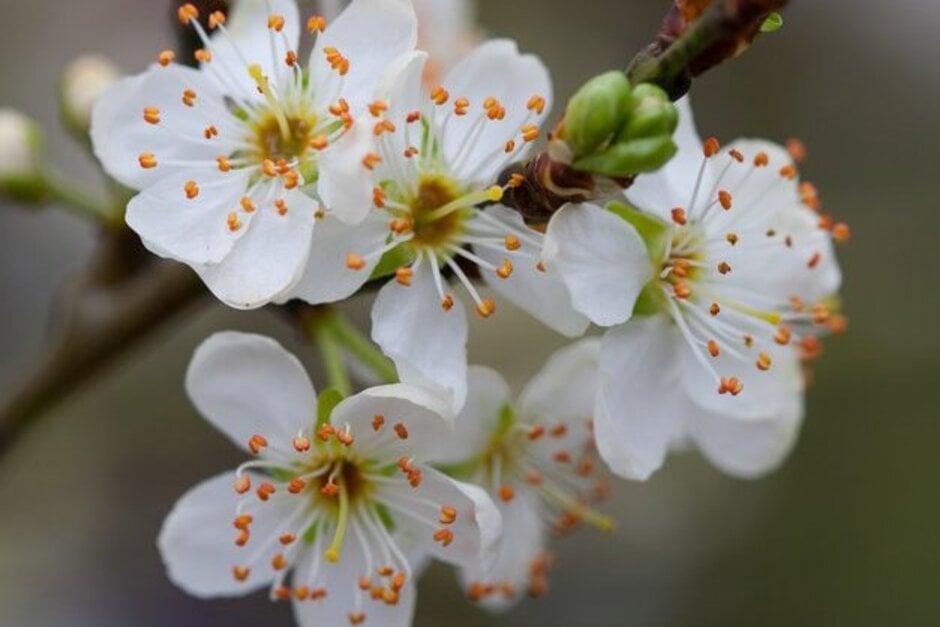
Gages flower early in the year (March/April), so the blossom is vulnerable to frost damage, which can reduce the crop. So if your tree is small enough, cover plants with /reused or an old bedsheet to protect the blossom overnight if frost is forecast, then remove during the day so pollinating insects can reach the flowers. Potted trees can also be moved into a greenhouse, porch or other sheltered location to avoid frosts when in blossom.
Fruit thinning
Gages often produce a heavy crop and their branches can break under the weight. To avoid this, thin out the young fruits in early summer – reduce them to one fruit every 5–8cm (2–3in) or a pair every 15cm (6in). This is easiest to do on smaller trained trees, but is worth doing on larger trees too, if you can safely reach the branches.
If your tree ends up carrying a particularly heavy crop, be prepared to prop up the branches in mid- and late summer, otherwise the weight of fruit could snap them.
Propagating
The best way to propagate gages is by or budding, which do require some skill but are well worth a try.
It is not generally worthwhile growing gages from seed (stones) or , as the resulting trees will grow much larger than those grafted onto a rootstock, will be slower to start fruiting and may not come true to type. There are also risks associated with growing from the seed of shop-bought fruit, so this should be avoided.
Pruning And Training
Just like plums, gages should be pruned annually to keep them in good shape, healthy and productive. Gages fruit on a mixture of one- and two-year old wood and older shoots. Avoid pruning gages during the dormant season or in mid- to late autumn, to minimise the risk of infection from silver leaf disease and bacterial canker. Prune on a dry day, when dry weather is forecast for at least the next two days.
- Young trees should be pruned in early spring, after the buds open
- Established trees should be pruned in summer
Free-standing gage trees are best pruned as:
- Bush trees – with a trunk about 75cm (2½ft) tall, then three or four branches radiating out from the top of the trunk to create an open-centred goblet shape
- Pyramid trees – similar to bush trees, but with their central shoot (leader) intact, so they don’t have an open centre. The branches start lower down, 40–50cm (16–20in) from the ground, and get gradually shorter further up the tree, to create a pyramid shape
Gage trees can also be trained into more space-saving shapes, ideal for small gardens or if you want to grow several fruit trees. The best trained shapes for gages are:
- Fans – a short trunk topped with a flat fan of radiating branches, trained against a wall or fence. Prune twice a year, in early summer and straight after fruiting – see initial pruning of fans and pruning established fans
- Cordons – a compact tree comprising a single stem with very short side-shoots, ideal for small spaces and pots. Support with a sturdy stake or horizontal wires. As there are no truly dwarfing rootstocks for gages, this method is less successful than with apples, but it can work with less vigorous varieties on semi-dwarfing ‘Pixy’ or ‘VVA-1’ rootstock. See training plums as cordons
Trees can be bought ready-trained, partly trained or untrained, depending on how much work you want to do. Gages aren’t suitable for training as espaliers. For more information, see our guide to pruning plums below (gages are pruned in the same way as plums).
Pruning overgrown and neglected trees
If a gage hasn’t been pruned for several years, its branches can get congested. Removal of branches should be staged over several summers. Aim to gradually create a well-balanced framework with an open centre to allow in plenty of light and air. Trees respond to larger pruning cuts by sending up a mass of new shoots. Where this happens, the shoots will need to be thinned in the summer to leave just one or two.
Harvesting
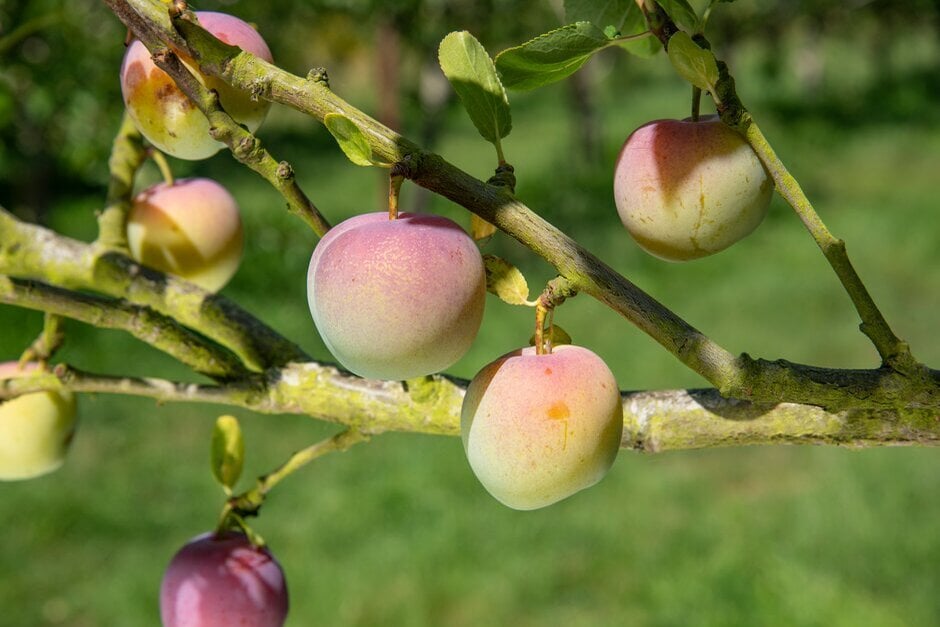
Gages develop their best flavour if left to ripen on the tree. If they feel soft when gently squeezed, they are ripe. Trees will generally need picking over several times, as fruits usually ripen gradually over time. Handle gages gently as they’re easily bruised.
Problem Solving
Gage trees are generally hardy, vigorous and fruitful, but poor harvests can be caused by the following:
- Frosts – where possible, cover or move trees to protect flowers from low temperatures, see Protecting from frost, above
- Spring storms and windy, cold conditions – unfavourable weather conditions in spring can damage blossom and deter pollinators. Plant in a sheltered position to reduce the risk
- Lack of water – insufficient water can cause young fruits to be shed. If growing a gage in a container or against a wall, check moisture levels regularly and water if needed. Mulching annually will help soil retain moisture. Avoid planting in shallow, poor soil
- Birds eating gages – netting will protect fruit, either cover the whole tree (if small enough) or individual branches with plastic-free or reused netting. Ensure the netting is taut and fastened securely so birds and other wildlife don’t get entangled in it. In most cases, established trees usually produce such generous crops that some can be shared with visiting birds
Common Problems

Bacterial canker
Bacterial canker is a disease of the stems and leaves of Prunus, especially plums and cherries, but also apricots, peaches and ornamental Prunus speci...

Blossom wilt
Blossom wilt is a fungal disease of apples, pears, plums, cherries and related ornamental trees. It kills blossoms, spurs and small branches. The prob...

Fruit: biennial bearing
Biennial bearing is a problem in some fruit trees, particularly apples and pears, where they crop heavily in one year and then produce little or nothi...


