Plants for a touch of tropical foliage
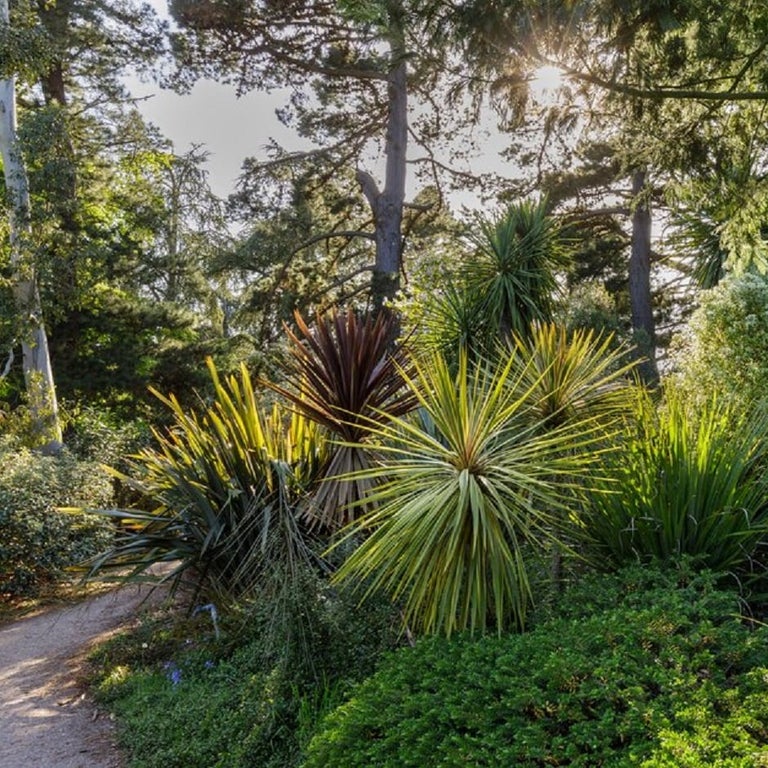
By selecting plants with a variety of shapes, sizes, colours and textures, it is possible to create a full and attractive border with a leafy jungle feel and year-round interest
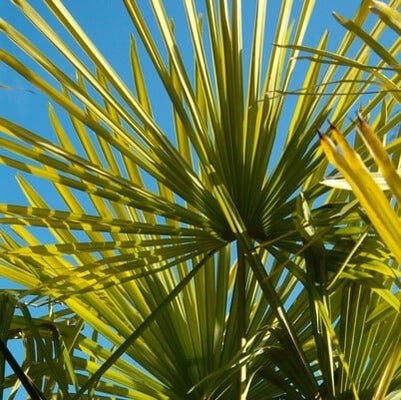
Choose hardy plants that can withstand outdoor temperatures
Foliage can provide colour interest, as well as flowers, giving a jungle feel
Look for microclimates in your garden that may suit some jungle-feel plants

James Lawrence, RHS Principal Horticultural Advisor, has designed this simple, attractive, and most importantly, sustainable border design for you to try at home with plants that are easy to grow, widely available and look good together.
This simple design of plants, once established, will grow well and create a leafy jungle look while still providing a variety of interest throughout the year.
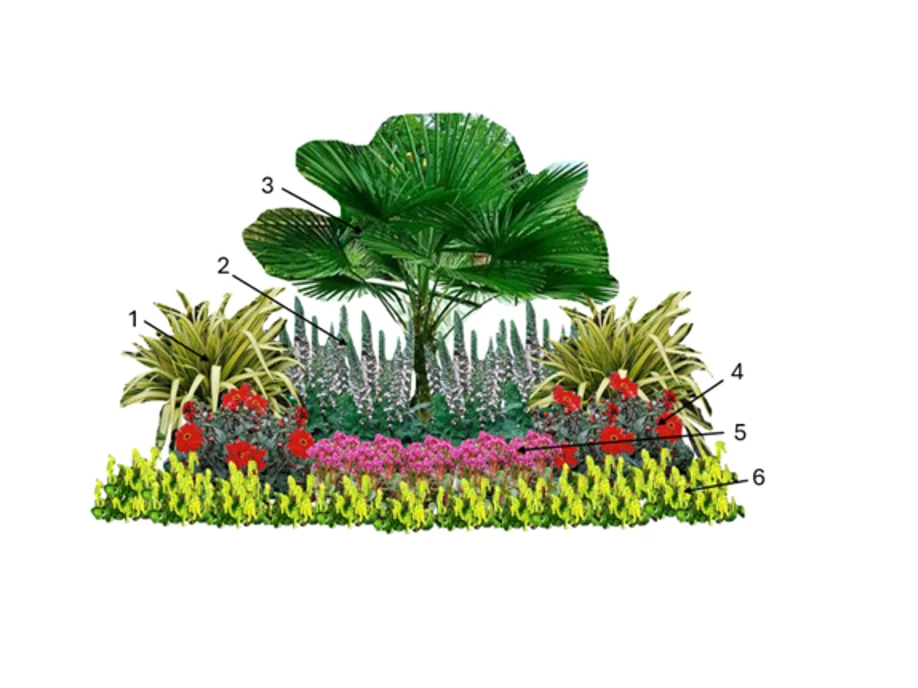
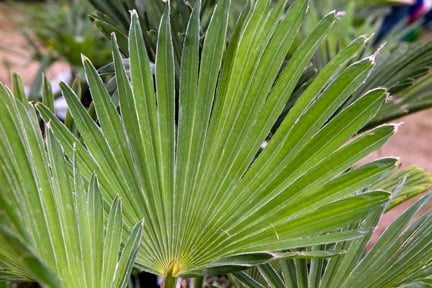
The Trachycarpus is the focal point with its large palm leaves, which contrast with the strap-like leaves of the Phormium and more rounded leaves of Bergenia and Umbilicus.
This planting scheme of tropical-looking foliage also provides seasonal colour and interest. The Bergenia flowers in spring, with the Umbilicus flowering in spring and summer, while the Acanthus and Dahlia follow on to flower through the summer.
Bergenia and Dahlia will help to attract beneficial insects to the garden. Providing a variety of different flowering types over a long period will help to attract a wide variety of pollinators.
The Bergenia and Umbilicus provide ground cover and will help prevent erosion of bare soil. The ground cover can also reduce loss of soil moisture by evaporation and will help to suppress weed growth.
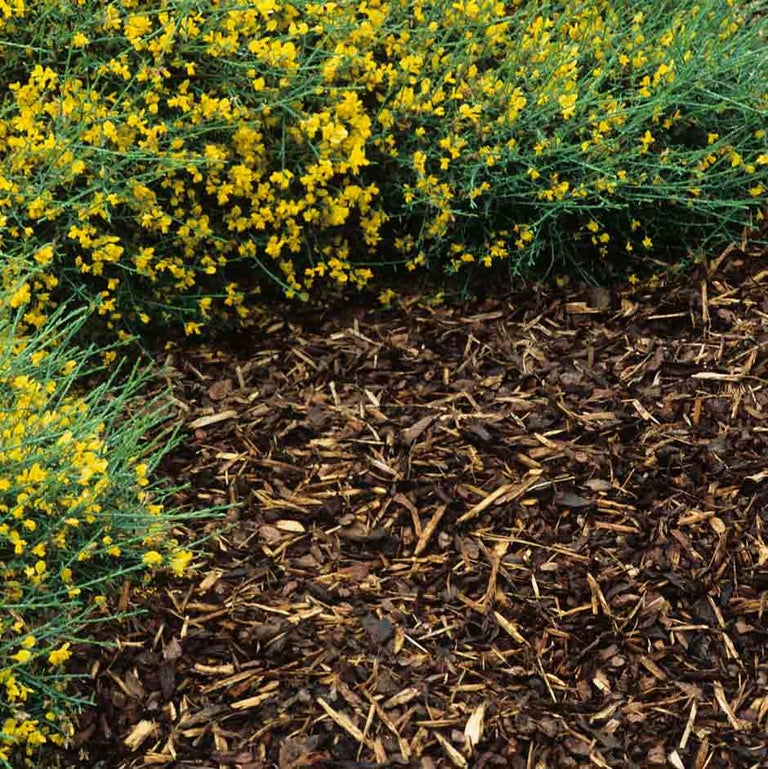
Additional organic mulching, preferably with homemade compost, can further help with soil moisture retention and weed suppression.
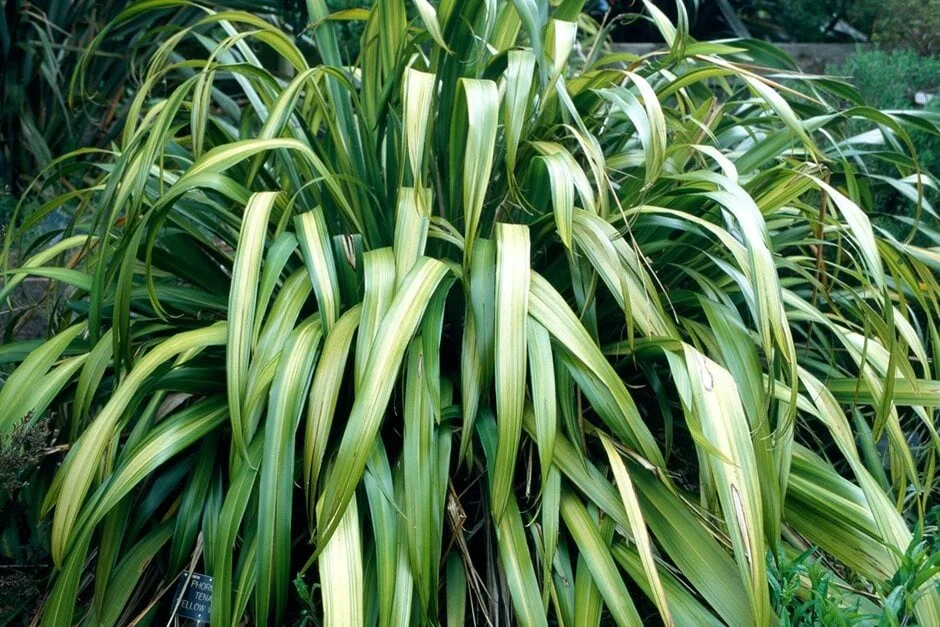
1 - Phormium ‘Yellow Wave’ is an evergreen, clump-forming with long, arching, strap-shaped leaves, heavily striped with bright yellow.
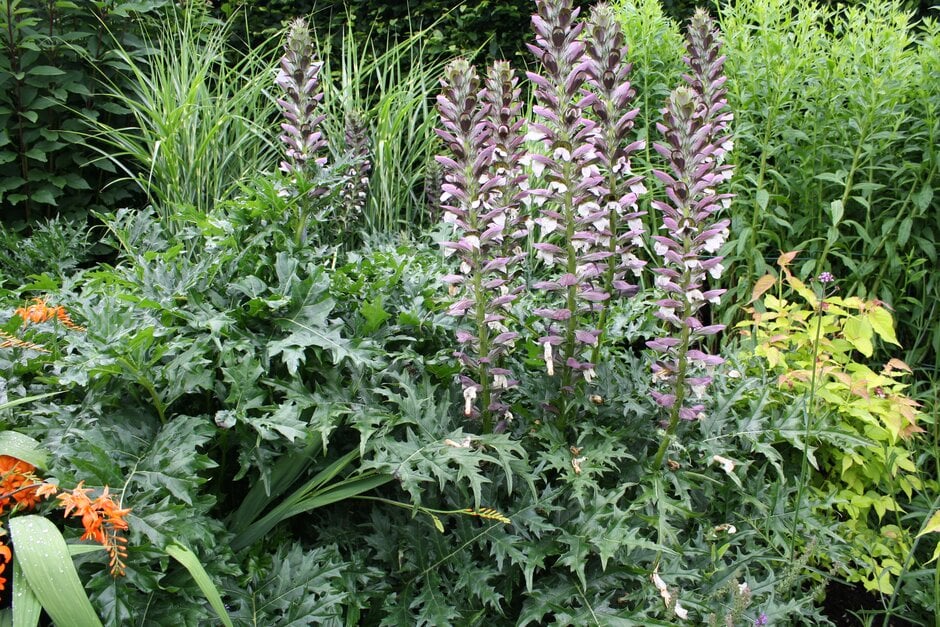
2 - Acanthus mollis is a herbaceous perennial with large, deeply cut, glossy green leaves and tall spikes of white flowers, sheathed in dusky purple bracts, in summer.
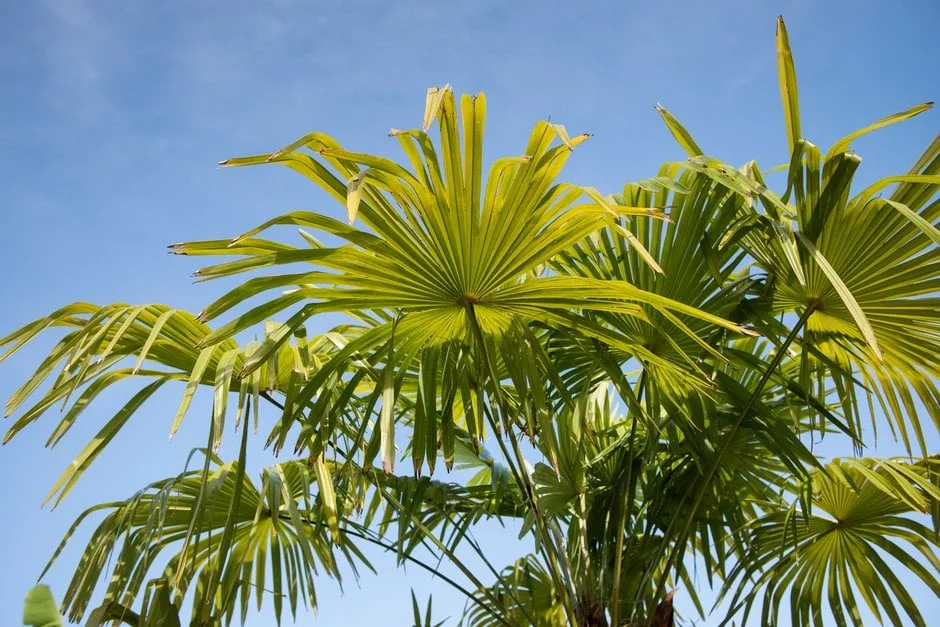
3 - Trachycarpus fortunei is an evergreen palm, forming a small tree with a stout, fibre-covered trunk and deeply divided, fan-shaped leaves. Large arching sprays of small, light-yellow flowers hang beneath in summer.
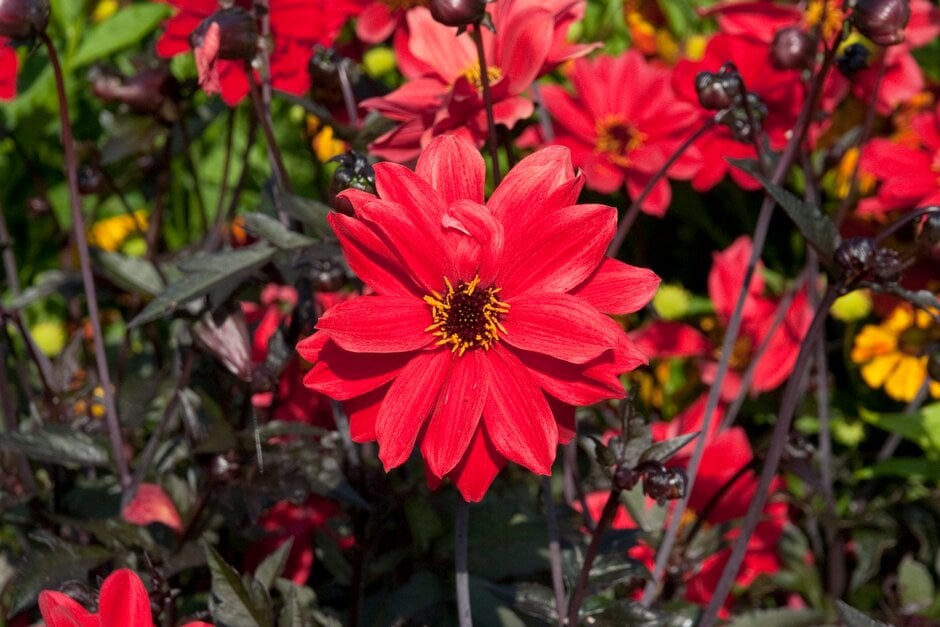
4 - Dahlia ‘Bishop of Llandaff’ is a herbaceous perennial with dark, blackish-red divided foliage and semi-double, brilliant red flowers in summer that are attractive to pollinators.
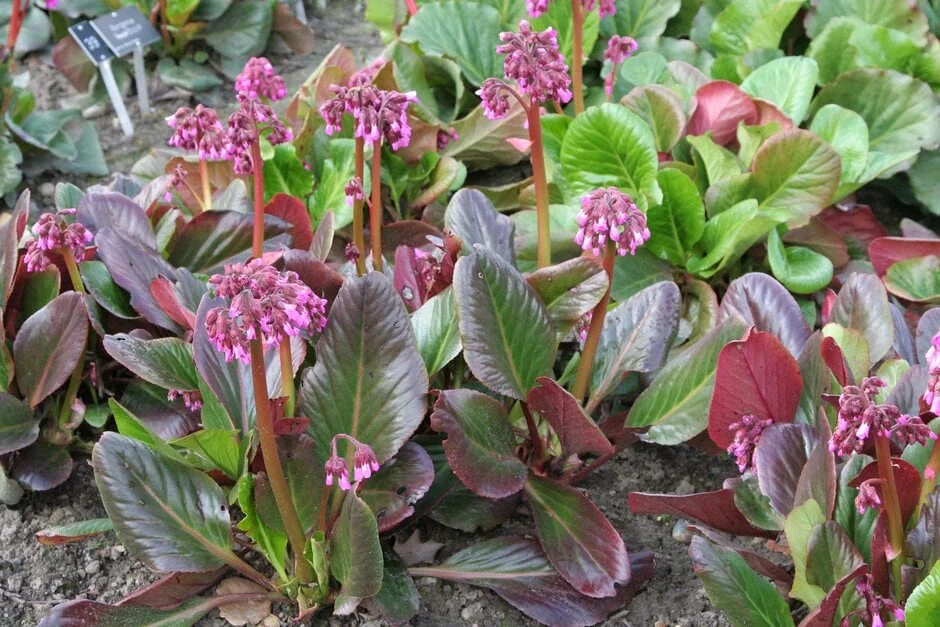
5 - Bergenia purpurascens var. delavayi is an evergreen perennial with large, round, dark green leaves that become beetroot-red in winter. Slender reddish stems bear drooping clusters of deep pink flowers in spring.
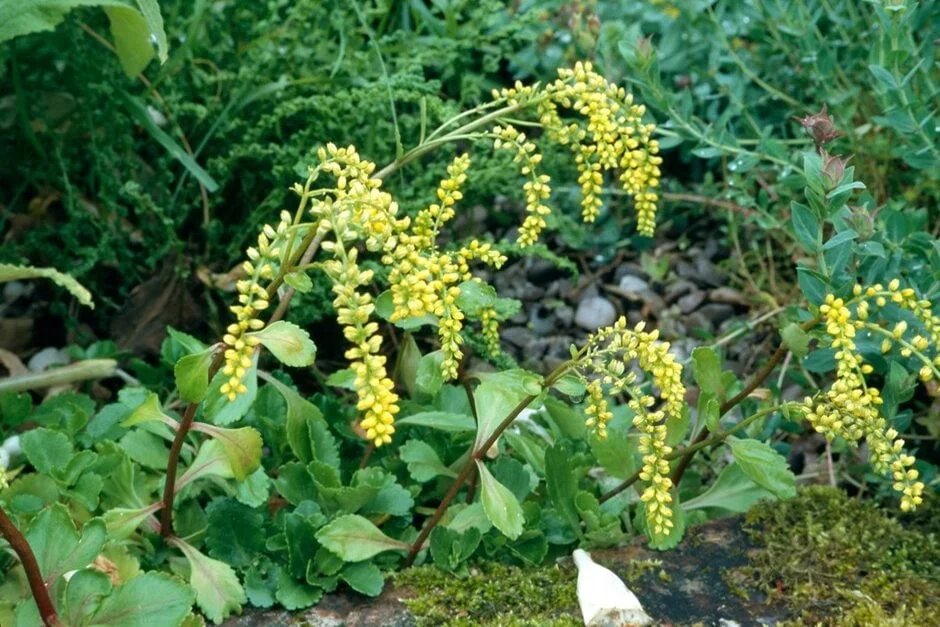
6 - Umbilicus oppositifolius is a prostrate evergreen perennial with large, fleshy leaves and arching spikes of small, bright yellow flowers on brownish stems in spring and summer.
By choosing strong-growing plants, mostly with an RHS Recommended: Award of Garden Merit, it is possible, even within a narrow colour palette, to keep your border looking attractive all year round. The plants in this design flower at different times of the year and attract a variety of pollinators.
AGM plants tend to be more naturally resistant to pests and disease and, once established, will reduce the need for extra inputs that weaker-growing plants would need, such as excessive water and fertiliser.
A simple planting plan helps to create depth, interest and good coverage in a border.
Tropical plants are not generally hardy in most of the UK. However, these plants together create a leafy tropical appearance to the border while being hardy through most of the UK, with the exception of the dahlia. It may be necessary to lift the dahlia in colder, wetter areas and store the tubers in a cool, frost-free place.
Using the ethos of ‘right plant, right place’ to create a sustainable planting combination is great for the environment. It helps avoid waste and the use of products and practices needed to try and help ailing plants, such as the application of fertiliser. It also creates robust, long-lived planting that benefits soil health and garden . For more information about sustainable gardening, please see the RHS Sustainability Strategy.